
902X-NTR
Editorial Overview & Systems Analysis
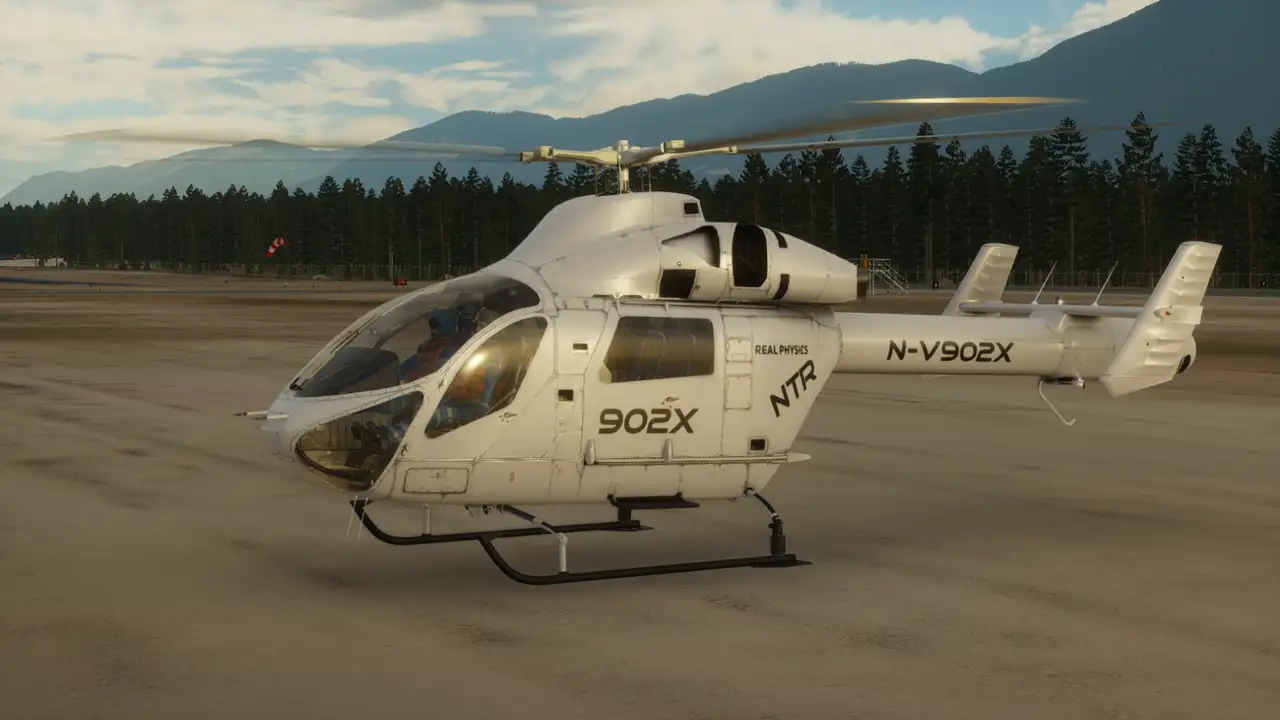
The VSKYLABS Test-Pilot: 902X-NTR brings a physics-driven twin-turbine No Tail Rotor (NOTAR) utility helicopter to X-Plane 12. Developed by JetManHuss using the MD-902 Explorer as an engineering reference, the simulation models real-world NOTAR anti-torque aerodynamics from the ground up rather than relying on an invisible conventional tail rotor. Powered by twin Pratt & Whitney Canada PW207E turboshaft engines with authentic OFF, IDLE, FLY, and TRAIN control modes, the airframe dynamically simulates the Coanda effect—where downwash from the main rotor wraps around the pressurized tail boom to generate roughly 60 percent of anti-torque stability in a hover—paired with a variable-pitch internal fan and rotating tail-boom thrust-vectoring thruster.
The package includes two distinct variants out of the box: the standard VSL 902X-NTR utility model and the extended-range VSL 902eX-NTR outfitted with twin external pressurized fuel tanks that stretch maximum range to roughly 800 nautical miles. Handling is stabilized by an integrated Vertical Stabilizers Control System (VSCS) providing active yaw damping and predictable trim behavior across the flight envelope, making the rotorcraft approachable for newer helicopter pilots while rewarding precise pedal work. Built natively for X-Plane 12, the project incorporates a multi-layer FMOD soundscape, a layered paint kit, and VSKYLABS' dedicated "Cockpit-Builders Heaven" assignment layer for effortless hardware switch mapping.
Avionics & Flight Deck Systems
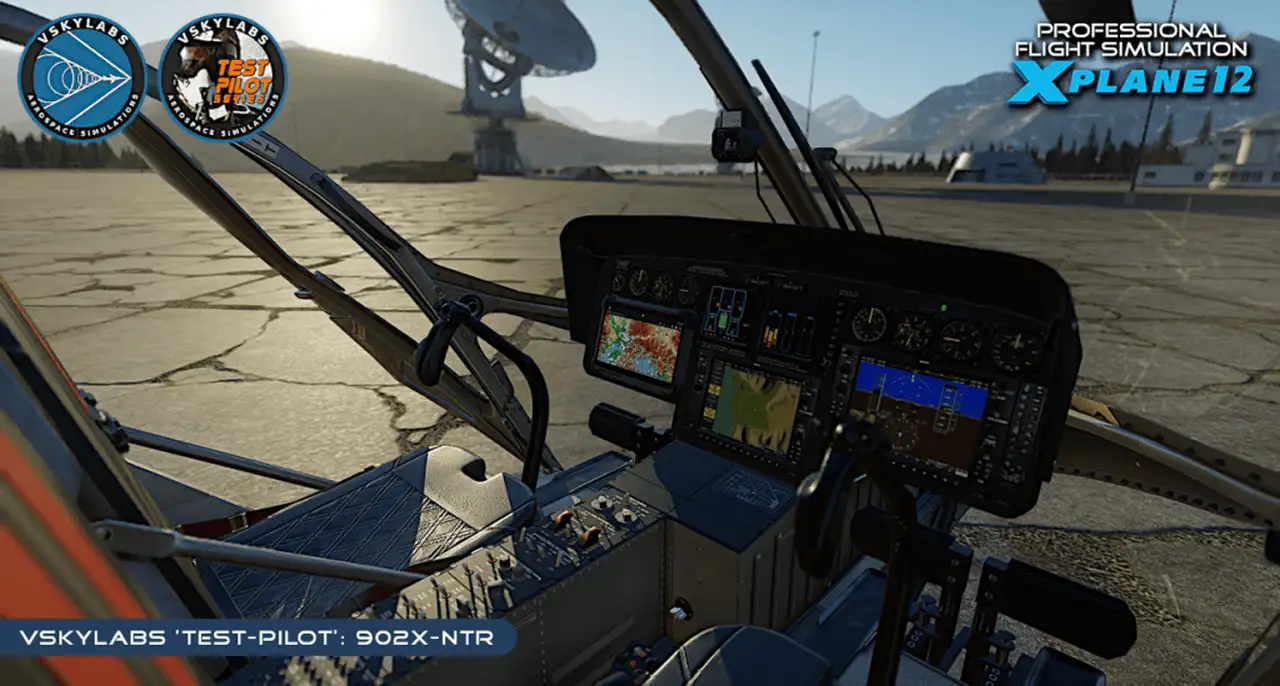
The flight deck blends a full Laminar Research Garmin G1000 glass suite with a custom digital annunciation panel and a simplified Integrated Instrument Display System (IIDS) for engine and rotor monitoring. Essential backup analog instruments—including airspeed, barometric altimeter, VSI, clock, and a radar altimeter with aural warning—sit alongside dedicated VSCS yaw-control indicators and VSKYLABS' "Digi-Slip" LED yaw-slip indicator. For low-altitude hover work and full VR immersion, pilots can toggle a collimated 3D Head-Up Display (HUD) featuring velocity-vector cues, backed by native AviTab tablet integration on the panel.
Primary Missions & Operational Roles
-
Urban EMS, Medevac & Confined-Area Landings: Operate safely into tight hospital helipads, rooftop decks, and obstructed urban landing zones without the hazard of an exposed tail rotor.
-
Extended-Range Offshore & Utility Transport: Fly long-distance overwater or remote logistics legs up to 800 nautical miles using the external fuel tanks on the VSL 902eX-NTR variant.
-
NOTAR Aerodynamics & Twin-Turbine Transition: Experience the unique anti-torque characteristics of Coanda-effect tail-boom circulation, directional jet thrusters, and VSCS yaw-damping logic.
-
VR & Home-Cockpit Helicopter Flying: Take advantage of the VR-optimized 3D velocity-vector HUD and uncluttered "Cockpit-Builders Heaven" keybind layer for full-immersion rotorcraft sessions.
Key Highlights
- True Physics-Based NOTAR Simulation: Models Coanda-effect tail-boom circulation, an internal variable-pitch fan, directional thruster nozzles, and VSCS yaw damping rather than a hidden tail rotor.
- Two Distinct Variants Included: Ships with both the standard VSL 902X-NTR and the extended-range VSL 902eX-NTR equipped with external fuel tanks for ~800 NM range.
- Hybrid G1000, IIDS & VR 3D HUD Cockpit: Pairs a full G1000 with custom engine annunciators, IIDS display, Digi-Slip LED yaw indicator, radar altimeter, AviTab, and a collimated 3D HUD.
- Approachable Yet Deep Flight Dynamics: Predictable, well-damped handling accommodates beginner rotorcraft pilots while maintaining authentic twin-turbine power envelopes.
- Dedicated Hardware Assignment Layer: Includes VSKYLABS' "Cockpit-Builders Heaven" interface for mapping switches, knobs, and engine modes cleanly in X-Plane 12.
Quirks & Limitations
- Engineering Testbed Rather Than Licensed Replica: Inspired by the MD-902 Explorer as a technical baseline, it intentionally omits official MD Helicopters branding and simplifies certain IIDS subpages.
- Simplified Engine Startup & Governor Automation: Streamlined engine control modes (OFF, IDLE, FLY, TRAIN) favor accessibility over deep FADEC failure modeling or hot-start penalties.
- Requires Different Pedal Habits Than Conventional Helicopters: Pilots accustomed to traditional tail rotors must adapt to Coanda-effect yaw authority changes during sideways flight and autorotations.
Community Ratings & Feedback
Want to rate this flight deck or leave a review? Log In or Create an FSS Account to post your review.
Be the first simmer to leave a flight deck review and community score for this airframe.
Systems & Integrations
Video Showcases
Help Improve the Directory
Notice missing details, broken links, or incorrect pricing? Submit a correction to our Hangar Mods.
Suggest an Update