
Cessna 150 Commuter
Media Gallery
Editorial Overview & Systems Analysis
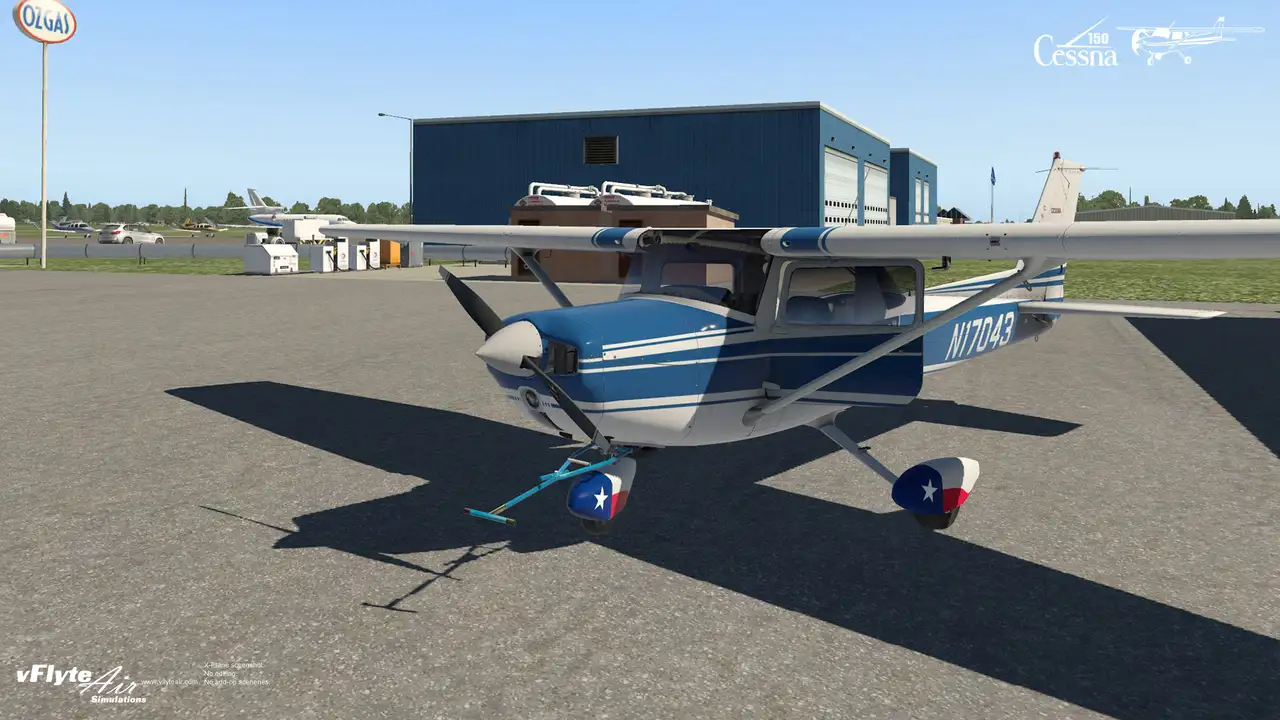
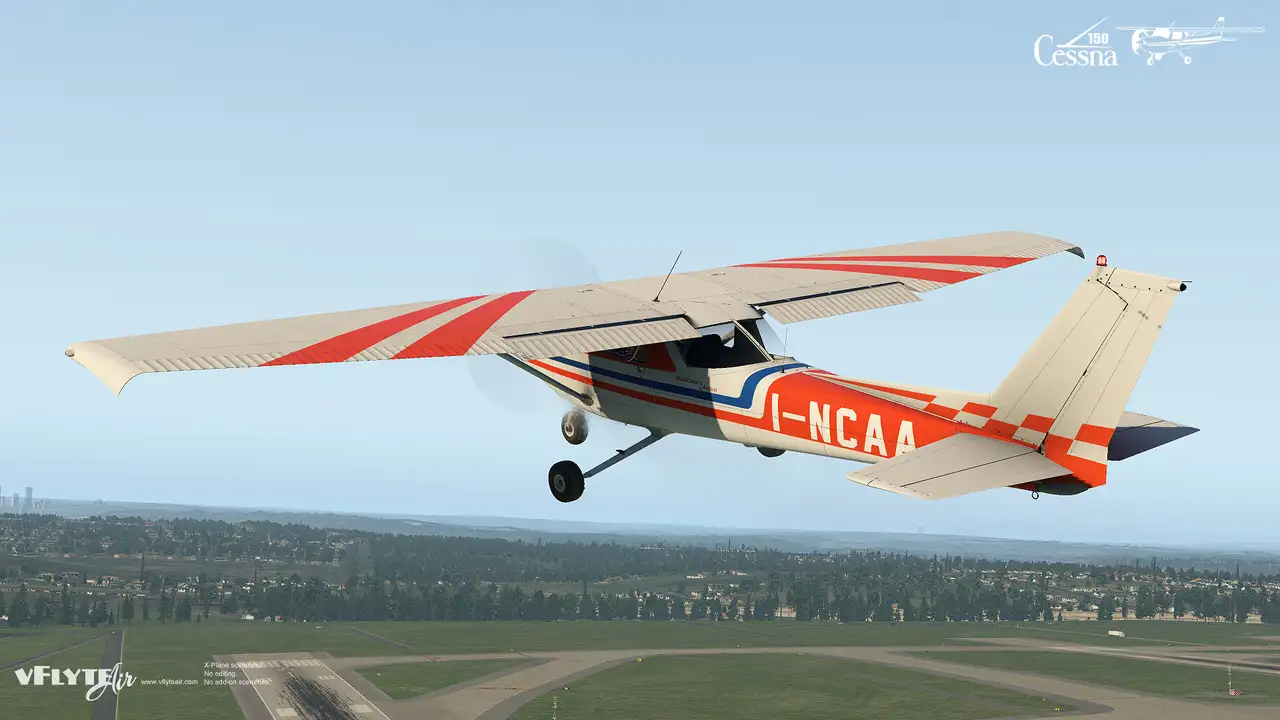
The Cessna 150 (universally recognized across aviation schools and flight simulation communities as the C150, C-150, 150 Commuter, Cessna Commuter, and vFlyteAir C150) is arguably the most famous two-seat primary trainer ever built. Produced between 1958 and 1977 before yielding the production lines to the Cessna 152, the 150 introduced hundreds of thousands of student pilots to powered flight. Developer vFlyteAir Simulations completely rebuilt their rendition from the ground up natively for X-Plane 12, basing the 3D model, systems, and cockpit geometry on a real-world 1972 Cessna 150L Commuter (tail number N17043).
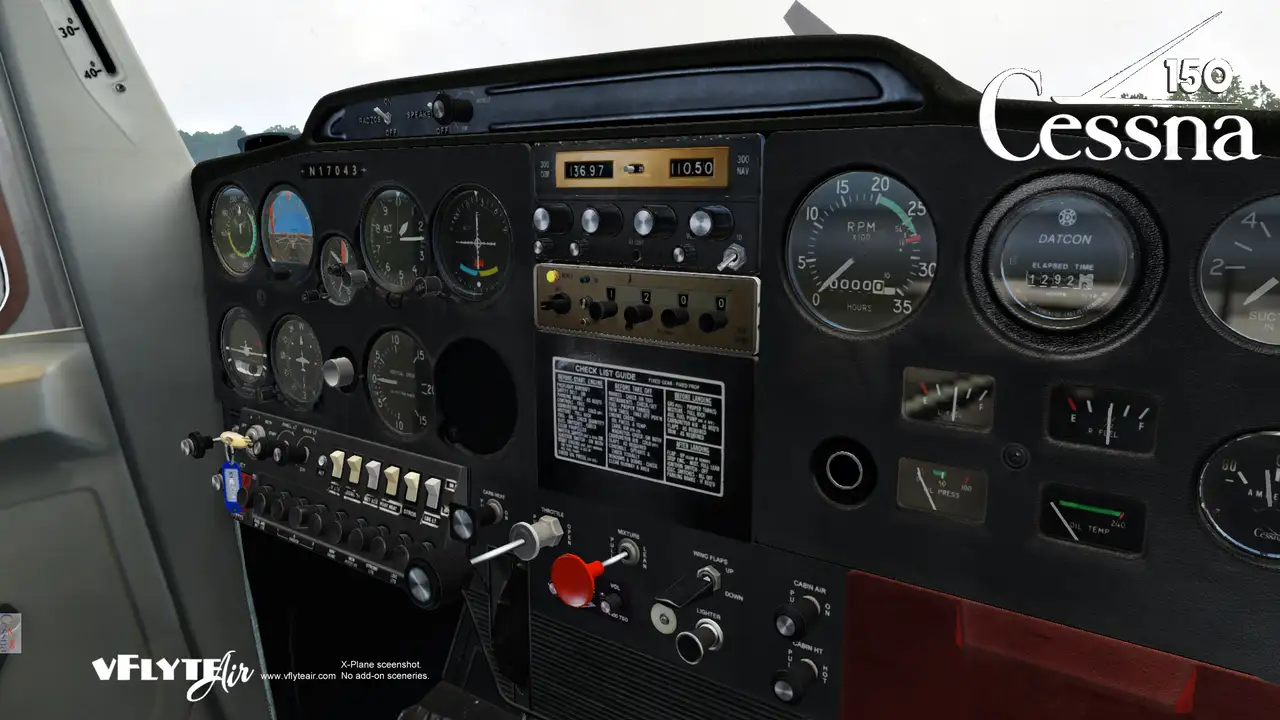
The aircraft provides four swappable 3D panel layouts that can be toggled instantly without restarting the flight. Simmers can train on the Basic VFR Trainer (bare-bones round dials with a single Comm/Nav radio), the period-authentic Commuter layout equipped with a functioning Cessna Navomatic 300A single-axis wing-leveler autopilot, an IFR Trainer panel with dual VOR/LOC indicators, or a Modern Glass layout featuring dual Aspen E5 electronic flight displays. Ground immersion is highlighted by a guided 3D preflight walkaround inspection that lets pilots dip fuel tanks with a physical fuel gauge, check oil on the dipstick, remove wheel chocks and pitot covers, and even pull the plane out of the hangar using an interactive manual nosewheel towbar.
In X-Plane 12, the Cessna 150 Commuter captures the slow, low-inertia characteristics of light general aviation. Powered by a 100-horsepower Continental O-200-A engine, the airframe cruises at a modest 90 to 100 KTAS, requiring active trim control and patience during summer density-altitude climbs. Acoustic design is delivered through an FMOD2 package recorded and mastered by Mike Maarse of SimAcoustics, capturing the distinct mechanical churn of the O-200, airframe rattle over grass strips, and realistic cockpit headset attenuation. With functional 40-degree manual flaps and docile stall manners, the vFlyteAir C150 offers an authentic entry point for raw-data pilotage and pattern practice.
Primary Missions & Operational Roles
-
Ab-Initio Primary Flight Training: Serving as the textbook basic trainer for student pilots practicing traffic patterns, rectangular courses, slow flight, and power-off stall recoveries.
-
Classic VFR Pilotage & Sectional Navigation: Flying low-and-slow cross-country legs between 2,500 and 5,500 feet at 95 KTAS using visual landmarks, highway tracking, and VOR triangulation.
-
Short-Field & Grass Strip Operations: Utilizing the full 40-degree flap deflection setting to execute steep approaches into short turf runways and unimproved farm fields.
-
Single-Axis Autopilot Cross-Country Cruising: Flying the Commuter panel variant to practice enroute navigation with the vintage Cessna Navomatic 300A wing-leveler and heading tracking.
Key Highlights
- Four Swappable 3D Cockpit Panels: Easily switch between Basic Trainer, Commuter with Navomatic autopilot, IFR Trainer, and modern dual Aspen E5 glass cockpit layouts.
- Interactive Preflight Walkaround & Ground Towbar: Fully interactive 3D preflight check to measure fuel and oil levels, inspect control surfaces, and physically move the airframe using a ground towbar.
- Authentic SimAcoustics FMOD2 Soundscape: High-fidelity audio recordings of the Continental O-200-A engine, switch detents, flap deployment motor hum, and plug-in pilot headset noise cancellation.
- Persistent Aircraft State Memory: Automatically retains over 50 individual airframe states, switch positions, cockpit preferences, and fuel levels across simulator flights.
- Steep 40-Degree Flap Authority: Replicates the massive drag and steep descent profiles made possible by the early Cessna 150 electric 40-degree flap extension.
Quirks & Limitations
- Modest Climb Performance at Gross Weight: With only 100 horsepower on tap, climbing past 5,000 feet on warm non-standard temperature days requires careful airspeed management to maintain safe climb rates.
- High Vulnerability to Carburetor Icing: Carburetor heat must be engaged proactively during descents and low-power approaches in humid air; neglecting carb heat will cause rapid engine sputtering and power loss.
- Low Crosswind Tolerance on Rollout: Due to its light gross weight and large high-wing dihedral surface area, strong crosswind gusts require assertive slip control to avoid drifting off the runway centerline.
- No Automated SimBrief Route Import: Lacks automated flight plan import; route legs must be dialed into the optional GPS unit manually or flown using traditional paper chart pilotage.
Community Ratings & Feedback
Want to rate this flight deck or leave a review? Log In or Create an FSS Account to post your review.
Be the first simmer to leave a flight deck review and community score for this airframe.
Systems & Integrations
Video Showcases
Help Improve the Directory
Notice missing details, broken links, or incorrect pricing? Submit a correction to our Hangar Mods.
Suggest an Update