
Maule M-7-235B Super Rocket
Media Gallery
Editorial Overview & Systems Analysis
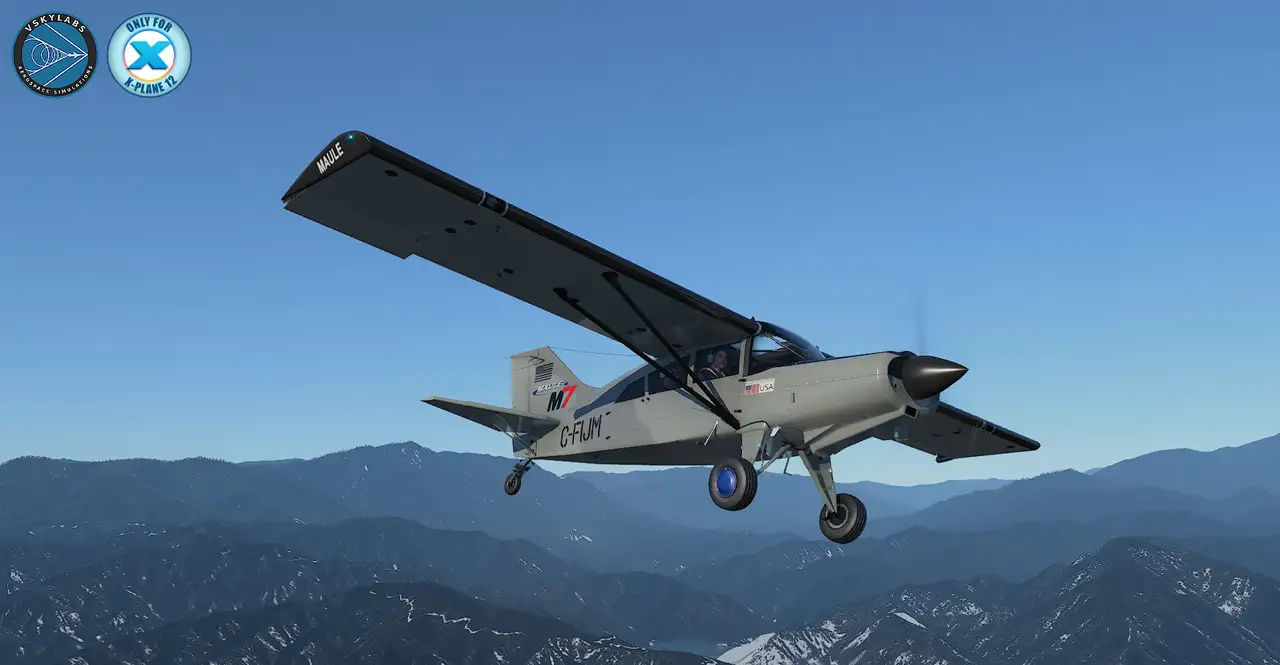
The Maule M-7-235B Super Rocket (frequently cataloged across backcountry communities and simulation searches as the Maule M-7, Maule M7, M-7-235, Maule Orion, or VSKYLABS Maule) is a celebrated staple of American bush flying. Manufactured in Moultrie, Georgia, by Maule Air, Inc., the M-7 family earned its reputation as a rugged, steel-tube framed utility hauler capable of lifting four adults and gear out of confined river sandbars and unimproved backcountry clearings. Developed natively from the ground up for X-Plane 12, the VSKYLABS Maule M-7-235B Project represents one of the earliest purpose-built bush planes developed in direct cooperation with the aircraft manufacturer.
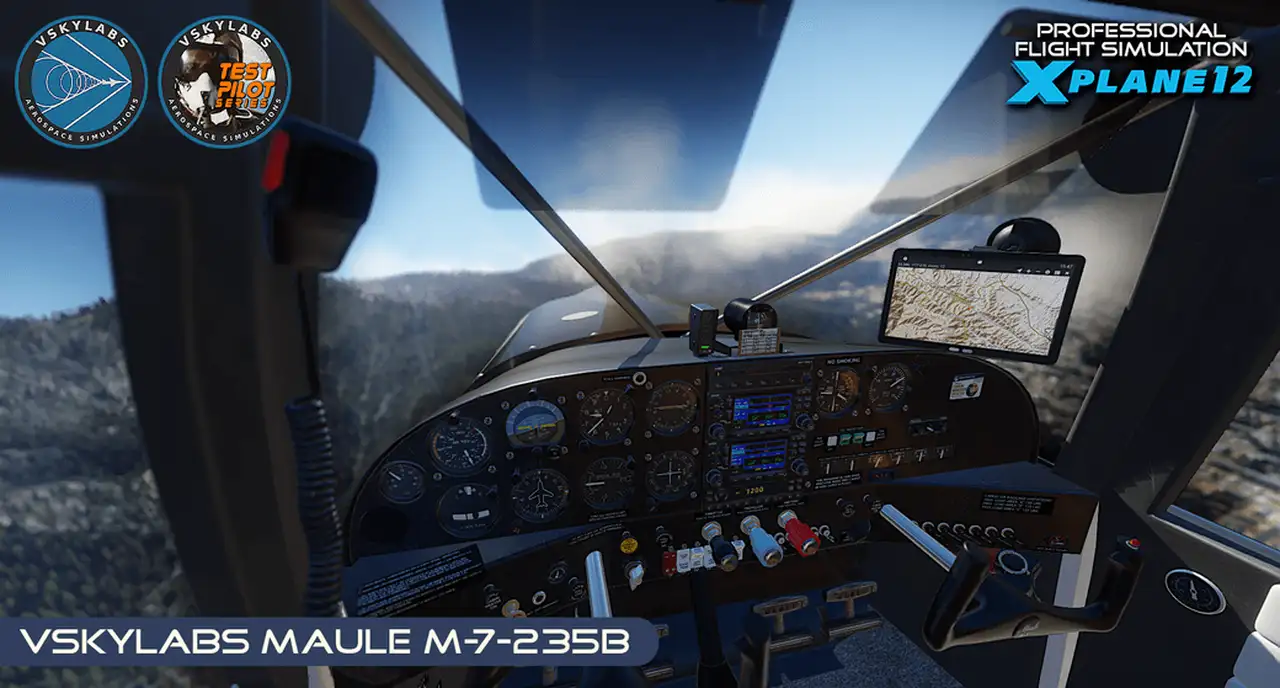
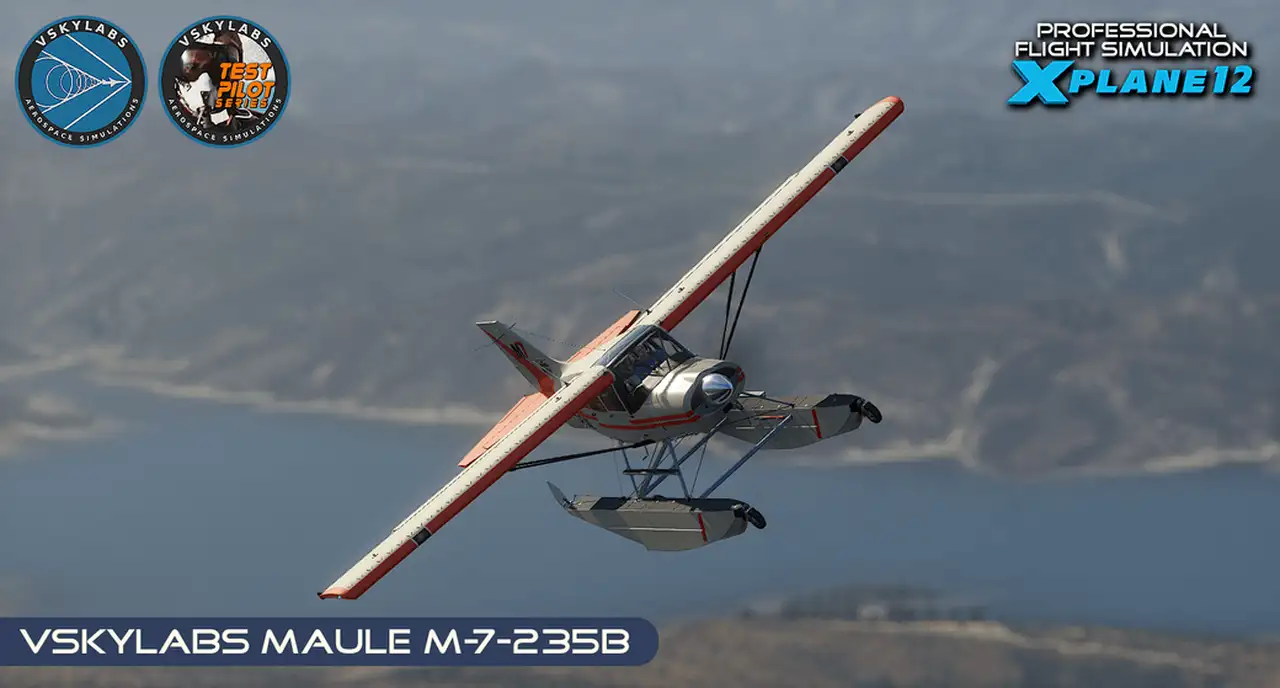
The package delivers multiple flight deck configurations and landing gear variants. Pilots can select between a classic analog panel featuring traditional steam gauges paired with a Garmin GNS 430 GPS, or an advanced modern glass flight deck powered by the Garmin G1000 suite. A notable feature across both layouts is the working replica of the Alpha Systems AOA "Eagle" indicator mounted on the glareshield, providing real-time angle-of-attack guidance during short-field approaches. VSKYLABS includes both a conventional landplane (with options for standard gear or oversized 35-inch bush wheels) and a fully animated amphibious floatplane model.
In X-Plane 12, the Maule handles with energetic responsiveness powered by its 235-horsepower Lycoming O-540 flat-six engine. The flight model accurately incorporates Maule's distinctive wing design, including its reflex flap setting: setting flaps to -7 degrees reduces wing camber for high-speed cruise up to 135 to 145 KTAS, while dumping flaps to 40 degrees allows steep, slow approaches down to 43 knots indicated airspeed. Whether touching down on rocky Alaskan gravel bars or water-taxing across alpine lakes, the aircraft provides an authentic, seat-of-the-pants STOL flying experience.
Primary Missions & Operational Roles
-
Backcountry Bush Exploration & Off-Airport STOL: Operating out of confined riverbanks, sandbars, and high-altitude mountain clearings utilizing 35-inch bush wheels and high-lift trailing-edge flaps.
-
Amphibious Lake & Coastal Water Operations: Flying the amphibious float variant to connect remote coastal bays, lakefront cabins, and island archipelagos throughout Alaska, Canada, and the Pacific Northwest.
-
Angle-of-Attack (AOA) Precision Approach Training: Using the glareshield-mounted Alpha Systems AOA indicator to fly high-drag, low-speed short-field approaches right on the edge of the stall warning horn.
-
Light Wilderness Cargo & Family Touring: Hauling camping equipment, hunting supplies, or passengers on fast VFR cross-country trips between 4,500 and 9,500 feet at 140 KTAS.
Key Highlights
- Authentic Negative Reflex Flap Mechanics: Accurately models Maule's unique -7 degree flap setting for cruise speed efficiency alongside deep positive settings up to 40 degrees for STOL landings.
- Dual Cockpit Panel Architectures: Ships with both a classic analog six-pack instrument layout and a modern Garmin G1000 glass cockpit configuration.
- Working Alpha Systems AOA Indicator: Officially licensed virtual replication of the glareshield Eagle AOA display, offering clear visual energy state awareness during low-speed maneuvers.
- Versatile Multi-Gear Bush Models: Includes standard wheeled gear, oversized 35-inch tundra bush wheels, and fully operational amphibious floats with animated water rudders.
- Native XP12 Flight & Water Dynamics: Developed natively without external background plugins, taking full advantage of X-Plane 12 water physics, wind-shear reactions, and photometric lighting.
Quirks & Limitations
- Demanding Tailwheel Ground Ground Handling: The short fuselage coupling and responsive spring tailwheel demand proactive rudder pedal control and stick-back discipline during rollout to avoid ground loops.
- Non-Functional Circuit Breakers: While switches and knobs are functional throughout the cockpit, the 3D circuit breaker panels are static visual elements and do not support manual system failure tripping.
- No Glass Panel on Amphibious Model: The amphibious floatplane variant is configured exclusively with the classic analog instrument layout; the G1000 suite is limited to the wheeled models.
- No Automated SimBrief Datalink Import: Lacks ACARS or SimBrief OFP direct datalink import; flight routes must be entered manually into the GPS or loaded via standard simulator flight plan files.
Community Ratings & Feedback
Want to rate this flight deck or leave a review? Log In or Create an FSS Account to post your review.
Be the first simmer to leave a flight deck review and community score for this airframe.
Systems & Integrations
Video Showcases
Help Improve the Directory
Notice missing details, broken links, or incorrect pricing? Submit a correction to our Hangar Mods.
Suggest an Update