
Aérospatiale/BAC Concorde
Media Gallery
Editorial Overview & Systems Analysis
The Aérospatiale/BAC Concorde (widely searched across flight simulation communities as Concorde, the Concorde FXP, SST, Supersonic Transport, or the Colimata Concorde) remains the crowning achievement of civil aviation engineering. Cruising at twice the speed of sound at 60,000 feet, the Anglo-French supersonic airliner transformed transatlantic travel into an elite, three-hour routine for British Airways and Air France. Recreating this engineering marvel for modern flight simulation requires balancing an intricate three-crew flight deck with personal simulator accessibility. In X-Plane 12, developer Colimata delivers this experience through the Concorde FXP Version 3, featuring native lighting, modernized flight physics, and refined automated cockpit assistance.
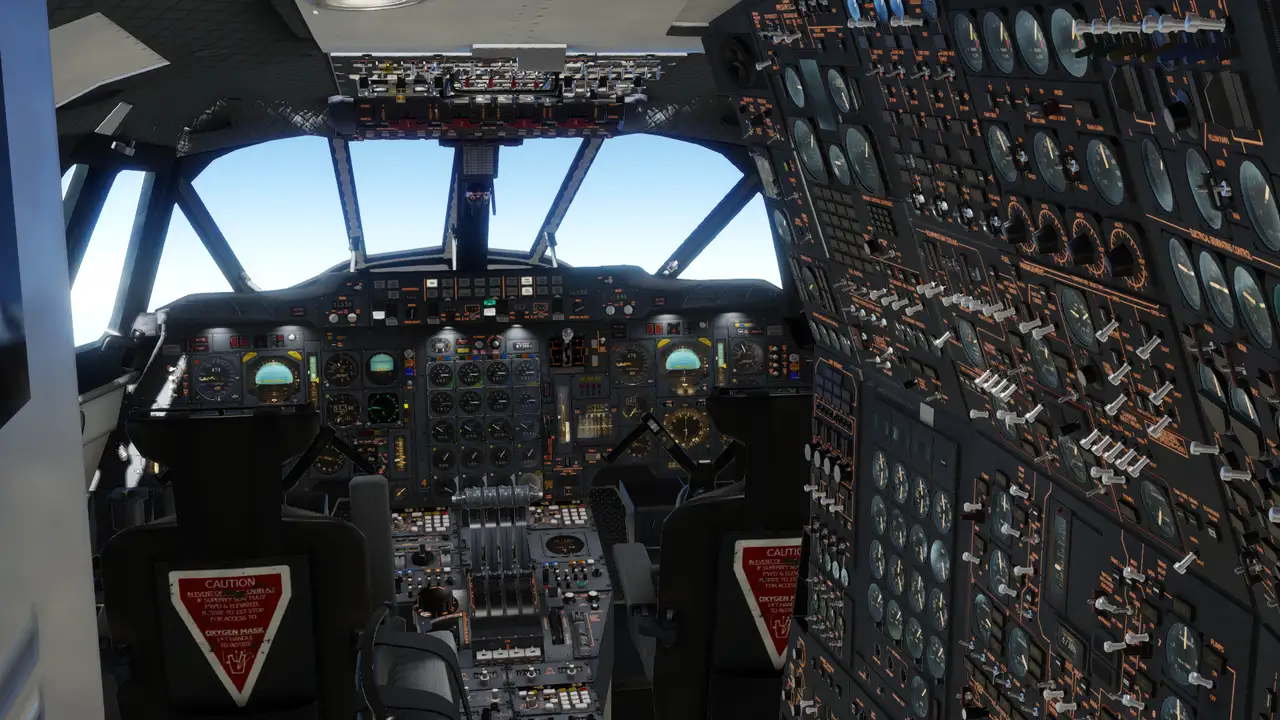
Colimata bridges the gap between complex engineering and solo piloting through an interactive Virtual Flight Engineer (VFE) interface. Simmers can operate the aircraft in standard procedural mode, where the VFE automatically manages fuel pumping, cross-feeding, and center-of-gravity shifts during transonic acceleration. For purists seeking deeper study-level realism, engaging PRO mode transfers total control of all 13 fuel tanks, trim transfer pumps, and cabin pressurization valves directly to the manual Flight Engineer panel. Up on the forward flight deck, navigation is driven by period-accurate Delco Carousel IV-A (CIVA) Inertial Navigation Systems (INS), requiring waypoint coordinates and latitude/longitude alignment to guide the delta-wing jet across the North Atlantic Tracks.
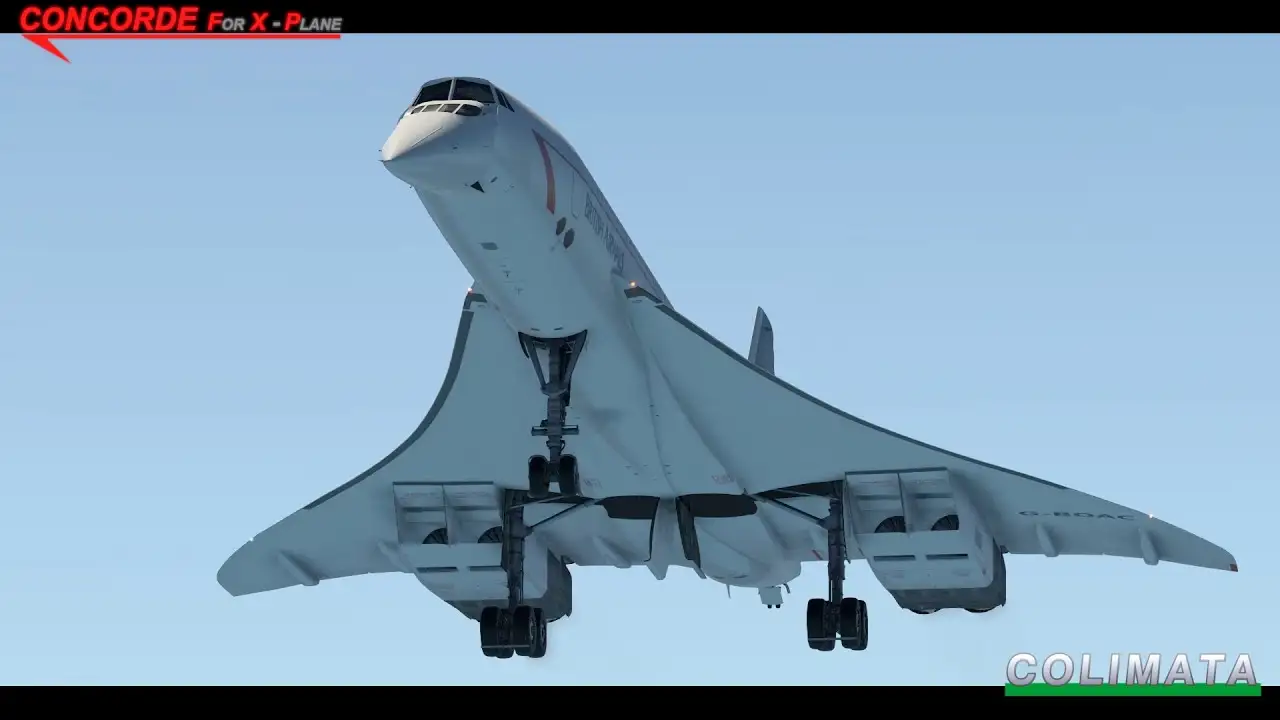
In X-Plane 12, the flight dynamics capture the distinct performance profiles of supersonic delta aerodynamics. Four Rolls-Royce/Snecma Olympus 593 turbojets with variable reheats (afterburners) propel the airframe through the sound barrier, where the center of lift moves aft and demands rapid fuel transfer into aft trim tank 11. Cruising between Mach 2.00 and Mach 2.04 at Flight Level 500 to Flight Level 600, the aircraft rides the thin upper atmosphere in Max Cruise autopilot mode. During terminal arrivals, lowering the iconic droop nose and visor restores runway visibility, while high approach angles of attack demand precise throttle modulation to establish stable landing flares without tail strikes.
Primary Missions & Operational Roles
-
Speedbird Supersonic Flagship Transatlantic Runs: Flying the classic British Airways and Air France express routes between London Heathrow (EGLL) or Paris Charles de Gaulle (LFPG) and New York JFK (KJFK) in under three and a half hours.
-
Mach 2 Transonic Acceleration & Step-Climb Profiles: Managing supersonic climb corridors past Mach 1.0, engaging afterburners through Mach 1.7, and following optimal cruise-climb profiles up to 60,000 feet.
-
CIVA Inertial Navigation System Mastery: Navigating oceanic tracks using raw inertial coordinates, cross-checking drift angles, and inserting mid-route waypoints via the classic 9-waypoint Delco Carousel INS keypad.
-
VIP Supersonic World Tours & Charters: Recreating luxury high-speed round-the-world charters into destinations such as Barbados (TBPB), Rio de Janeiro (GIG), and Honolulu (PHNL).
Key Highlights
- Dual Operational Modes for All Skill Levels: Features an intelligent Virtual Flight Engineer GUI for single-pilot operations alongside a full manual PRO mode for hands-on center-of-gravity fuel trimming.
- Custom Autopilot & Supersonic Flight Modes: Dedicated AFCS featuring functional Max Climb, Max Cruise, and autoland modes tailored to supersonic envelope management.
- Animated Multi-Position Droop Nose & Visor: Fully functional visor and nose positioning (0, 5, and 12.5 degrees) with authentic cockpit window geometry changes and aerodynamic drag penalties.
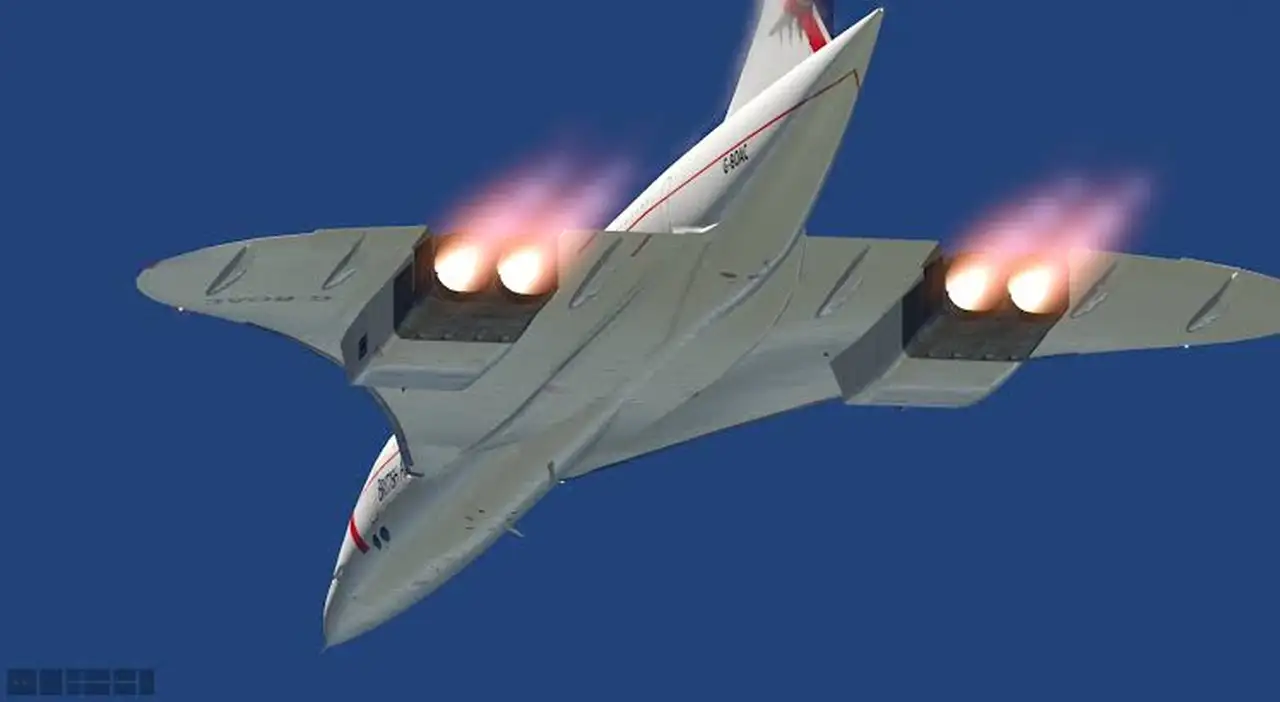
- Native XP12 Visuals & Environmental Effects: Updated photometric floodlighting, high-resolution exterior PBR skins, rain effects, and active thermal heat-blur effects trailing the Olympus exhausts.
- Integrated Dual CIVA INS Navigation: Native support for Carousel IV-A inertial navigation units, delivering an authentic 1970s long-haul oceanic navigation experience.
Quirks & Limitations
- Delicate Transonic Trim Management: Failing to transfer fuel aft during supersonic acceleration or forward prior to subsonic deceleration can shift the center of gravity outside safe operational limits, causing pitch oscillations.
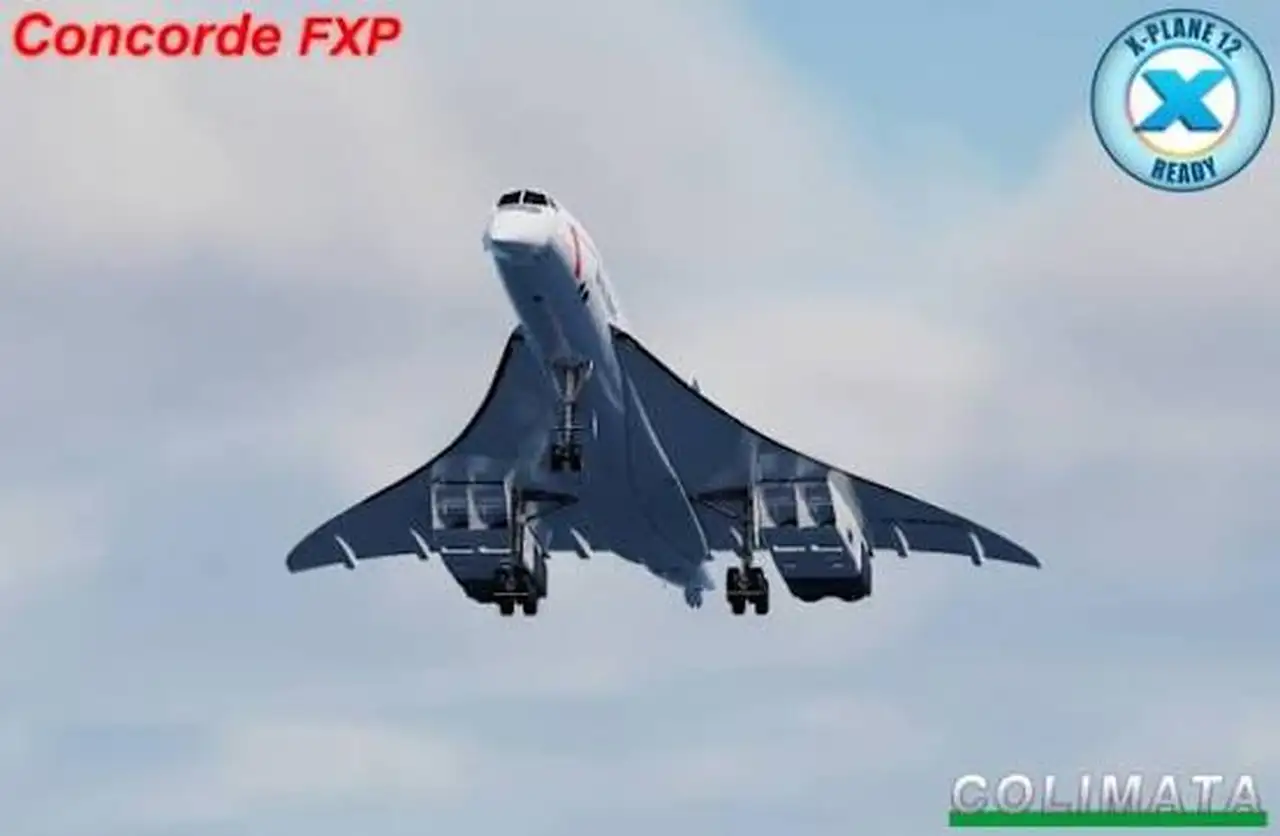
- High Approach Workload Without Flaps: As a pure ogival delta wing lacking trailing-edge flaps or slats, landing approaches require high pitch angles (roughly 10 to 12 degrees nose-up) and active throttle management on the backside of the power curve.
- No Automated Modern SimBrief Datalink: Lacks modern ACARS or direct tablet import options; oceanic routing requires manual INS coordinate typing or loading pre-compiled coordinate route files.
- Pitch Stability Oscillations in Early XP12 Weather: High-altitude turbulence in the upper stratosphere can induce slight vertical-speed hunting when engaging Max Cruise, occasionally requiring manual damper or pitch trim intervention.
Community Ratings & Feedback
Want to rate this flight deck or leave a review? Log In or Create an FSS Account to post your review.
Be the first simmer to leave a flight deck review and community score for this airframe.
Purchase & Download
X-Plane.org storeSystems & Integrations
Video Showcases
Help Improve the Directory
Notice missing details, broken links, or incorrect pricing? Submit a correction to our Hangar Mods.
Suggest an Update