
Cirrus SR22
Editorial Overview & Systems Analysis
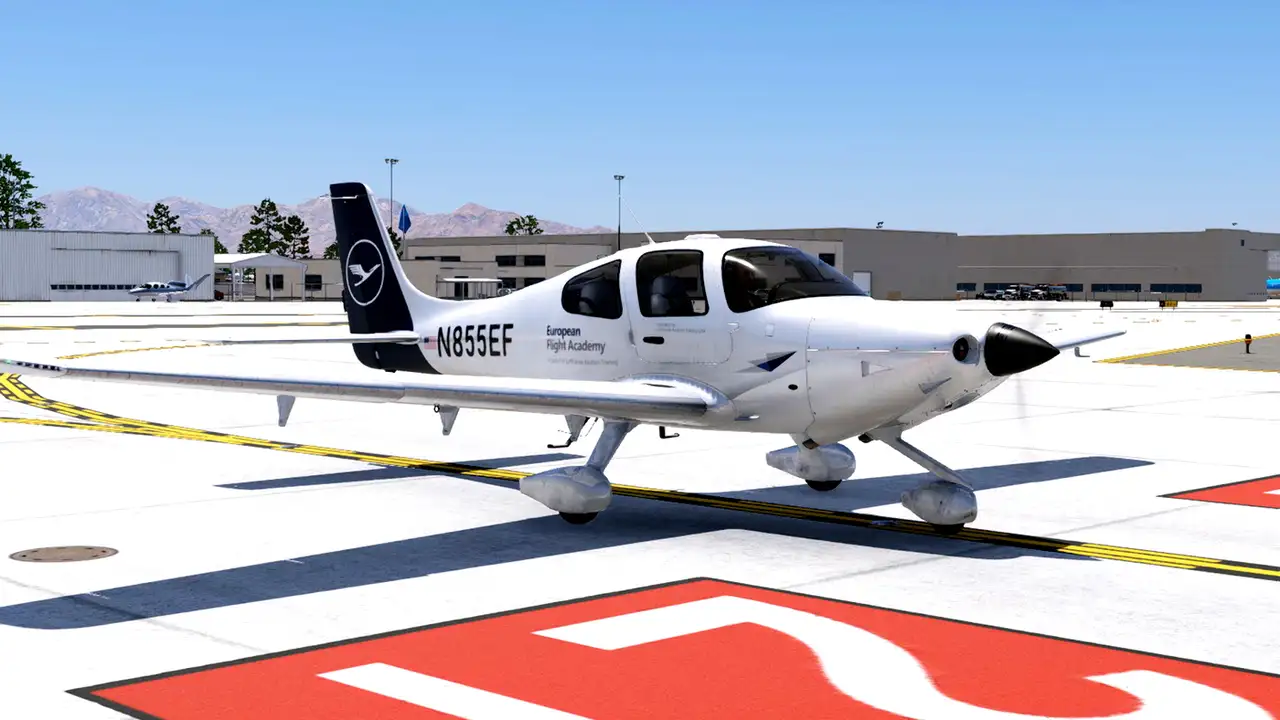
The Cirrus SR22 (widely searched across the flight sim community as the SR22, SR-22, Cirrus Perspective, and Cirrus G-series) stands as the world's best-selling high-performance single-engine piston aircraft. Recognized for pioneering modern general aviation safety through its composite airframe, ergonomic side-yoke controls, and standard Cirrus Airframe Parachute System (CAPS), the SR22 fundamentally redefined personal air transport. Laminar Research completely rebuilt the default Cirrus SR22 as a native flagship showcase for X-Plane 12, taking full advantage of the platform's photometric lighting, advanced blade-element aerodynamics, and revised tire friction physics.
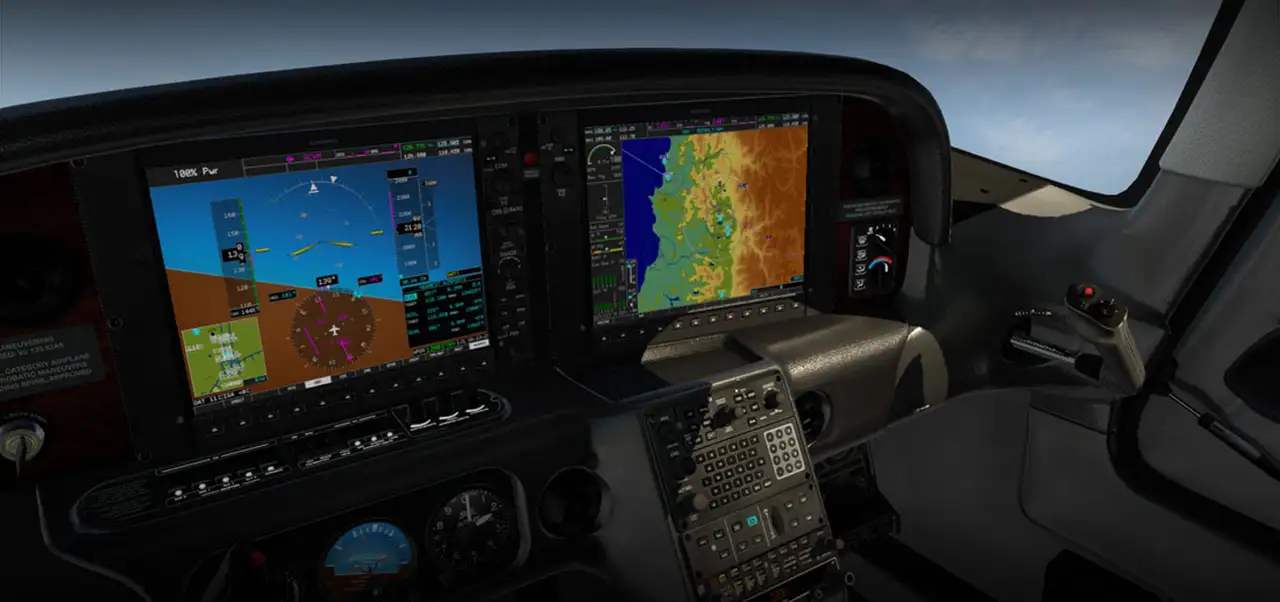
The flight deck is centered around Laminar’s deeply integrated Garmin G1000 suite, customized to mirror the Cirrus Perspective avionics layout. Pilots interact with dual 10-inch primary flight and multifunction displays equipped with synthetic vision, dynamic terrain mapping, airway auto-routing, and digital engine monitoring for the Continental IO-550-N powerplant. The cockpit modeling features high-resolution 4K PBR textures, working circuit breakers, tinted sun visors, and authentic ambient cabin floodlighting that makes nighttime instrument flying comfortable without supplementary third-party lighting plugins.
In X-Plane 12, the SR22 flies with the sleek, slippery characteristics typical of clean composite airframes. Powered by a naturally aspirated 310-horsepower engine spinning a constant-speed propeller, it cruises comfortably between 170 and 180 KTAS at mid-altitudes. Managing energy on descent is critical; without speedbrakes, the aircraft accelerates quickly if pitched down without a corresponding power reduction. Laminar has also modeled the ballistic CAPS parachute system: pulling the overhead red T-handle blows the mechanical hatch cover, fires the rocket motor, and floats the entire airframe safely to the ground beneath a full nylon canopy.
Primary Missions & Operational Roles
-
Point-to-Point IFR Cross-Country Travel: Cruising at 8,000 to 12,000 feet at 175 KTAS, linking regional airports across 600 to 800 nautical mile legs with comprehensive autopilot coupling.
-
Technologically Advanced Aircraft (TAA) Training: Practicing modern glass-cockpit procedures, WAAS LPV GPS approach tracking, VNAV step-down descents, and holding entries via the G1000 interface.
-
Emergency Management & Ballistic Parachute Drills: Practicing engine failures, spatial disorientation recoveries, and full CAPS handle activations to observe post-deployment descent and terrain impact physics.
-
Regional VFR Cross-Country & Island Hopping: Taking advantage of the panoramic forward canopy and crisp flight deck visibility for scenic visual flights into coastal and mountainous airfields.
Key Highlights
- Functional CAPS Ballistic Parachute System: Fully animated overhead emergency handle with explosive hatch jettison, ballistic rocket firing, canopy deployment, and realistic parachute descent dynamics.
- High-Performance Glass Cockpit Avionics: Native Garmin G1000 features Synthetic Vision Technology (SVT), digital Engine Indication System (EIS), VNAV calculations, and full GFC 700 autopilot modes.
- Refined Native XP12 Aerodynamics & Visuals: Features 4K PBR interior materials, dynamic windshield rain and de-icing effects, accurate wing flex, and realistic high-speed cruise performance.
- Included With Core Simulator: Ships natively inside every standard X-Plane 12 installation at zero additional cost, providing immediate access to a modern TAA platform.
- Active Community Repaint Support: Broad selection of high-resolution real-world factory schemes, custom club liveries, and cockpit color variants available on the X-Plane.org forums.
Quirks & Limitations
- Free-Castering Nosewheel Taxi Dynamics: Lacks a mechanical rudder-to-nosewheel steering linkage; low-speed directional control requires deliberate differential braking, which can feel twitchy on entry-level rudder pedals.
- High Energy Retention on Final Approach: Due to low aerodynamic drag, descending while maintaining approach speeds requires early power management; high-and-fast arrivals result in extensive floating down the runway.
- Standard Default Engine Wear Modeling: Does not simulate persistent mechanical degradation, fouled spark plugs, fuel vapor locking, or oil contamination between simulator sessions.
- No Dedicated 3D AviTab Yoke Mount: Flight tracking charts and approach plates must be viewed through the G1000 MFD screens or standard 2D simulator windows rather than a dedicated pilot EFB tablet.
Community Ratings & Feedback
Want to rate this flight deck or leave a review? Log In or Create an FSS Account to post your review.
Be the first simmer to leave a flight deck review and community score for this airframe.
Systems & Integrations
Video Showcases
Help Improve the Directory
Notice missing details, broken links, or incorrect pricing? Submit a correction to our Hangar Mods.
Suggest an Update