
Boeing 720 / 720B
Media Gallery
Editorial Overview & Systems Analysis
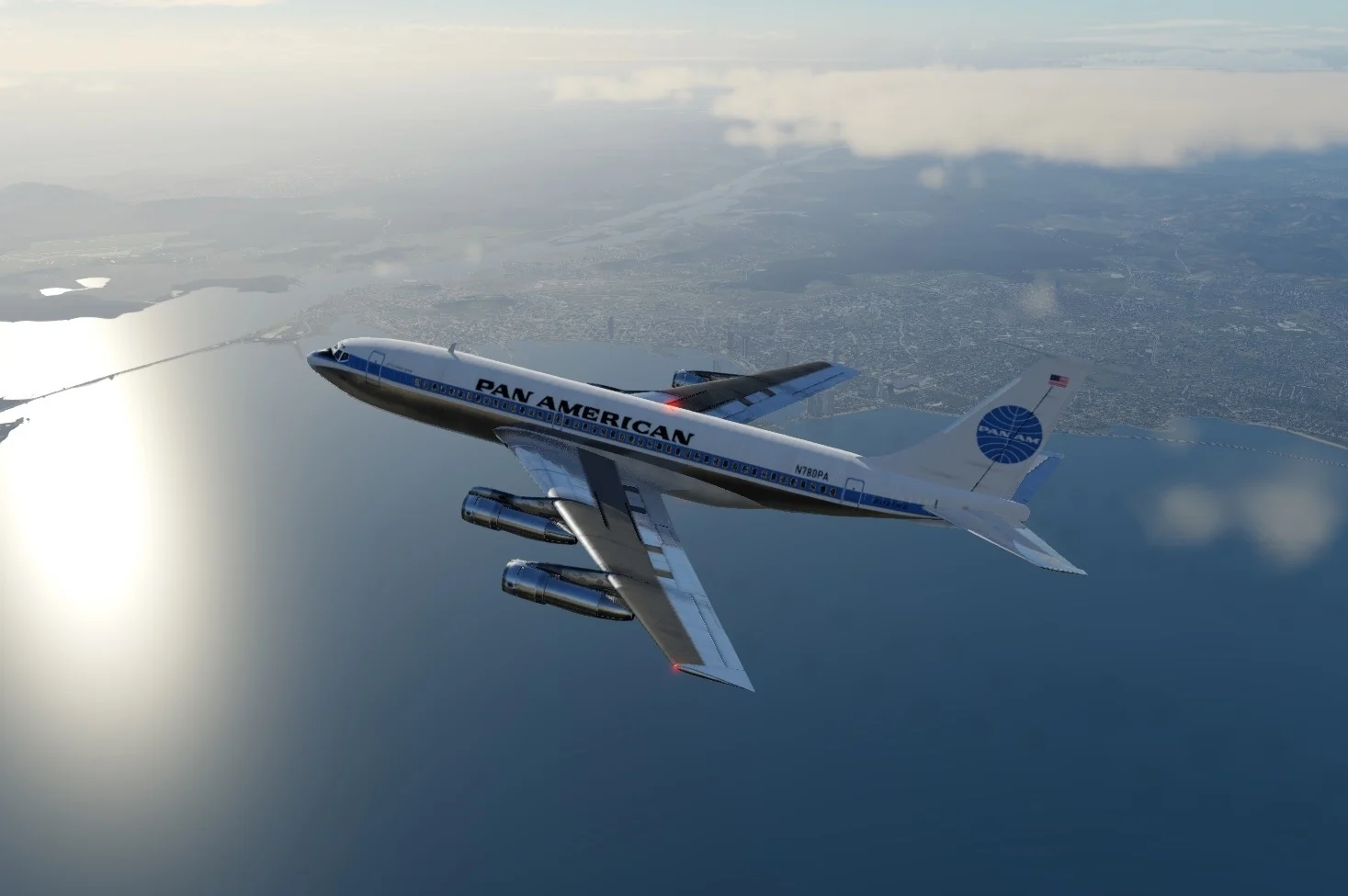
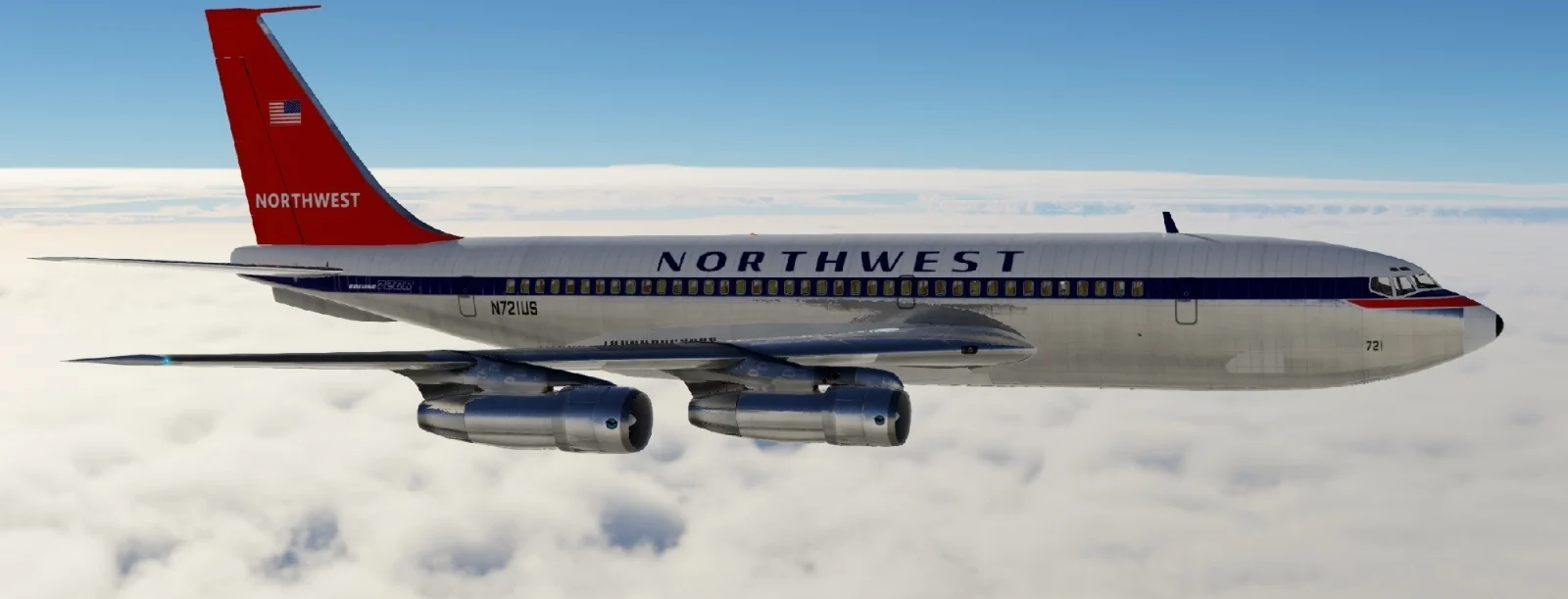
The Boeing 720 and 720B (frequently cataloged as the 720, 720B, B720, B720B, or by its original engineering designation, the Boeing 707-020) holds a distinct place in early commercial jet aviation. Conceived in the late 1950s as a lighter, shorter derivative of the long-haul 707, the 720 was purpose-built to operate out of shorter municipal runways that could not accommodate standard transcontinental quad-jets. With an airframe shortened by roughly nine feet, modified leading-edge wing gloves, and reduced takeoff weight, United Airlines and American Airlines embraced the type for medium-range trunk routes. In X-Plane 12, freeware developer Shenshee has resurrected this classic four-engine jetliner, giving classic jet enthusiasts a flyable piece of mid-century jetliner history at zero cost.
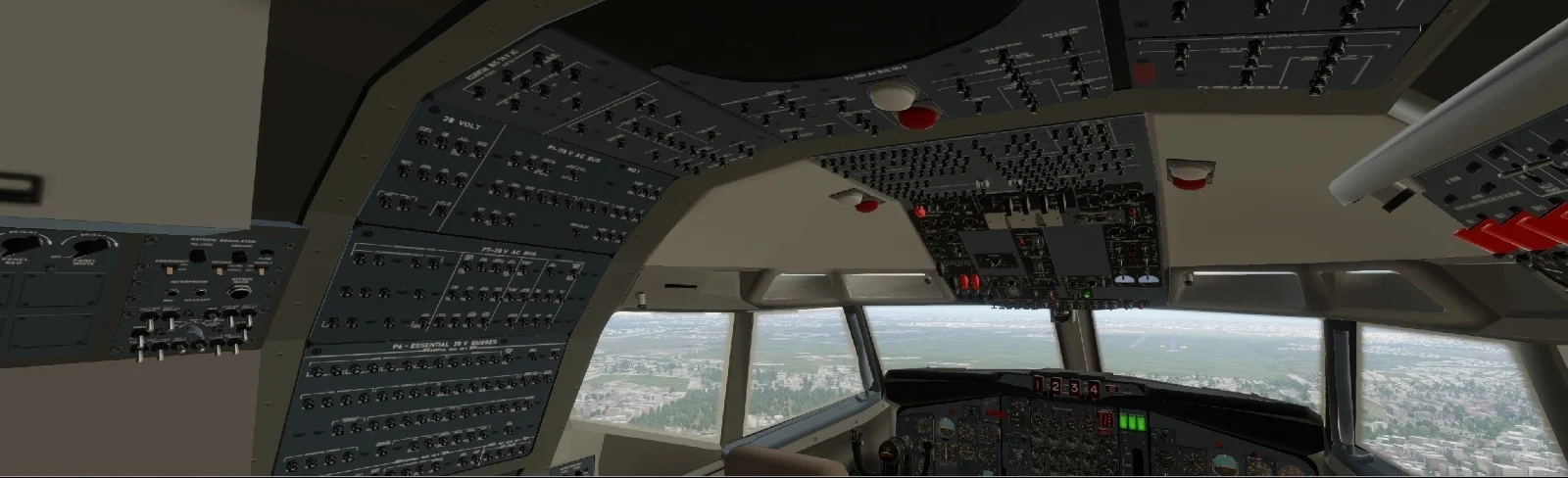
Visually, the project relies heavily on traditional Plane Maker airframe architecture paired with custom external elements and an authentic 3D cockpit shell rather than a bespoke high-poly mesh modeled in external software like Blender. Despite these geometric limitations, Shenshee has continually refined the flight deck with custom night lighting, functioning dials, and separate model variants for both the early turbojet-powered 720 (Pratt & Whitney JT3C) and the later turbofan-equipped 720B (Pratt & Whitney JT3D). The cockpit environment captures the mechanical era of three-crew flight decks, populated by rows of analog tapes, mechanical gyros, and engine instruments.
In X-Plane 12, the flight dynamics demonstrate a noticeable distinction between engine configurations. The early JT3C turbojet model requires prolonged takeoff rolls, gentle initial climb gradients, and continuous power management to prevent altitude decay. In contrast, the JT3D turbofan-powered 720B offers energetic climb performance and responsive thrust response. While it does not feature deep study-level failure modeling or proprietary custom code, Shenshee's 720 provides an accessible, fun platform for hand-flying raw VOR-to-VOR radials and golden-era airliner routes.
Primary Missions & Operational Roles
-
Mid-Century Domestic Trunk Routes: Recreating historic 1960s intercity routes between medium-length runways like Chicago Midway, New York LaGuardia, and Dallas Love Field.
-
Raw Data VOR/ADF Navigation Practice: Operating without glass map displays or modern flight management computers, forcing pilots to track airways using dual VOR needles, DME distance readouts, and non-directional beacons.
-
Classic Four-Engine Thrust Management: Practicing early turbojet energy control by managing slow spool times, high fuel burn rates, and clean aerodynamic descent planning.
-
VIP & Rock Tour Charter Flights: Flying classic executive charter operations, paying homage to famous private Boeing 720s such as Led Zeppelin's legendary 1970s touring jet, "The Starship."
Key Highlights
- Dual Turbojet & Turbofan Engine Variants: Includes both the JT3C turbojet 720 and the more powerful JT3D turbofan 720B, each with authentically tuned Plane Maker performance curves.
- Complete Freeware Accessibility: Delivered as a community freeware project, offering four-engine vintage jet operations without payware financial investment.
- Continuous Active Developer Updates: Regularly patched to maintain compatibility with X-Plane 12 lighting engines, gear geometries, and modern sim updates.
- Vibrant Night Lighting & Cockpit Atmosphere: Features well-tuned cockpit floodlighting, readable night instrument illumination, and visible landing light beams.
- Active Third-Party Community Mod Base: Supported by community members with dedicated PBR cockpit texture overhauls, instrument glass mods, and custom sound packs.
Quirks & Limitations
- Plane Maker Geometric & Visual Modeling: Built using native Plane Maker modeling techniques, resulting in segmented fuselage curves, simplified wing roots, and noticeable cockpit window shaping discrepancies compared to modern Blender-modeled payware.
- Casual System Depth: Relies primarily on default X-Plane electrical, hydraulic, and pneumatic architectures rather than custom logic scripts or deep mechanical degradation.
- No Native Modern Navigation or Tablet: Lacks built-in SimBrief datalink, GPS glass displays, or 3D AviTab integration; pilots must rely on classic radio navigation or pop-up 2D tools.
- Ground Steering Setup Requirement: Requires users to correctly map their nosewheel tiller or verify simulator steering assignments, as nosewheel deflection can be unresponsive if default ground steering toggles are not configured.
Community Ratings & Feedback
Want to rate this flight deck or leave a review? Log In or Create an FSS Account to post your review.
Be the first simmer to leave a flight deck review and community score for this airframe.
Systems & Integrations
Video Showcases
Help Improve the Directory
Notice missing details, broken links, or incorrect pricing? Submit a correction to our Hangar Mods.
Suggest an Update