
Boeing 767-300ER (FlightFactor)
Editorial Overview & Systems Analysis
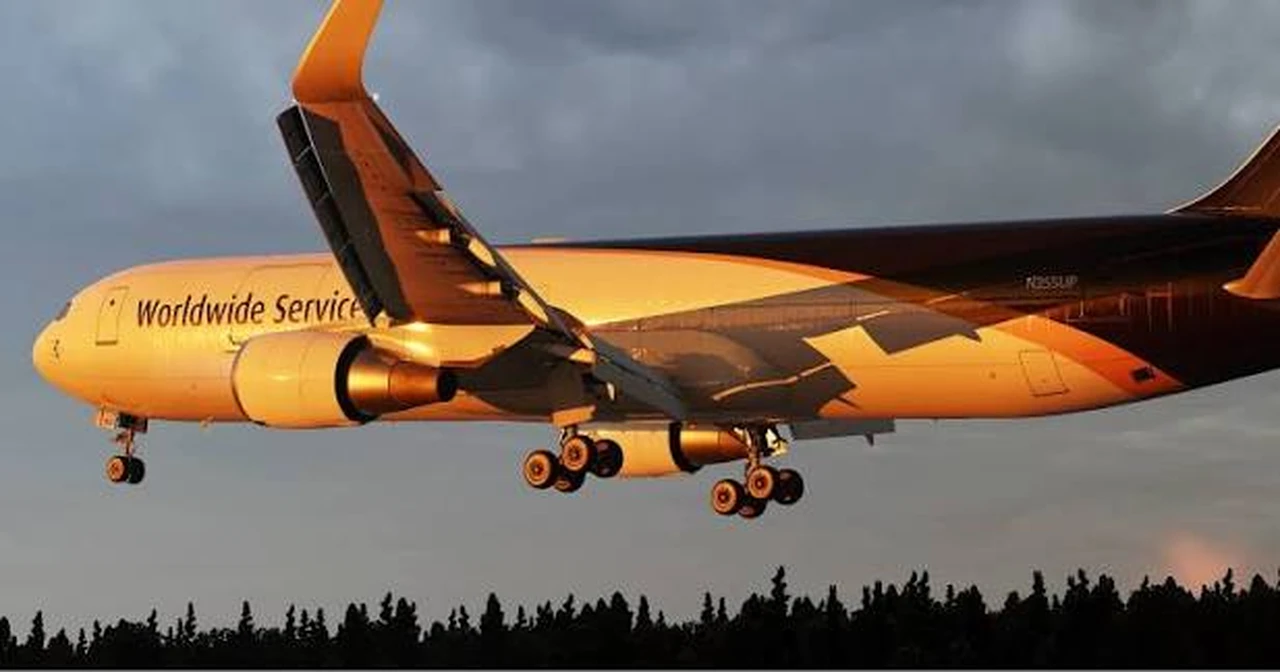
The FlightFactor Boeing 767-300ER brings commercial aviation’s quintessential twin-aisle pioneer to X-Plane with benchmark study-level systems fidelity. Developed by Boeing concurrently with the narrowbody 757, the 767 was engineered around a shared common pilot type rating, identical cockpit operational philosophy, and advanced transition-era avionics. More importantly, the 767 made commercial aviation history as the aircraft that proved and popularized Extended-range Twin-engine Operational Performance Standards (ETOPS-120 and ETOPS-180)—single-handedly dismantling the regulatory monopoly held by trijets and quadjets across transatlantic corridors. Flown extensively by carriers like Delta, United, American, British Airways, ANA, LATAM, and Austrian Airlines—as well as anchoring the global express freight fleets of FedEx, UPS, and Amazon Prime Air—the 767 remains an iconic, versatile widebody workhorse.
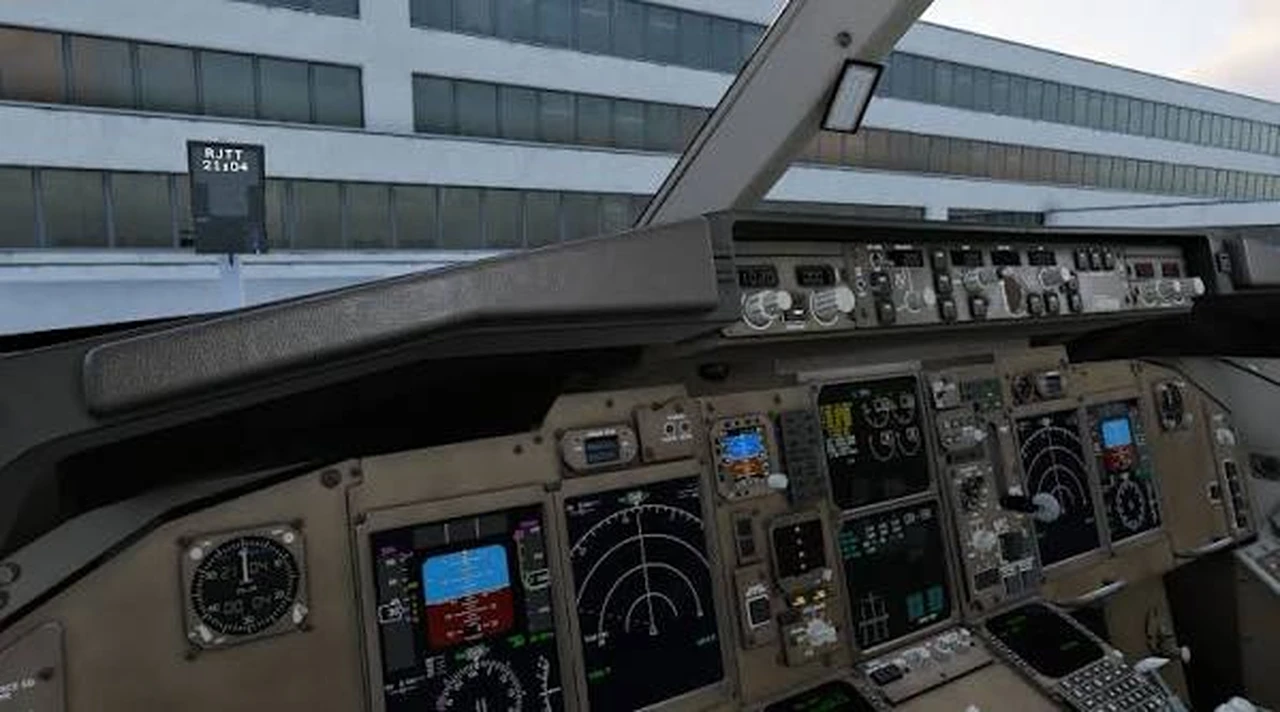
FlightFactor’s rendition in X-Plane 12 faithfully reproduces the distinct mechanical and aerodynamic personality of Boeing's medium widebody. Virtual captains can dispatch three distinct powerplant types: the General Electric CF6-80C2, the Pratt & Whitney PW4060, and the Rolls-Royce RB211-524H, each simulated with bespoke thermodynamic startup cycles, spool rates, and fuel flow curves. The cockpit faithfully models the transition-era cathode-ray tube (CRT) Electronic Flight Instrument System (EFIS) featuring Electronic Attitude Director Indicators (EADI) and Horizontal Situation Indicators (EHSI), coupled with dual independent Pegasus Flight Management Computers (FMC). For operators simulating modernized airline flight decks, FlightFactor also offers a modular Flat Panel Display System (FPDS) upgrade.
Under the surface, systems depth is modeled to component-level mechanics. The aircraft simulates three independent hydraulic systems (Left, Center, Right) with functioning Ram Air Turbine (RAT) deployment, authentic electrical bus-tie logic with automatic generator load shedding, triple Inertial Reference Systems (IRS) with realistic alignment drift, and interactive circuit breaker panels. Pre-flight dispatch, payload staging, and turnaround operations are governed by a window-mounted iPad Electronic Flight Bag (EFB) that supports direct SimBrief operational flight plan imports, interactive passenger/cargo loading, pushback tug controls, real-time takeoff/landing reference speed calculations, and full AviTab integration. Backed by stable X-Plane 12 aerodynamic polars and an immersive multi-channel sound suite, the FlightFactor 767 stands as an essential transatlantic flagship for any serious long-haul flight simulator hangar.
Primary Missions & Operational Roles
-
Transatlantic & Transcontinental Widebody Corridors: Flying classic 6-to-10-hour oceanic flag routes connecting European and North American gateways (e.g., London Heathrow to Boston, Frankfurt to New York JFK, or Chicago O'Hare to Dublin).
-
Heavy-Duty Express Overnight Cargo (with Extended Upgrade): Operating high-tempo package freight schedules for FedEx, UPS, DHL, and Amazon Air virtual fleets utilizing the 767-300F main cargo deck.
-
High-Density Domestic Trunk & Hub Feed: Executing heavy domestic routes between congested airline hubs where passenger volume exceeds narrowbody capacity (e.g., Atlanta to Salt Lake City, or Tokyo Haneda to Sapporo).
-
Transition-Era Dual-FMC Oceanic Operations: Mastering classic glass-cockpit line operations, flying coupled LNAV/VNAV step climbs, managing ETOPS Equal Time Points (ETP), and executing triple-channel CAT IIIb autolands.
Key Highlights
- Benchmark study-level Boeing widebody simulation featuring General Electric CF6, Pratt & Whitney PW4000, and Rolls-Royce RB211 engine options with distinct sound and thrust dynamics.
- Deep systems architecture modeling complete triple-circuit hydraulics, independent AC/DC electrical distribution buses, functional Ram Air Turbine (RAT), and realistic IRS gyro alignment.
- Intuitive interactive Electronic Checklist (ECL) on the EFB tablet that senses physical cockpit switch positions and automatically verifies procedural steps.
- Feature-packed iPad EFB supporting direct SimBrief operational flight plan imports, dynamic weight and balance staging, runway performance calculations, and AviTab chart viewing.
- Stable native X-Plane 12 flight dynamics capturing authentic widebody inertia, control wheel steering (CWS), and forgiving landing flare characteristics.
- Comprehensive ground servicing environment with interactive pushback tugs, baggage loaders, catering trucks, and GPU/air start cart connections.
- Flexible expansion ecosystem allowing simmers to expand to the Extended package (adding the short-body 767-200ER and 767-300F Freighter) or the modern Flat Panel Display System (FPDS).
Quirks & Limitations
- Legacy cockpit 3D geometry and texturing in secondary corners reflect its origin as an upgraded XP11 airframe rather than a clean-sheet native XP12 scratch build.
- Multi-display rendering and complex background C++ plugin threads demand solid CPU single-core performance and at least 8 GB of GPU video memory for smooth frame rates.
- Layered package pricing structure ($79.00 base, $99.00 Extended, $119.00 Global, $145.00 Global Plus) can be confusing for prospective buyers seeking specific airframes or glass retrofits.
- Large physical dimensions and swept wing ground-effect require proactive energy planning on approach to avoid floating down the runway when crossing the threshold with excess airspeed.
Community Ratings & Feedback
Want to rate this flight deck or leave a review? Log In or Create an FSS Account to post your review.
Be the first simmer to leave a flight deck review and community score for this airframe.
Purchase & Download
X-Plane.org storeSystems & Integrations
Video Showcases
Help Improve the Directory
Notice missing details, broken links, or incorrect pricing? Submit a correction to our Hangar Mods.
Suggest an Update