
Bellanca Aircruiser 66-75
Editorial Overview & Systems Analysis
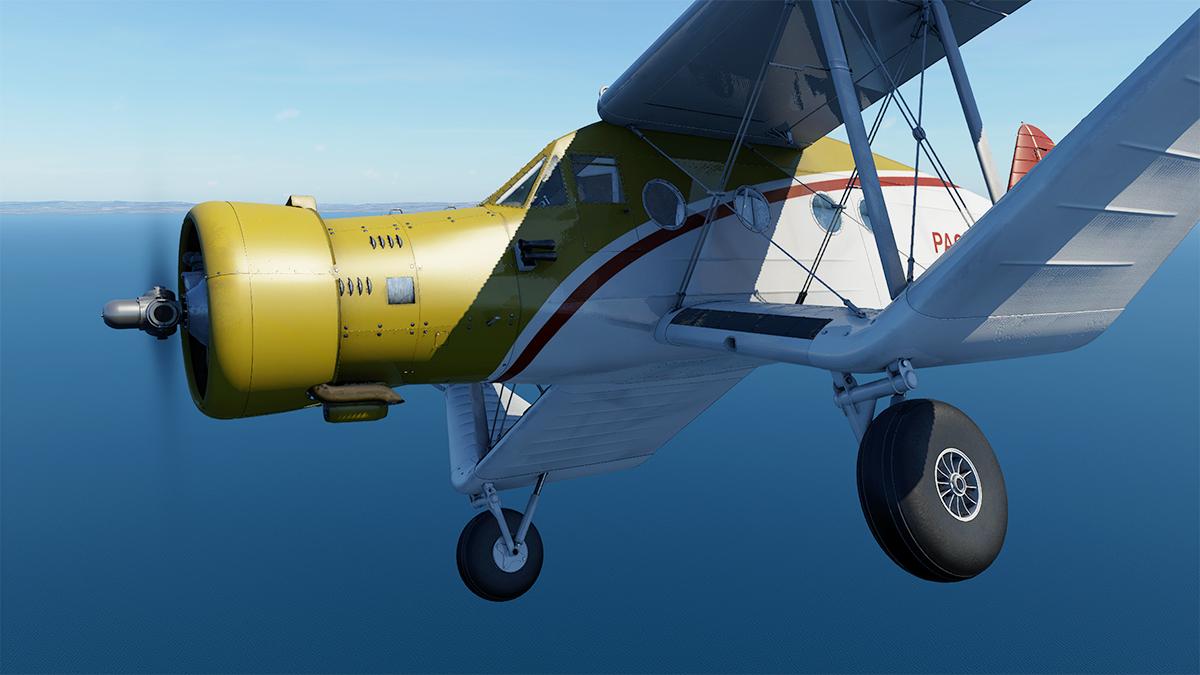
Nicknamed "The Flying W" due to its distinctive inverted sesquiplane strut configuration, the Bellanca Aircruiser represents one of the most eccentric and aerodynamically bold commercial aircraft ever built. Conceived by Italian-American aeronautical pioneer Giuseppe Mario Bellanca during the Golden Age of Aviation, the Aircruiser was engineered around an uncompromising core philosophy: make every structural component of the airframe generate lift. Rather than treating wing struts as parasitic dead weight, Bellanca contoured the massive external bracing struts into lifting airfoils with wide chord profiles. The resulting 66-75 variant, powered by a thundering 730–760 horsepower Wright Cyclone radial engine, earned a reputation as the "Flying Garden Shed" that could lift a payload greater than its own empty weight.
Originally released as a premium payware simulation by Hangar 23 before being gifted to the flight simulation community as full freeware in June 2025, the Bellanca Aircruiser 66-75 is a tour de force of vintage character in X-Plane 12. Modeled with high-resolution PBR textures, authentic fabric rippling, and detailed mechanical linkages, the add-on includes both standard wheeled gear (with removable streamlined wheel pants) and a heavy twin-float seaplane variant. Hangar 23 partnered with Mango Studios to author an FMOD soundset that reproduces the visceral, low-frequency rumble of a big 9-cylinder Wright radial. With authentic engine operating quirks—including a two-stage starter requiring boost-coil ignition, dynamic oil buildup smoke on cold starts, and optional modern GPS/autopilot integration—the Aircruiser is one of the most distinctive classic bush and transport platforms available for X-Plane 12.
Primary Missions & Operational Roles (Mission Ideal)
-
Remote Canadian Bush & Mining Operations: Recreating the rugged, historic Canadian bush operations of Mackenzie Air Service and Canadian Airways in the Northwest Territories, flying heavy ore, drilling machinery, and provisions into unimproved ice or gravel runways.
-
Sub-Arctic Floatplane Expeditions: Utilizing the twin-float configuration to explore the deep lakes and river networks of Ontario, Alaska, and the Yukon without runway infrastructure.
-
Golden Age Regional Feeder Transport: Flying 1930s-era passenger hops between early commercial airfields across the American Midwest, navigating via dead reckoning, low-frequency radio ranges, or raw-data pilotage.
-
High-P-Factor Stick-and-Rudder Training: Mastering taildragger ground loops, adverse yaw, and low-speed floatplane water taxies under severe crosswinds.
Key Highlights
- Exceptional Payware-Grade Quality as Freeware: Originally sold as a commercial payware release and maintained by developer Hangar 23 as high-tier community freeware.
- Unmistakable "Flying W" Lifting-Strut Aerodynamics: Accurately models Bellanca’s unusual lifting struts, providing remarkable low-speed lift and short takeoff and landing (STOL) capability.
- Dual Underگفت Undergear Configurations: Ships with both conventional tailwheel landing gear (with toggleable vintage wheel pants) and heavy floatplane variants with retractable water rudders.
- Mango Studios Radial FMOD Audio: High-fidelity Wright Cyclone acoustic profile featuring authentic idle clatter, deep radial hum under climb power, and cough-and-crank cold starts.
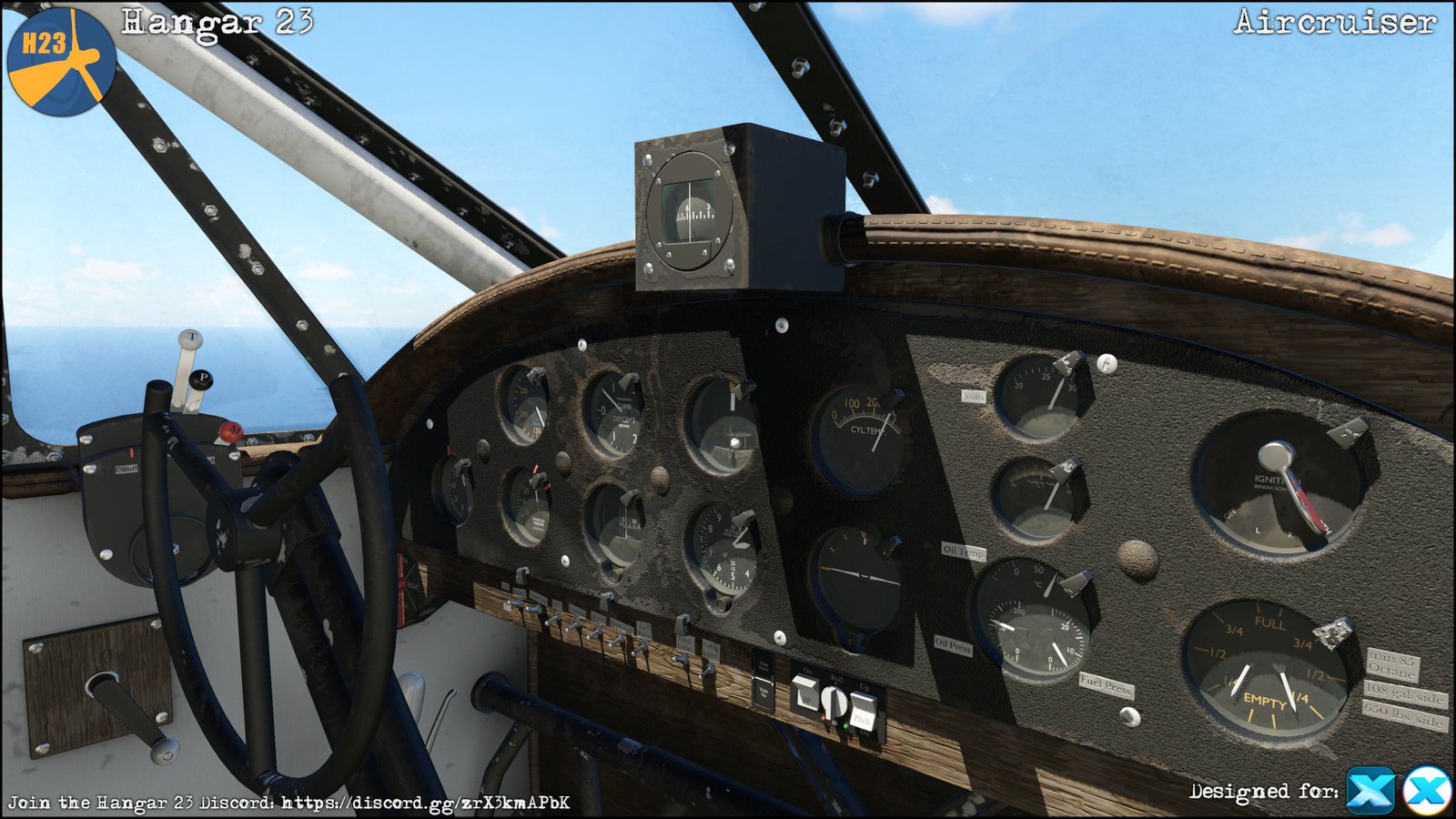
- Versatile Cockpit Customization: Offers authentic period-accurate steam instrumentation with switchable clipboard weight-and-balance logic, simple heading/pitch autopilot, and drop-in support for Laminar GNS 530 or Reality XP GTN 750 units.
Quirks & Limitations
- Challenging Tailwheel Ground Handling: High center of gravity, substantial torque and P-factor from the 760 HP Wright Cyclone, and narrow gear track demand active, disciplined rudder inputs during takeoff and rollout.
- Multi-Stage Starting Procedure: Requires activating the auxiliary "Boost Coil" toggle alongside the starter crank; failing to energize the coil will cause the engine to crank endlessly without catching spark.
- Modest High-Altitude Cruise Speeds: Despite immense lifting capability, the large frontal cross-section and thick airfoil struts generate high parasitic drag, settling cruise speeds around 140–150 mph.
Community Ratings & Feedback
Want to rate this flight deck or leave a review? Log In or Create an FSS Account to post your review.
Be the first simmer to leave a flight deck review and community score for this airframe.
Purchase & Download
X-Plane.org DownloadsSystems & Integrations
Video Showcases
Help Improve the Directory
Notice missing details, broken links, or incorrect pricing? Submit a correction to our Hangar Mods.
Suggest an Update