
Boeing 737-800 (ZIBO)
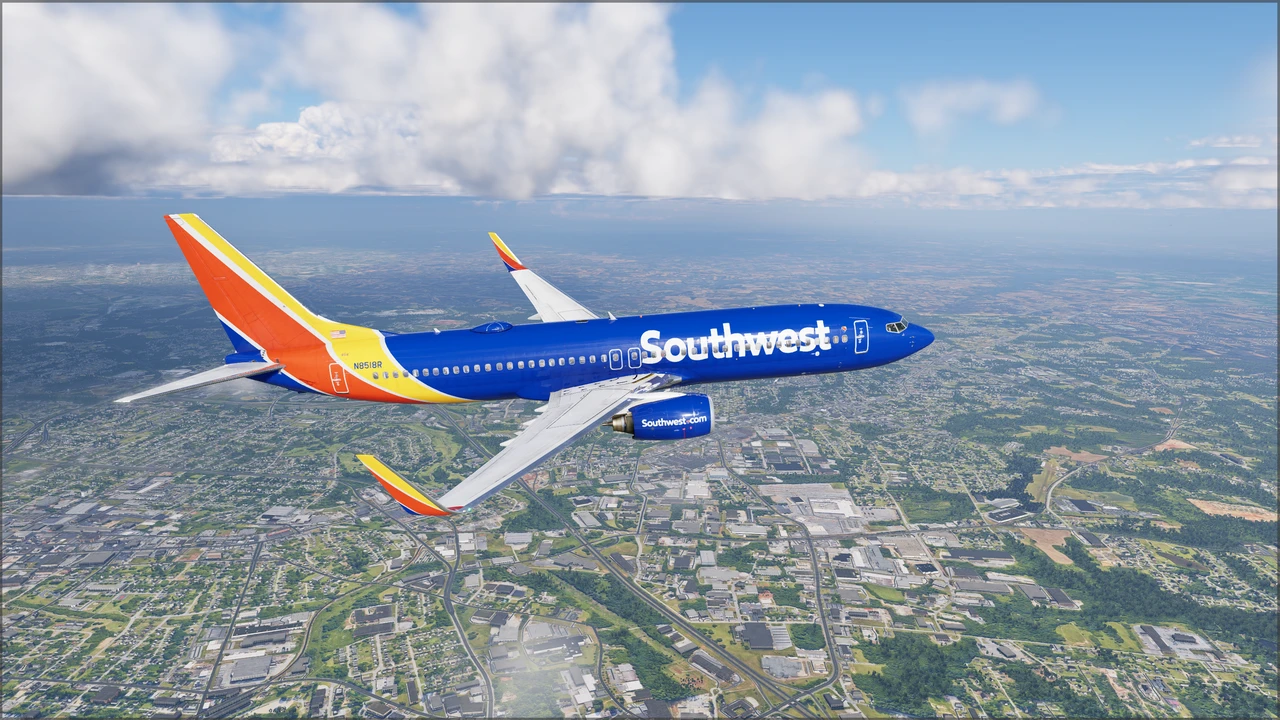
Media Gallery

Editorial Overview & Systems Analysis
The Zibo Mod Boeing 737-800X is widely recognized as the single most influential community-driven project in the history of civilian desktop flight simulation. Born as an ambitious effort by Slovak developer Lubos Zibek to refine the default Laminar Research 737-800, the project evolved into an exhaustive, near study-level recreation of the world's most ubiquitous twinjet airliner. Over years of continuous, disciplined development supported by active 737 line captains, type-rated instructors, and sound engineers, the Zibo Mod redefined community expectations for freeware—delivering systems depth, flight physics authenticity, and procedural rigor that rival high-end payware airliners.
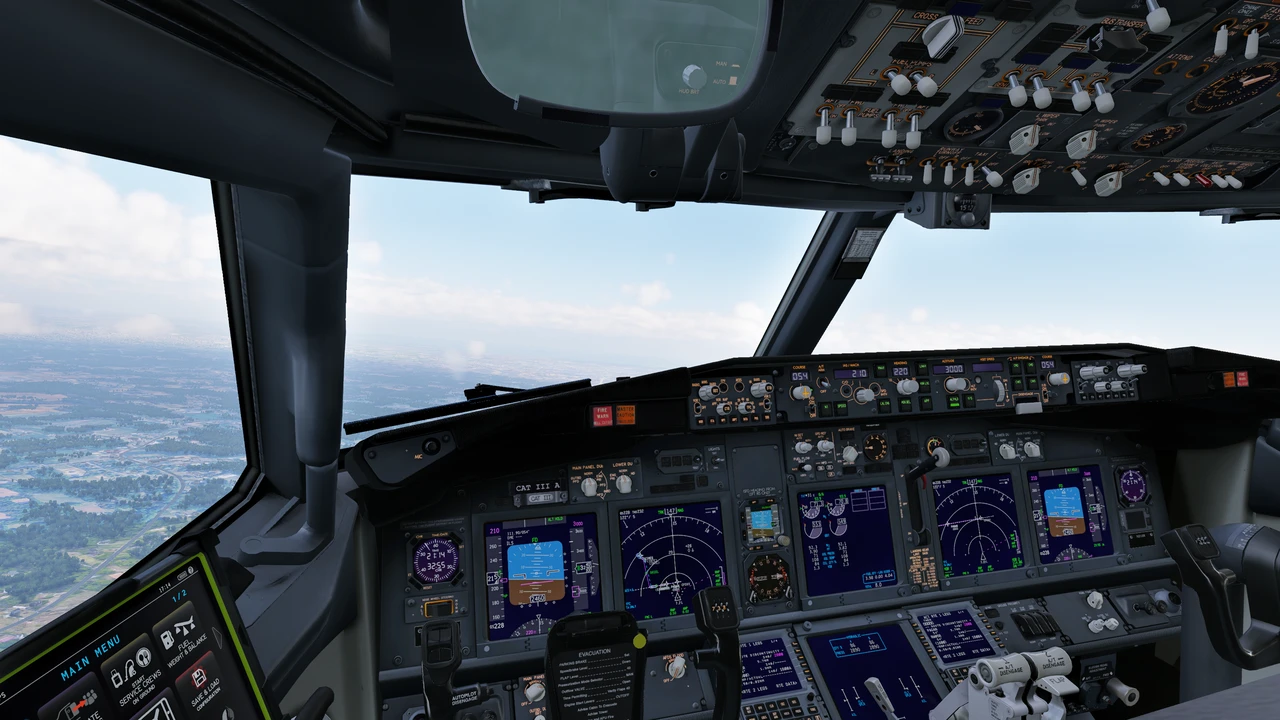
Step into the flight deck, and the difference from default aircraft is immediate. The avionics suite is powered by dual independent Flight Management Computers (FMCs) with cross-talk synchronization, authentic lateral navigation (LNAV), and sophisticated vertical navigation (VNAV) that calculates exact top-of-climb, step-climb fuel burn, and geometric descent paths. Every subsystem operates from functional schematics: multi-bus AC and DC electrical routing with automatic bus transfer logic, dual-loop fire detection, an authentic pneumatic duct and bleed air system, and cabin pressurization controllers that react dynamically to cabin rate-of-climb schedules. Furthermore, the cockpit features interactive circuit breaker panels, custom Head-Up Guidance (HGS/HUD) with low-visibility takeoff and landing symbology, and an extensive library of resettable mechanical and electrical failures.
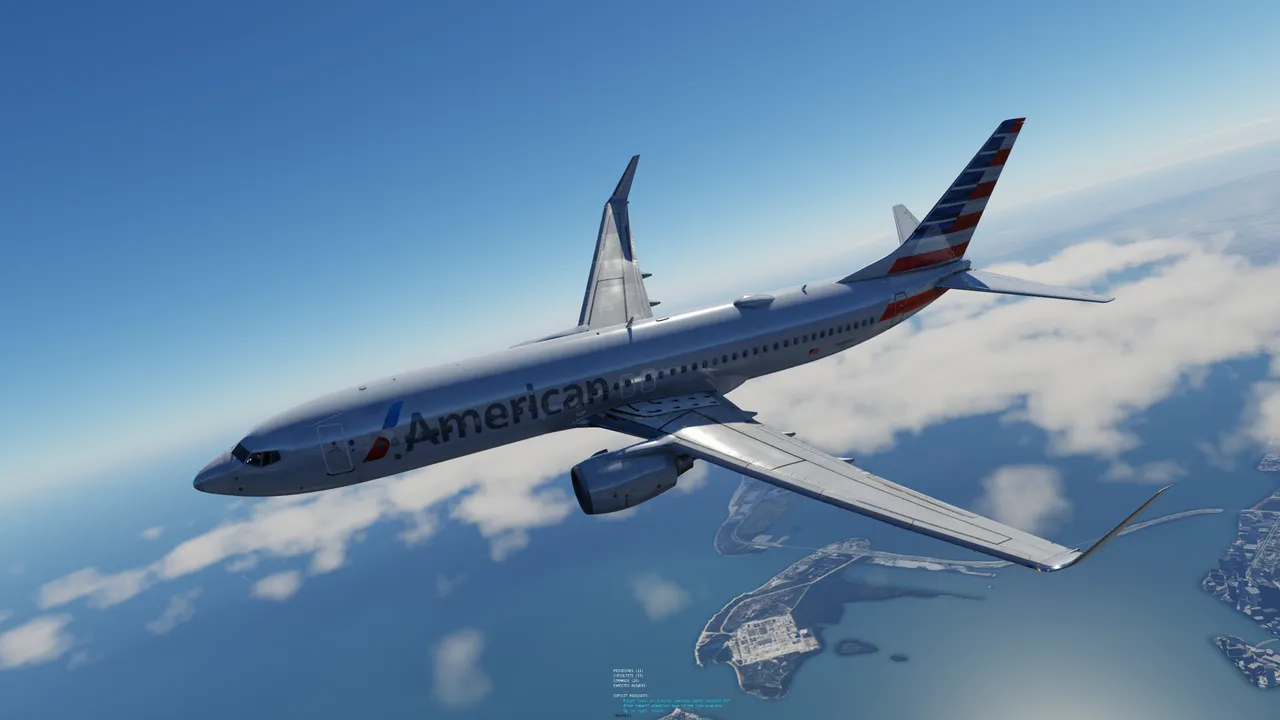
In native X-Plane 12, the aircraft takes full advantage of advanced photometric flight deck backlighting, volumetric windshield rain and ice accretion, and refined Blade Element Theory aerodynamics. Hand-flying the Zibo 737 reveals the distinctive, tactile responsiveness celebrated by real-world Boeing crews: authoritative control column heft, predictable pitch-power coupling from the low-slung CFM56-7B engines, and true aerodynamic ground-effect cushioning on short final. Flight operations are centered around a feature-dense window-mounted Electronic Flight Bag (EFB) tablet that manages direct SimBrief flight plan parsing, interactive passenger and cargo loading, pushback tug operations, real-time takeoff and landing reference speed calculations, and airframe customization—including blended winglets, modern Split Scimitar winglets, eyebrow window plugs, and carbon brake packages. Supported by an immersive multi-layered FMOD acoustic package that reproduces the CFM56 "buzzsaw" fan blade harmonics and cockpit airflow acoustics, the Zibo 737-800X remains the definitive narrowbody benchmark for X-Plane.
Primary Missions & Operational Roles
-
Global High-Density Continental Airline Rotations: Flying scheduled 1-to-5 hour airline sectors connecting major international and domestic hubs (e.g., Chicago O'Hare to Denver, London Stansted to Rome Ciampino, or Sydney to Melbourne).
-
Disciplined VATSIM and IVAO Network Line Operations: Executing authentic airline line flights on online air traffic control networks requiring exact RNP/RNAV adherence, holding pattern execution, speed constraints, and coupled CAT IIIb autolands.
-
Type Rating & Multi-Crew Airline Training: Practicing real-world Boeing Flight Crew Operating Manual (FCOM) standard operating procedures, flows, QRH non-normal checklists, and single-engine failure drills.
-
Constrained Short-Field Operations: Operating in and out of performance-critical runways (such as Innsbruck, Toncontín, or Santos Dumont) utilizing the optional Short Field Performance (SFP) package and carbon brakes.
-
Multi-Leg Rapid Turnaround Operations: Managing high-tempo 30-minute gate turnarounds using the EFB tablet for passenger deplaning, automated turnaround refueling, load sheet calculation, and preflight flows.
Key Highlights
- Zero tolerance for procedural shortcuts; improper engine start sequences, incorrect bleed air panel configurations, or mismatched FMC gross weights will trigger authentic master caution alerts and autopilot disconnects.
- Pitch sensitivity during takeoff rotation and landing flare; rotating faster than 2 to 3 degrees per second or flaring beyond 8.4 to 10 degrees near the runway surface risks dragging the aft fuselage tail skid.
- Fast-paced development cadence means frequent updates; pilots updating manually without using automated tools like SkunkCrafts must occasionally manage clean installs to prevent plugin conflicts.
- Visual model retains portions of the core Laminar Research 3D fuselage structure, which exhibits slightly simpler poly-count detailing in secondary areas compared to newer ground-up payware models.
- Supports aircraft saving states while in flight.
Quirks & Limitations
- Installation and update management can be intimidating for newcomers, often requiring manual folder management or third-party updater utilities.
- Unforgiving procedural discipline; failing to follow real-world flows (such as pressurization or bleed air configuration) will trigger loud warnings or autopilot disconnects.
- Rapid, frequent update cycles mean occasional minor bugs or regressions can slip into new releases before quick follow-up patches.
- The circuit breaker panel is strictly cosmetic.
Community Ratings & Feedback
Want to rate this flight deck or leave a review? Log In or Create an FSS Account to post your review.
It flies well, even down to dropping a bit after takeoff rotation. Rain is modeled, weather radar is fully implemented, checklists are included, and ground operations are animated. It's the best no money I ever spent on an aircraft.
Purchase & Download
Zibo's Official Download Google DriveSystems & Integrations
Video Showcases
Help Improve the Directory
Notice missing details, broken links, or incorrect pricing? Submit a correction to our Hangar Mods.
Suggest an Update