
Beechcraft Bonanza V35
Editorial Overview & Systems Analysis
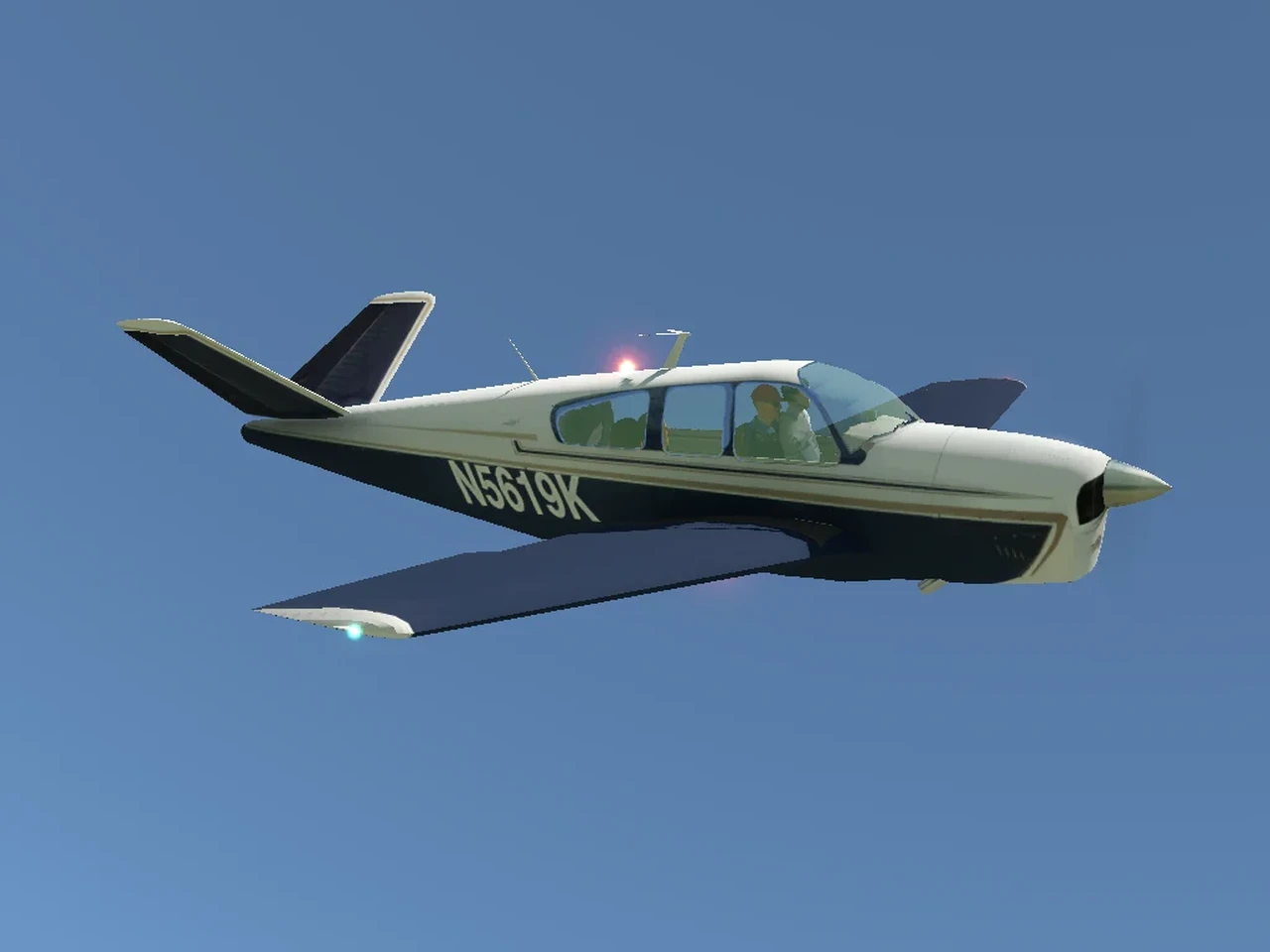
The Beechcraft Bonanza Model 35 (universally renowned across aviation lore and flight simulation circles as the V-tail Bonanza, Bonanza V35, Beech V35, Fork-Tailed Doctor Killer, and dvt Bonanza) is an enduring icon of American post-war civil aviation. Introduced in 1947 by the Beech Aircraft Corporation of Wichita, Kansas, the Bonanza made aviation history with its distinctive V-tail empennage, retractable tricycle landing gear, and high cruise speeds. For flight simmers seeking a freeware rendition of this classic design in modern simulators, community developer dvt modernized and ported Larry Cole’s classic freeware model into an updated package for X-Plane 12.
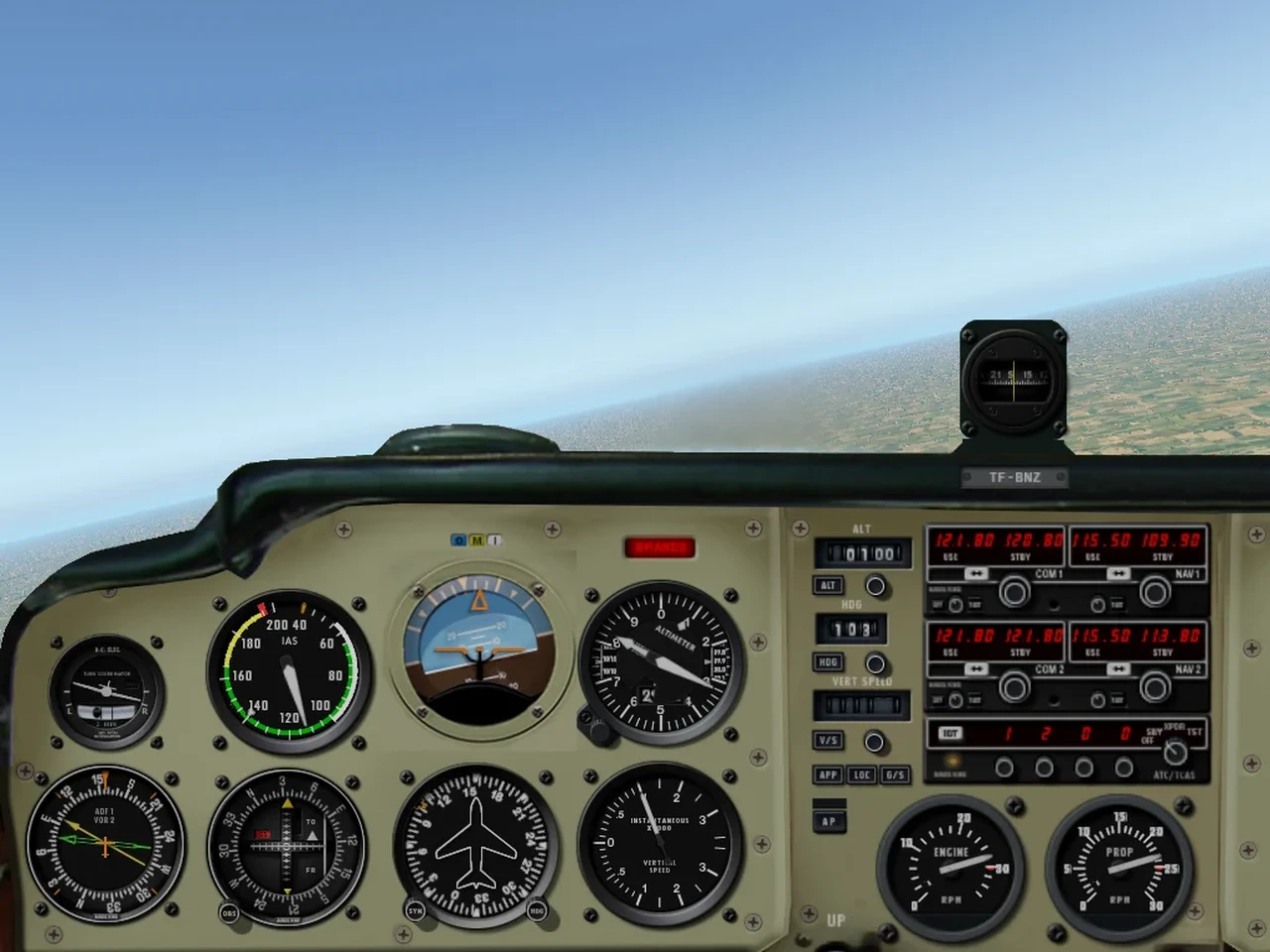
The flight deck captures the character of a late-1960s owner-flown single. Simmers sit before an analog pilot panel equipped with primary flight instruments, engine gauges, and classic nav/comm radios. Developer dvt updated the panel logic and flight model parameters to function inside X-Plane 12's updated physics engine, adding an artificial stability (Art Stab) toggle switch to help dampen characteristic yaw wandering during low-speed taxi runs and high-altitude cruising. The external 3D model faithfully renders the Bonanza's low-wing profile, sleek engine cowl, and articulated "ruddervators"—the coupled tail surfaces that act simultaneously as elevators for pitch and rudders for yaw.
In X-Plane 12, the V35 handles with agile speed. Powered by a 285-horsepower Continental IO-520 engine, the airframe climbs quickly and achieves an authentic cruise speed of 170 to 177 KTAS at 6,500 to 8,500 feet. True to the real-world V-tail's flight dynamics, the absence of a conventional vertical stabilizer produces a noticeable "Bonanza wag" (minor yaw oscillation) in turbulent air, making active rudder trim or engaging the stability toggle useful during long cruise legs. For casual simmers seeking a fast, classic retro cruiser without payware complexity, this freeware port offers an accessible way to experience one of aviation's most recognized silhouettes.
Primary Missions & Operational Roles
-
Classic 1960s High-Speed VFR Cross-Country: Cruising between 5,500 and 9,500 feet at 175 KTAS, connecting regional airfields across 500 to 750 nautical mile legs.
-
V-Tail Aerodynamic & Ruddervator Familiarization: Experiencing the coupled pitch-yaw control dynamics and subtle Dutch-roll characteristics inherent to the Beechcraft V-tail empennage.
-
Raw-Data VOR & Traditional Pilotage: Navigating cross-country routes using visual pilotage, paper sectionals, and classic analog VOR radial tracking without moving-map GPS assistance.
-
Hop-In-and-Fly Vintage Ramp Cruising: Providing an accessible, zero-complexity freeware single for quick visual pattern circuits and scenic touring.
Key Highlights
- Modeled directly after Austin Meyer’s personal aircraft (N844X), benefiting from first-hand aerodynamic validation and flight test tuning.
- Blistering performance envelope, reproducing the Evolution’s 300+ KTAS high-altitude cruise and 3,000+ fpm climb performance.
- Built natively for X-Plane 12 with photometric cockpit displays, dynamic windshield rain shedding, and airframe icing effects.
- Dual Laminar Garmin G1000 glass flight deck configured with dedicated PT6A turbine instrument displays and full autopilot coupling.
- Included at zero extra cost with every copy of X-Plane 12, requiring zero license managers, third-party plugins, or installer overhead.
- Exceptionally lightweight hardware footprint, delivering fluid and consistent frame rates across complex add-on sceneries.
Quirks & Limitations
- Simplified Pilot-Side Instrumentation Only: The pilot-side flight gauges and radios are functional, but copilot-side panel dials are static visual fixtures.
- Continuous Autopilot Pitch Oscillation: In turbulent air or high cruise speeds, the default autopilot pitch-hold mode can develop a mild vertical hunt, requiring manual trim adjustment.
- Legacy Audio Engine: Uses standard legacy sound files rather than a native 3D FMOD2 soundscape, resulting in uniform interior audio.
- Yaw Sensitivity in Atmospheric Turbulence: The V-tail configuration experiences typical low-amplitude yaw hunting ("wag") in convective air, demanding proactive rudder trim control.
Community Ratings & Feedback
Want to rate this flight deck or leave a review? Log In or Create an FSS Account to post your review.
Be the first simmer to leave a flight deck review and community score for this airframe.
Purchase & Download
X-Plane.org DownloadsSystems & Integrations
Video Showcases
Help Improve the Directory
Notice missing details, broken links, or incorrect pricing? Submit a correction to our Hangar Mods.
Suggest an Update