
Grumman F-14 Tomcat
Editorial Overview & Systems Analysis
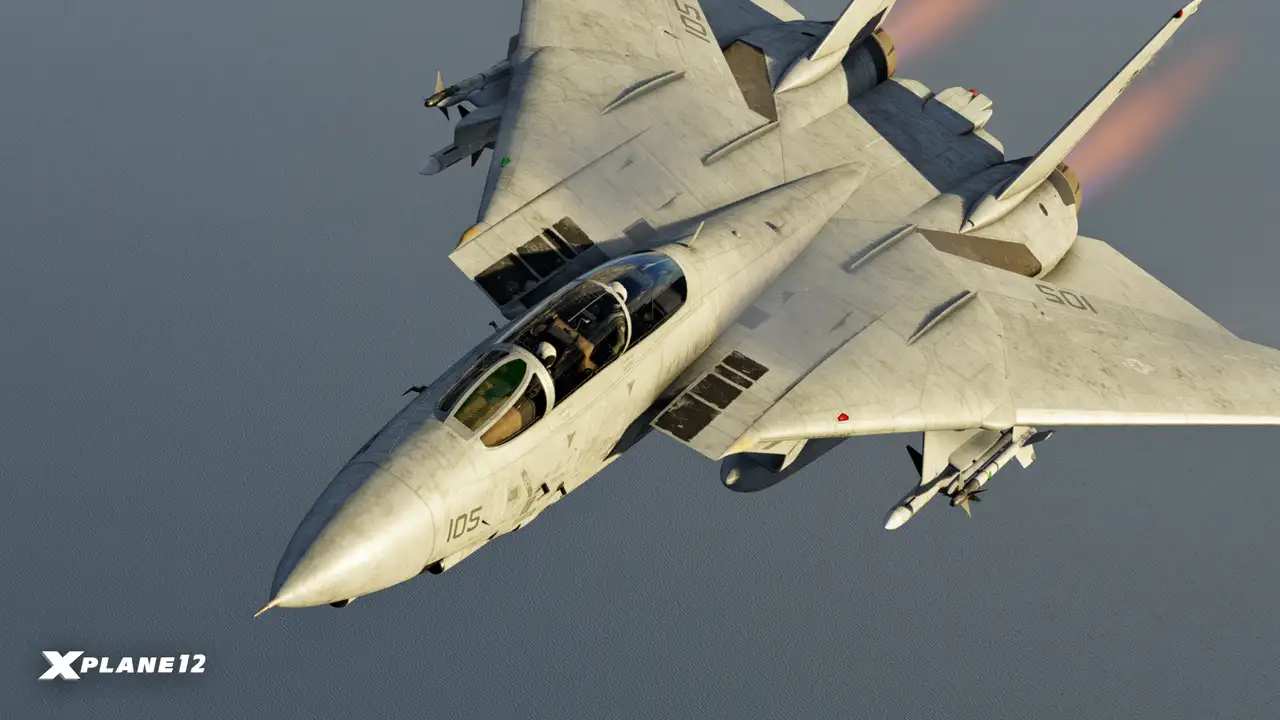
The Grumman F-14 Tomcat serves as Laminar Research’s flagship military fast-jet for X-Plane 12, included at no additional cost with the base simulator. Modeled specifically after the ultimate F-14D "Super Tomcat" variant, the aircraft replaces the trouble-prone Pratt & Whitney TF30 turbofans of the earlier A-model with dual General Electric F110-GE-400 afterburning powerplants producing over 27,000 pounds of static thrust apiece. In real naval aviation history, the F-14 served as the United States Navy’s premier fleet defense interceptor and carrier-capable air superiority platform from 1974 until its retirement in 2006. In X-Plane 12, Laminar utilizes the twin-engine heavyweight fighter to demonstrate core simulator engine milestones: dynamic variable-geometry wing physics, supersonic compressibility and transonic drag divergence, photometric canopy glass, and moving aircraft carrier catapult and arresting-gear dynamics.
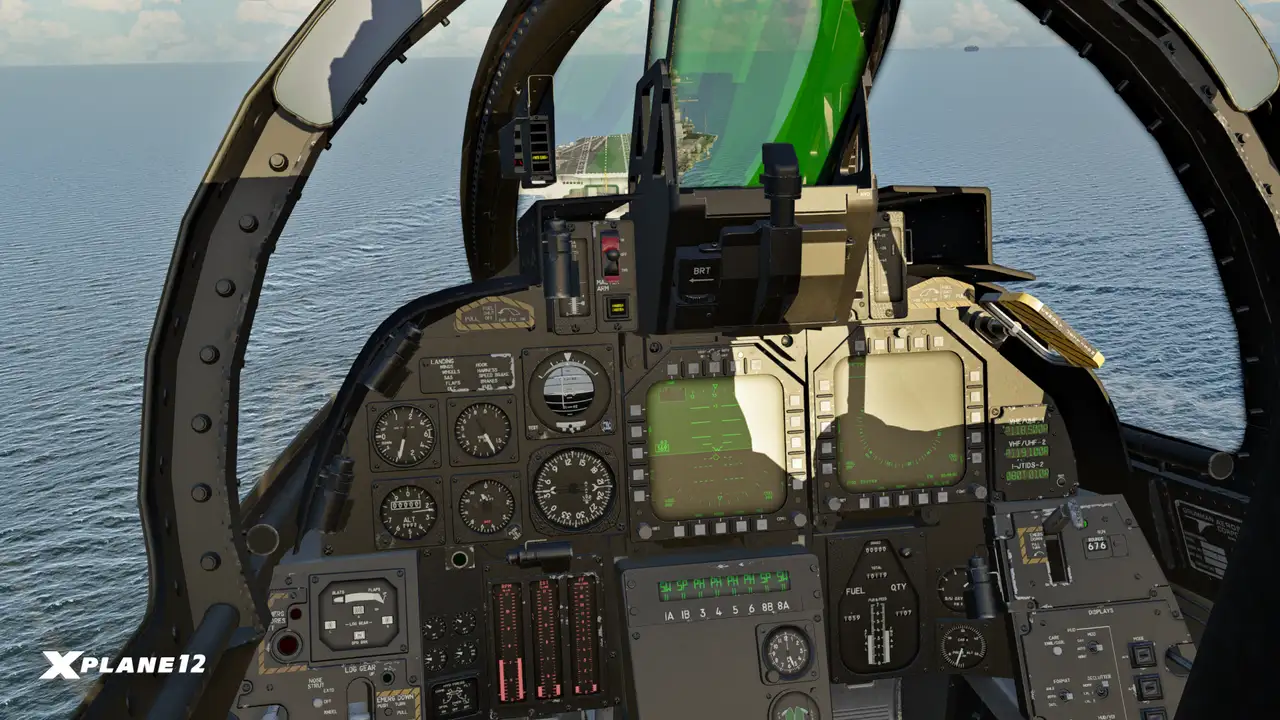
For flight simmers accustomed exclusively to airliners or general aviation, stepping into the F-14 cockpit introduces a very different breed of flight dynamics. The Tomcat features variable-sweep wings that automatically sweep from 20° (providing high aspect ratio and maximum lift during low-speed carrier approaches and takeoff) back to 68° (minimizing parasitic and wave drag for high-subsonic dashes and Mach 2+ supersonic flight), as well as a 75° manual "oversweep" setting for tight carrier deck parking. Aerodynamically, the aircraft lacks conventional wing-mounted ailerons; lateral roll control is provided entirely by differential all-moving tailerons (stabilators) and wing-top aerodynamic spoilers. Cockpit instrumentation reflects the digitized F-14D upgrade, pairing analog round gauges with dual multi-function displays (MFDs) and a true, space-stabilized 3D Head-Up Display (HUD) with a collimated flight path marker (velocity vector). While it lacks the deep combat radar suites and complex radar intercept officer (RIO) back-seat simulation of dedicated combat-focused titles like DCS World, it delivers an accessible, thrilling aerodynamic playground for high-speed intercept and carrier operations.
Primary Missions & Operational Roles
-
CATOBAR Aircraft Carrier Operations: Practicing high-precision catapult launches, optical carrier landing system glide slopes (the "meatball"), and 3-wire arrested landings on X-Plane 12’s dynamic, moving naval aircraft carriers.
-
Supersonic High-Altitude Interceptions & Dashes: Exploring high-Mach flight physics, rapid step-climbs to FL500+, and energy-management challenges at speeds exceeding Mach 2.0.
-
Low-Altitude High-Speed Tactical Navigation: Flying low-level terrain following and fast visual navigation through mountain canyons and scenic river valleys at 450 to 550 knots.
-
High Angle-of-Attack (AoA) Flight Training: Mastering pure stick-and-rudder flying without fly-by-wire flight envelope protections, learning to use rudder pedals for roll control at high AoA to prevent adverse yaw and wing drop.
Key Highlights (Pros)
-
Purpose-built natively for X-Plane 12, taking full advantage of native photometric cockpit lighting, dynamic rain effects, and high-G transonic vapor effects.
-
Authentic variable-sweep wing simulation powered by Blade Element Theory, dynamically calculating changing centers of lift, wing sweep angles (20° to 68°), and oversweep deck storage.
-
Groundbreaking space-stabilized flight path marker (velocity vector) in the 3D HUD, making manual glide-path control and runway/carrier deck line-ups exceptionally intuitive.
-
Twin General Electric F110-GE-400 engines providing staggering climb rates and thrust-to-weight performance exceeding 1:1 at combat weights.
-
Fully integrated with X-Plane 12’s native aircraft carrier operations, including functional catapult bridles, launch logic, and tailhook wire-trap physics.
-
Included free with every base copy of X-Plane 12 with zero licensing fees, updaters, or installation overhead.
Key Highlights
- Purpose-built natively for X-Plane 12, taking full advantage of native photometric cockpit lighting, dynamic rain effects, and high-G transonic vapor effects.
- Authentic variable-sweep wing simulation powered by Blade Element Theory, dynamically calculating changing centers of lift, wing sweep angles (20° to 68°), and oversweep deck storage.
- Groundbreaking space-stabilized flight path marker (velocity vector) in the 3D HUD, making manual glide-path control and runway/carrier deck line-ups exceptionally intuitive.
- Twin General Electric F110-GE-400 engines providing staggering climb rates and thrust-to-weight performance exceeding 1:1 at combat weights.
- Fully integrated with X-Plane 12’s native aircraft carrier operations, including functional catapult bridles, launch logic, and tailhook wire-trap physics.
- Included free with every base copy of X-Plane 12 with zero licensing fees, updaters, or installation overhead.
Quirks & Limitations
- ceed real-world structural and aerodynamic thermal limits (reaching indicated airspeeds past 900+ knots at sea level).
- Procedural military systems; radar displays, weapon tracking, and targeting modes are simplified default abstractions compared to dedicated combat study-level sims.
- Lacks civilian navigation luxuries: no SimBrief flight plan import, civil FMS, or AviTab tablet integration; cross-country flights rely on TACAN/VOR tuning, heading vectors, or visual navigation.
- Unforgiving stick-and-rudder handling at slow speeds; pulling aggressive aft-stick at high angles of attack without coordinating with the rudder will trigger severe wing-rock or unrecoverable flat spins.
Community Ratings & Feedback
Want to rate this flight deck or leave a review? Log In or Create an FSS Account to post your review.
Be the first simmer to leave a flight deck review and community score for this airframe.
Systems & Integrations
Video Showcases
Help Improve the Directory
Notice missing details, broken links, or incorrect pricing? Submit a correction to our Hangar Mods.
Suggest an Update