
Vickers Vimy
Editorial Overview & Systems Analysis
First conceptualized in 1917 by Reginald Kirshaw Pierson at Vickers Limited as a heavy twin-engine biplane bomber for the Royal Flying Corps, the Vickers Vimy entered production just as World War I drew to a close. While arriving too late for frontline combat, the airframe secured an enduring place in aviation history through pioneering long-distance flights—most famously in June 1919, when Captain John Alcock and Lieutenant Arthur Whitten Brown completed the first non-stop transatlantic crossing, flying a modified Vimy from St. John's, Newfoundland to Clifden, Ireland. Decades later, an airworthy replica was built in the 1980s and 1990s to recreate those historic pioneering routes before retiring to permanent display at the Brooklands Museum.
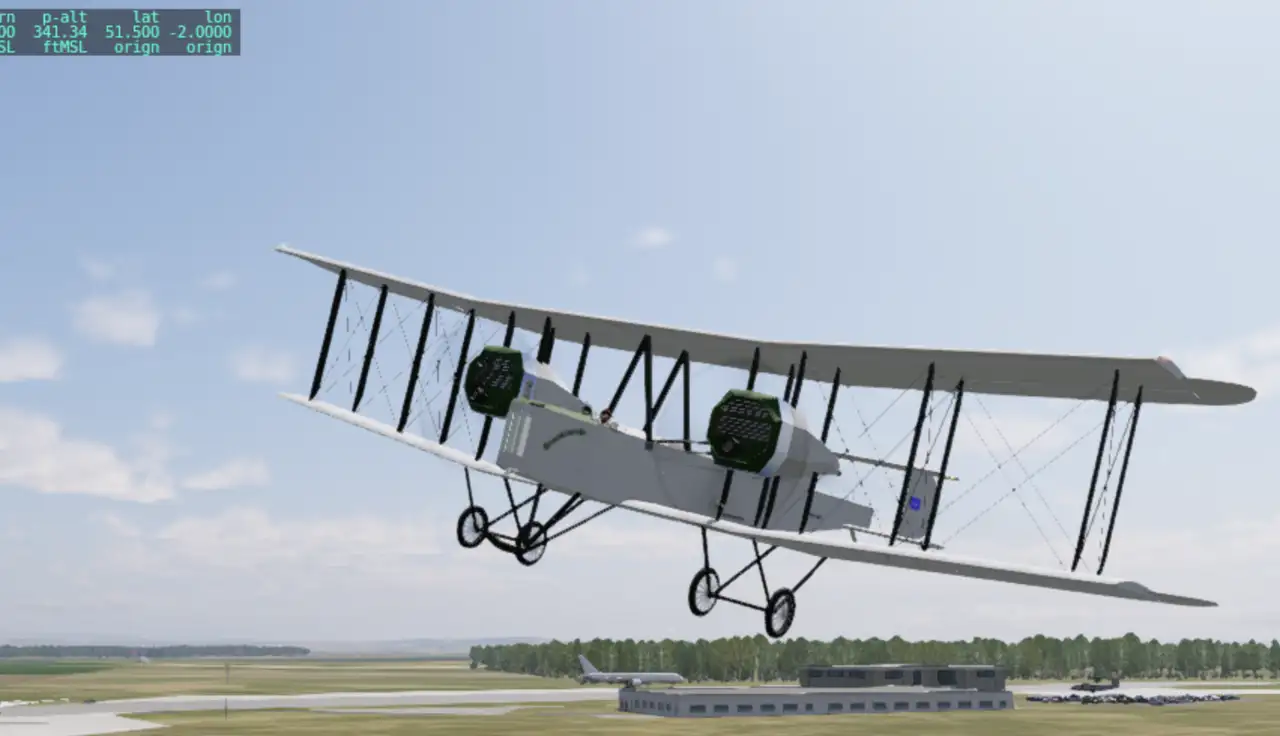
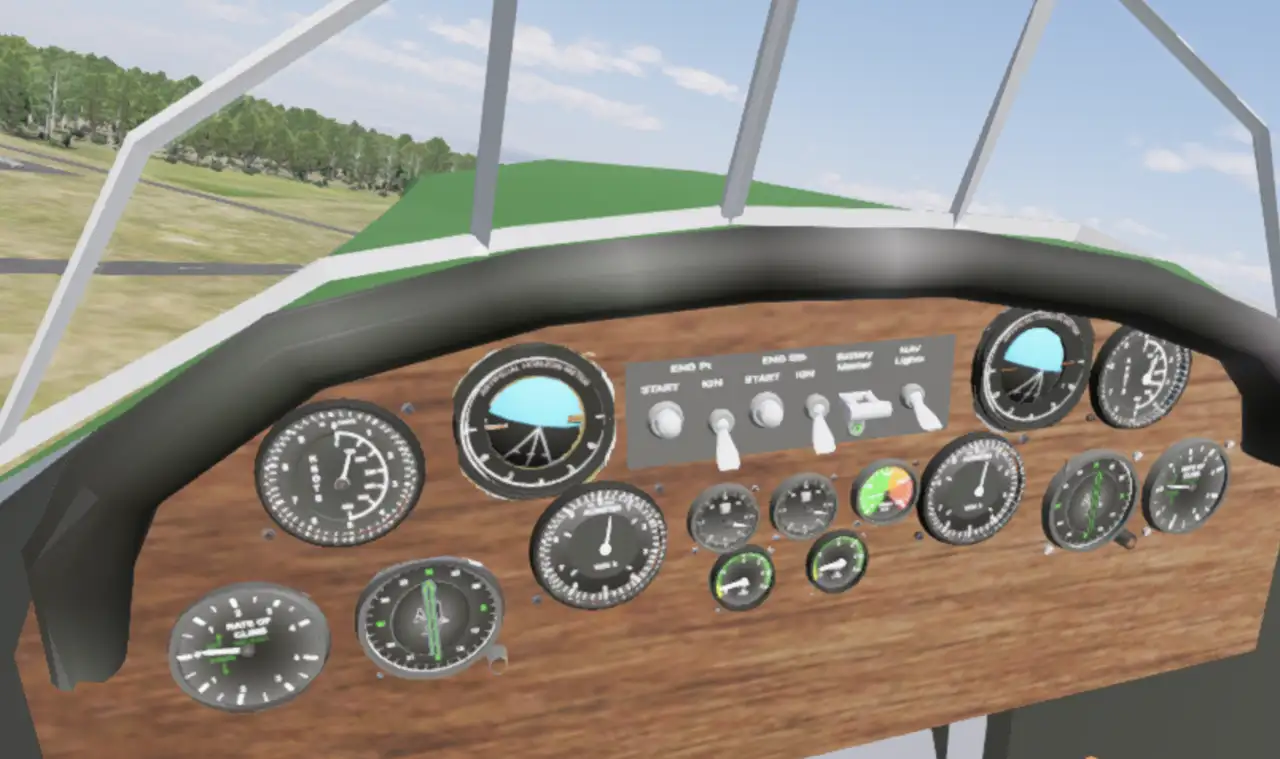
In X-Plane 12, this community freeware package adapts the original work created by developer Norvell, with pilot figures modeled by Beber, to represent the 1980s Brooklands replica configuration. Reflecting the modern replica, the aircraft incorporates more powerful engines and an updated instrument panel rather than original Great War equipment. The cockpit places virtual aviators in an authentic open-air cockpit behind a wide wood-grain instrument board fitted with updated analog flight instruments, individual ignition switches, and dedicated push-button starters for each engine. Externally, the 3D model captures the sprawling biplane wing cellule, interplane struts, mid-wing engine nacelles, and twin-wheel main undercarriage assemblies.
Flying the Vickers Vimy in X-Plane 12 requires a disciplined, low-and-slow vintage touch. Takeoff calls for smooth coordination: the tail begins flying early at roughly 25 knots, with rotation occurring with gentle back pressure around 55 knots. Aviators must avoid steep initial climb angles; the high-drag biplane structure bleeds airspeed quickly when pitched up excessively, leading to an immediate low-altitude stall. Circuit flying and landing are straightforward: pulling power back to one-third establishes a predictable descent between 65 and 70 knots. Flaring high in ground effect causes velocity to drop rapidly, and holding the stick fully back throughout the ground roll lets the expansive biplane wings act as an effective aerodynamic brake.
Classified squarely within our Casual fidelity tier, this freeware add-on is designed for accessible historic reenactments, vintage barnstorming, and hop-in-and-fly fun. With simplified starter and electrical controls, forgiving engine handling, and zero complex failure plugins, it gives virtual aviators an engaging look at one of aviation's great long-distance pioneers.
Primary Missions & Operational Roles
-
Historic Long-Distance Reenactments: Retrace Alcock and Brown’s 1919 transatlantic route or early long-range trail-blazing flights across Europe and the Middle East.
-
Low-and-Slow Open-Cockpit VFR: Tour coastal scenery, grass strips, and countryside valleys with unobstructed panoramic sightlines from the open flight deck.
-
Vintage Tailwheel Handling Practice: Practice low-speed rudder authority, tailwheel coordination, and crosswind corrections in a large twin-engine biplane layout.
-
Biplane Energy Management: Hone pitch discipline on climb-out and practice aerodynamic rollout braking using high-drag wing geometry.
Key Highlights
- 100% Freeware Historic Twin Biplane: Delivers a complete, flyable recreation of an iconic aviation pioneer at zero cost.
- Brooklands 1980s Replica Layout: Recreates the higher engine output and modernized analog cockpit dials of the historic Brooklands display replica.
- Characteristic Low-Speed Biplane Flight Dynamics: Captures authentic early 20th-century handling with a 55-knot rotation and rapid high-alpha deceleration.
- Accessible Hop-in-and-Fly Operation: Features simple battery, ignition, and push-button starter workflows for immediate flying without complex overhead.
- Lightweight Frame-Rate Performance: Built with clean geometry and default-driven instruments, ensuring smooth framerates on modest hardware setups.
Quirks & Limitations
- High Risk of Climb-Out Stall: Climbing too steeply after liftoff causes rapid airspeed decay, which can lead to an abrupt low-altitude stall.
- Casual Systems Architecture: Engine parameters and electrical buses rely on stock simulator logic without custom thermodynamic wear or component failure modeling.
- No Modern Navigation or Transponder: Configured strictly as a vintage open-cockpit VFR aircraft without an integrated GPS, AviTab tablet frame, or modern transponder.
- Classic Visual Finish: Cockpit textures and exterior fabric surfaces reflect traditional modeling techniques rather than high-resolution modern PBR weathering.
Community Ratings & Feedback
Want to rate this flight deck or leave a review? Log In or Create an FSS Account to post your review.
Be the first simmer to leave a flight deck review and community score for this airframe.
Purchase & Download
X-Plane.org DownloadsSystems & Integrations
Video Showcases
Help Improve the Directory
Notice missing details, broken links, or incorrect pricing? Submit a correction to our Hangar Mods.
Suggest an Update