
Hawker Hunter T.7 (Two-Seat Trainer)
Editorial Overview & Systems Analysis
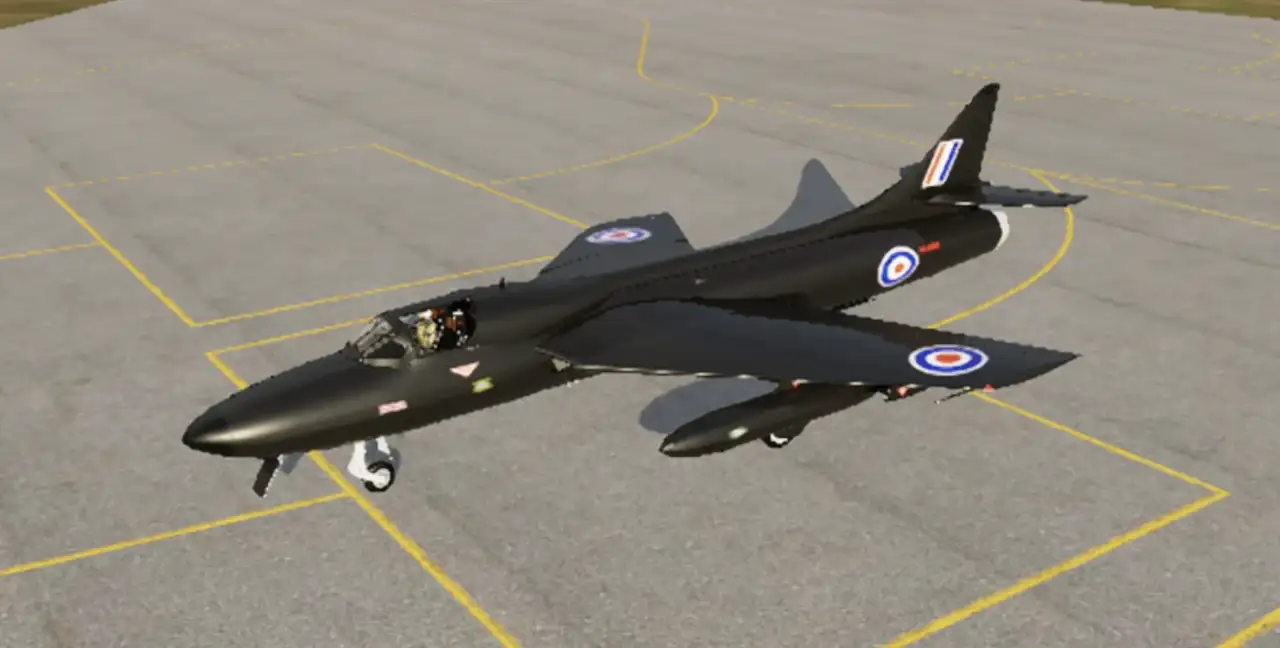
Introduced in the late 1950s to support the Royal Air Force's frontline transition into swept-wing transonic operations, the Hawker Hunter T.7 adapted Sir Sydney Camm’s clean airframe into a side-by-side dual-control operational trainer. To accommodate instructor and student abreast without tandem seating, Hawker widened the forward fuselage, giving the trainer its distinctive bulbous canopy and reprofiled nose. Retaining the single Rolls-Royce Avon turbojet and swept-wing geometry of the single-seat fighter variants, the two-seater preserved the Hunter’s legendary high-speed agility, serving for decades with both the RAF and the Royal Navy (as the T.8), as well as supporting premier aerial display teams like the Black Arrows and Blue Diamonds.
In X-Plane 12, community developer Ray H delivers a dedicated freeware rendition of the twin-seat Hunter trainer. The external model captures the widened cockpit profile, distinct twin windscreen glazing, and clean lines of the classic British jet. The package ships with four authentic historical paint schemes, including the celebrated all-black livery of the RAF 111 Squadron "Black Arrows," the blue-and-white scheme of 92 Squadron’s "Blue Diamonds," a classic frontline tactical grey, and the markings of XL623—a real-world airframe undergoing active civilian restoration.
Under the hood, the flight model has been calibrated around official Hunter F.6 Pilot’s Notes with assistance from community member 12in95. The aerodynamic parameters faithfully reflect the real jet’s handling: smooth rotation and liftoff at roughly 145 knots with single or second flap (across five available flap detents), an approach speed of around 155 knots with gear and third flap deployed, and a base-to-final descent flow held near 200 knots. In a high-altitude dive from 40,000 feet, the airframe cleanly breaks the sound barrier to reach Mach 1.05 before natural aerodynamic drag decelerates it below Mach 1.0 as it descends into denser air.
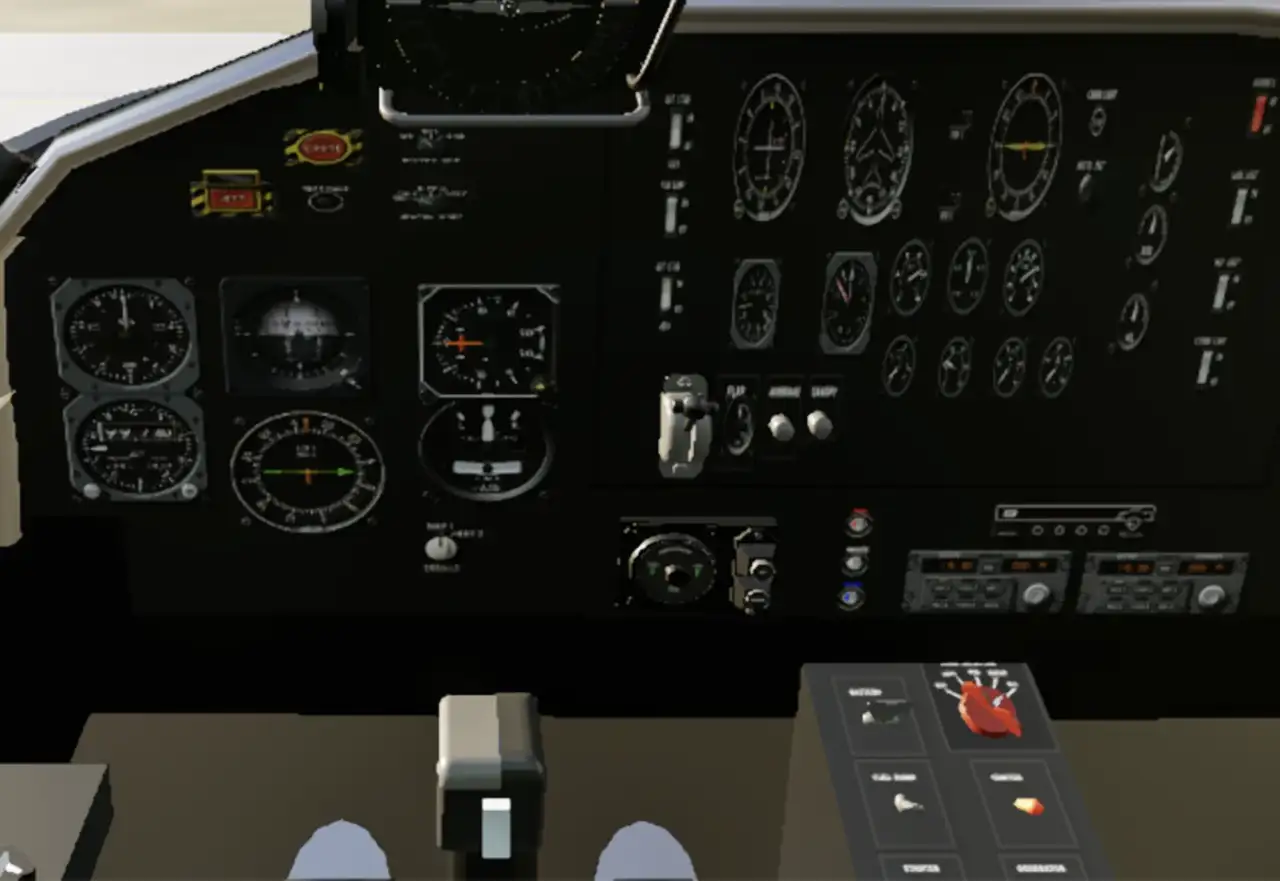
Classified firmly within our Casual fidelity tier, this add-on focuses on immediate hand-flying pleasure, vintage military aerobatics, and classic visual navigation. The cockpit panel utilizes ergonomically arranged stock Plane Maker steam gauges, VOR, and ADF instrumentation rather than complex bespoke C++ plugin loops. For virtual aviators looking to experience the pure, responsive stick-and-rudder joy of early British military jet aviation in X-Plane 12, it provides an authentic, accessible hop-in-and-fly experience.
Primary Missions & Operational Roles
-
Vintage Military Fast-Jet Training: Recreate 1960s RAF advanced pilot training syllabus flights, practicing high-speed circuits, stall recovery, and transonic dives.
-
Classic British Aerobatic Display Flying: Fly formation routines and solo aerobatics in the historic colors of the Black Arrows or Blue Diamonds.
-
Cold War Radionavigation Cross-Country: Navigate the UK and European airspace via classic point-to-point VOR and ADF beacon tracking from airfields like Boscombe Down, Ockham, and Bournemouth Hurn.
-
Low-Level Tactical Valley Runs: Carve through low-altitude terrain contours utilizing the Hunter's smooth roll rates, high sweepback stability, and broad forward canopy view.
Key Highlights
- 100% Freeware Community Release: Delivers a complete, fully flyable two-seat British transonic jet trainer at zero cost.
- Calibrated Flight Model: Tuned against official F.6 Pilot’s Notes data, delivering authentic rotation, approach, and transonic dive performance.
- Historic Livery Collection: Ships with four period-correct liveries representing the Black Arrows, Blue Diamonds, tactical RAF grey, and restoration airframe XL623.
- Side-by-Side Dual Cockpit: Accurately recreates the widened fuselage and dual-yoke instrument layout unique to the Hunter T.7/T.8 trainers.
- Lightweight & High Performance: Built on clean Plane Maker instrumentation and optimized 3D geometry, ensuring butter-smooth framerates across all hardware setups.
Quirks & Limitations
- Casual Systems Depth: Cockpit instruments and electrical logic rely primarily on stock Plane Maker subsystems rather than deep bespoke systems programming.
- Simplified Audio Implementation: Utilizes standard simulator jet audio rather than a dedicated multi-channel FMOD2 directional soundscape.
- Basic External Stores Options: External stores are restricted to standard fuel drop tanks and internal guns without complex tactical weapons management.
- Visual Cockpit Finish: Texturing and canopy frames reflect traditional modeling techniques rather than high-wear 8K PBR materials.
Community Ratings & Feedback
Want to rate this flight deck or leave a review? Log In or Create an FSS Account to post your review.
Be the first simmer to leave a flight deck review and community score for this airframe.
Purchase & Download
X-Plane.org DownloadsSystems & Integrations
Video Showcases
Help Improve the Directory
Notice missing details, broken links, or incorrect pricing? Submit a correction to our Hangar Mods.
Suggest an Update