
Dornier 328-110
Media Gallery
Editorial Overview & Systems Analysis
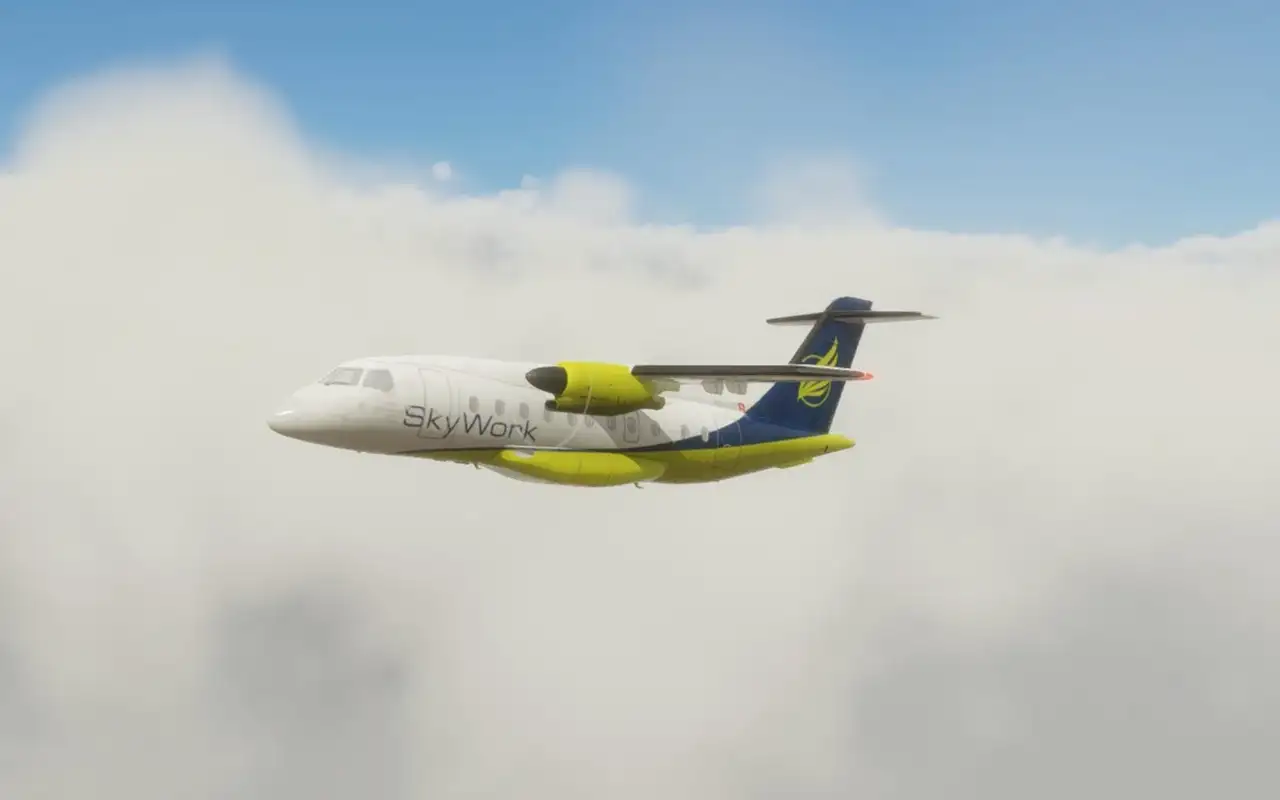
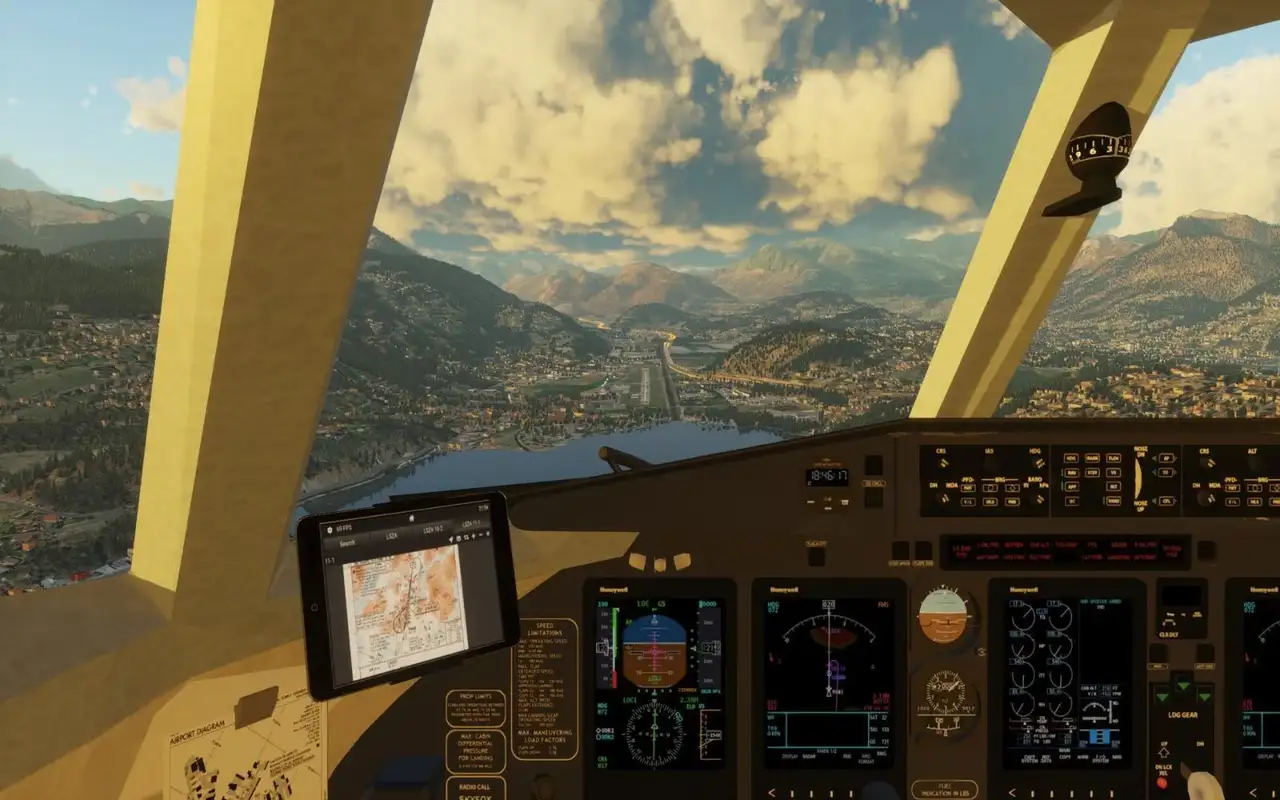
First entering airline service in the early 1990s, the Dornier 328 was engineered by Dornier Luftfahrt GmbH to offer true jet-like comfort, speed, and climb rates in a 30 to 33-seat regional turboprop. Featuring a distinctive supercritical TNT (Tragflügel neuer Technologie) wing profile, a tall T-tail, and two Pratt & Whitney Canada PW119B turboprop engines turning six-bladed composite Hartzell propellers, the 328 could cruise at up to 335 KTAS—outrunning virtually every competing turboprop in its class. In the cockpit, Dornier modernized regional airline operations by equipping the aircraft with the Honeywell Primus 2000 digital avionics suite, bringing glass cockpit situational awareness to short-field commuter hubs and mountain runways like Lukla, Bern, and London City.
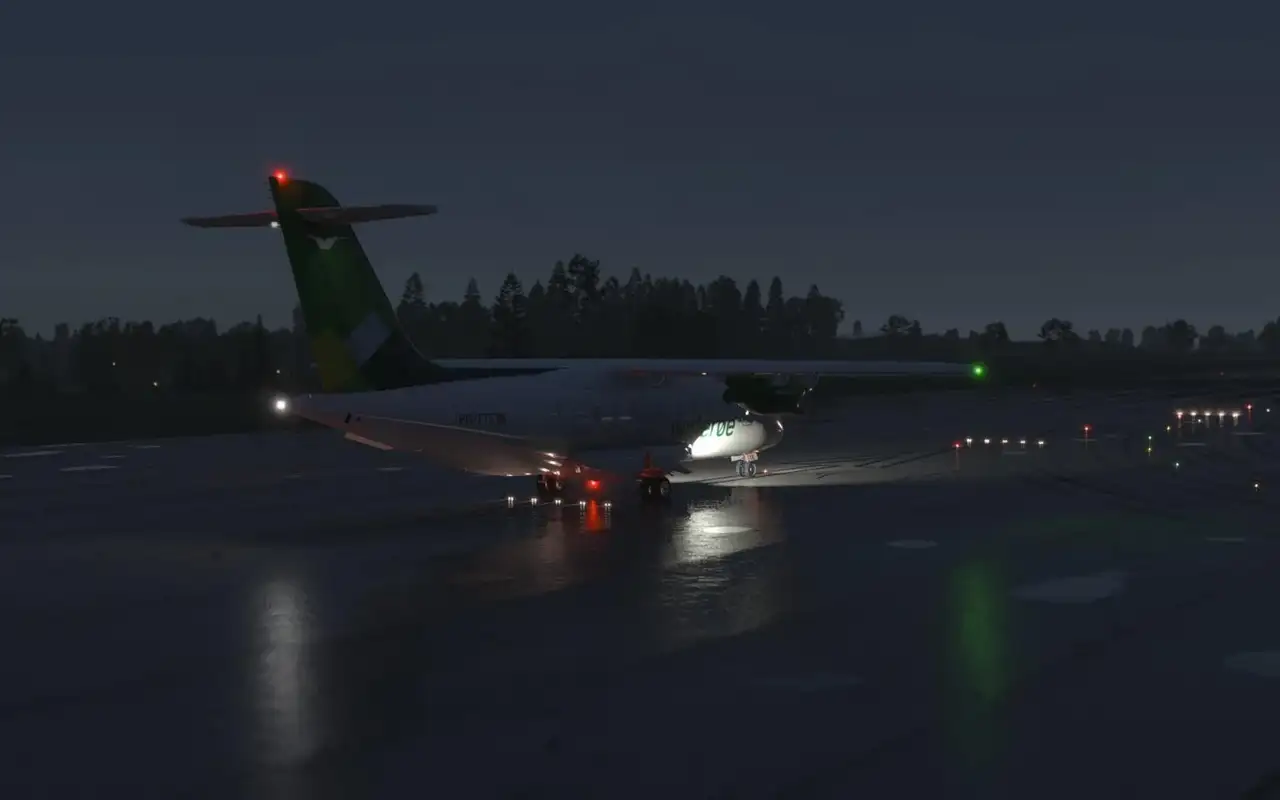
The virtual history of the Dornier 328 in X-Plane traces back to the celebrated freeware project built by the MG team and afCee. Community developer argonius took up the mantle to deliver a dedicated, comprehensive conversion for X-Plane 12. Rather than just applying a quick aerodynamic patch, this release updates the flight dynamics for X-Plane 12’s atmospheric airflow, retunes the engine thrust and fuel flow tables for the PW119B powerplants, and incorporates native volumetric rain effects onto the windshield glass. The package also features refined cockpit night lighting and an integrated 3D AviTab tablet frame mounted beside the captain's station.
Operating the Dornier 328 in X-Plane 12 is an engaging, fast-paced turboprop experience. The clean aerodynamics and potent climb capability mean the aircraft reaches regional cruising altitudes between FL180 and FL250 with remarkable speed. Managing descent requires advance planning: the supercritical wing generates minimal drag, requiring disciplined use of ground spoilers and power levers to avoid overspeeding the airframe when entering busy terminal arrival corridors. During short-field approaches, the powerful beta range and reverse thrust deliver confident stopping power on short runways.
Classified squarely within our Procedural fidelity tier, the argonius Dornier 328-110 stands as one of the finest freeware regional airliners available for X-Plane 12. While it avoids punitive depot-level component breakdown simulations, it faithfully models real-world normal checklists, custom Honeywell Primus screen modes, automated alerting systems, and standard turboprop airline procedures, making it a stellar addition to any commuter route network.
Primary Missions & Operational Roles
-
Regional Hub Feeder Operations: Fly realistic 30 to 60-minute regional hops connecting secondary domestic airfields to major commercial hubs.
-
Short-Field & Mountain Strip Landings: Exploit the aircraft's steep climb angles, high flap lift, and responsive reverse thrust on demanding, constrained runways.
-
Glass-Cockpit Turboprop IFR Navigation: Manage standard arrival and departure procedures using the integrated Honeywell Primus 2000 multi-function displays and digital radio management units.
-
Fast Inter-City Commuter Runs: Cruise at high turboprop airspeeds above 300 KTAS to maintain tight virtual airline schedules.
Key Highlights
- High-Quality Freeware Regional Airliner: Delivers a complete, fully featured 30-passenger turboprop flight deck free of charge to the community.
- Dedicated X-Plane 12 Flight Dynamics: Rebuilt and fine-tuned specifically for the modern simulator's lift, drag, and propwash physics.
- Integrated 3D AviTab Display: Features a dedicated, cockpit-integrated tablet display supporting georeferenced airport diagrams and navigation charts.
- Custom Honeywell Primus 2000 Displays: Provides authentic PFD/MFD symbology, electronic checklist modes, and a customized Crew Alerting System.
- Native Windshield Rain & Updated Lighting: Integrates X-Plane 12 dynamic rain wipers and volumetric cockpit ambient illumination.
Quirks & Limitations
- Slippery Descent Profile: The high-efficiency wing retains speed effortlessly; descending from cruise while slowing to pattern speeds requires early energy management and spoiler discipline.
- Default FMS Architecture: The navigation computer logic is wrapped around the default Laminar FMS core, limiting advanced operational FMC database functions.
- Community Port Visual Heritage: While visually crisp, interior 3D geometry and switch surfaces reflect earlier base modeling standards rather than fully reworked modern 8K PBR texturing.
- Lack of Deep Abuse Physics: Powerplant handling is forgiving and will not trigger catastrophic thermodynamic engine block failures or carbon fouling from aggressive throttle handling.
Community Ratings & Feedback
Want to rate this flight deck or leave a review? Log In or Create an FSS Account to post your review.
Be the first simmer to leave a flight deck review and community score for this airframe.
Purchase & Download
X-Plane.org DownloadsSystems & Integrations
Video Showcases
Help Improve the Directory
Notice missing details, broken links, or incorrect pricing? Submit a correction to our Hangar Mods.
Suggest an Update