
Fokker 50

Editorial Overview & Systems Analysis
The Fokker 50 was developed in the 1980s as the modern successor to the highly successful F27 Friendship. The Dutch manufacturer retained the proven high-wing, twin-turboprop layout but heavily modernized the airframe with aerodynamic refinements, a glass-equipped flight deck, and two Pratt & Whitney Canada PW125B engines turning slow-spinning, six-bladed Dowty Rotol composite propellers. This powerplant configuration gave the Fokker 50 exceptional short-field performance and a noticeably quieter cabin than its direct competitors, cementing it as a staple of European and global short-haul feeder routes throughout the 1990s and 2000s.
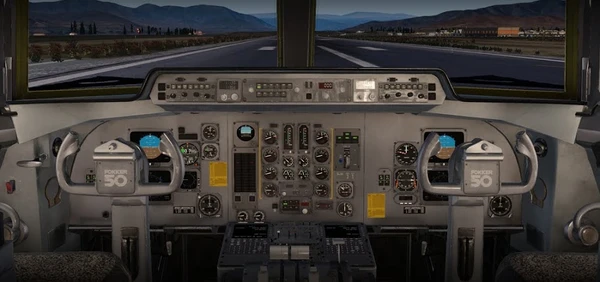
Carenado’s rendition of the Fokker 50 was originally released during the X-Plane 11 lifecycle and remains one of the few high-quality visual models of the aircraft available in desktop simulation. The virtual cockpit showcases Carenado’s signature 4K texturing, featuring realistic material reflections across the metal dials, dielectric surfaces, and heavy yokes. Beneath the visuals, the aircraft incorporates custom electrical, bleed air, and pressurization logic, along with functioning throttle reverser gates and customized aural warnings.
However, in the context of X-Plane 12, this airframe is officially unsupported. Carenado has stepped away from active X-Plane development, leaving this module to rely entirely on an unofficial community upgrade patch hosted on the store page to function in the new simulator. While the community .acf patch rectifies the most severe flight model anomalies and engine parameter shifts caused by X-Plane 12’s updated atmospheric physics, virtual pilots should expect legacy friction. The aircraft lacks native X-Plane 12 photometric lighting, volumetric rain geometry, and FMOD2 dynamic acoustics.
Sitting in the Procedural fidelity tier, the Fokker 50 remains fully flyable for those willing to tolerate a legacy port. It offers an engaging, hands-on turboprop airliner experience with authentic switchology and systems logic that goes beyond default aircraft, provided you are comfortable operating an abandoned airframe that will not receive future official patches.
Primary Missions & Operational Roles
-
Regional Short-Haul Feeder Routes: Fly 40-to-60 minute regional hops carrying up to 50 virtual passengers between major hubs and secondary regional airports.
-
Classic Turboprop IFR Navigation: Manage altitude constraints, weather avoidance, and non-precision approaches using classic turboprop energy management and early-generation FMS or RealityXP GTN 750 integration.
-
Short-Field Operations: Utilize the massive six-bladed propellers and robust reverse thrust logic to execute steep approaches and short rollouts on constrained runways.
Key Highlights
- Exceptional Visual Modeling: Retains stunning 4K interior and exterior textures that hold up remarkably well, capturing the exact aesthetic and wear of the classic Dutch turboprop.
- Custom Systems Logic: Features dedicated simulated logic for the electrical bus, fuel crossfeed, bleed air, and cabin pressurization systems.
- RealityXP GTN 750 Integration: Natively supports replacing the default navigation displays with a fully functional 3D RealityXP GTN 750 GPS unit (requires separate purchase).
- Immersive Acoustic Profile: The legacy FMOD sound pack accurately reproduces the distinctive low-RPM drone of the PW125B engines and Dowty Rotol props.
Quirks & Limitations
- Abandoned Official Support: Carenado no longer updates the aircraft; X-Plane 12 functionality relies 100% on a community-provided compatibility patch.
- Missing Native XP12 Features: Lacks integration with modern simulator features such as dynamic photometric night lighting, FMOD2 sound layers, and native volumetric rain effects on the glass.
- Flight Model Sensitivities: Because it uses an unofficial community patch to bridge the gap between XP11 and XP12 physics, pitch and power curves may feel slightly artificial during extreme edge-of-envelope maneuvering.
- Default FMS Foundation: Out of the box, the custom flight management system relies heavily on the default Laminar FMS architecture rather than a bespoke tactical navigation suite.
Community Ratings & Feedback
Want to rate this flight deck or leave a review? Log In or Create an FSS Account to post your review.
Be the first simmer to leave a flight deck review and community score for this airframe.
Purchase & Download
X-Plane.org storeSystems & Integrations
Video Showcases
Help Improve the Directory
Notice missing details, broken links, or incorrect pricing? Submit a correction to our Hangar Mods.
Suggest an Update