
Piper Warrior II PA-28-161
Editorial Overview & Systems Analysis
Certified in the late 1970s, the PA-28-161 Warrior II became the standard ab initio training aircraft for thousands of flight schools worldwide. Building upon the original PA-28-151 Warrior, Piper upgraded the powerplant to a 160 hp Lycoming O-320-D3G engine turning a fixed-pitch Sensenich propeller. More importantly, it established the modern identity of the light Cherokee line by standardizing Piper's semi-tapered wing. With a maximum gross weight of 2,440 lbs, the Warrior II struck the ideal balance between low acquisition costs, economical fuel consumption (around 8.5 to 9 gallons per hour), and forgiving, honest flight characteristics that built confidence in student aviators.
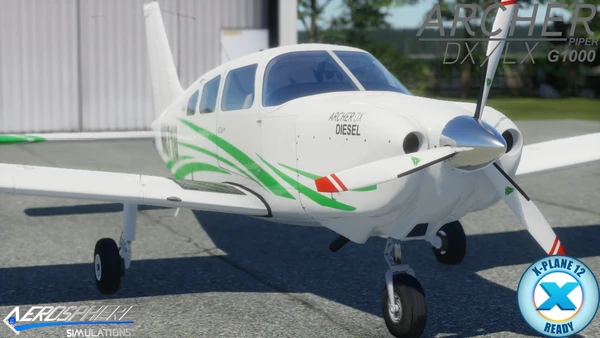
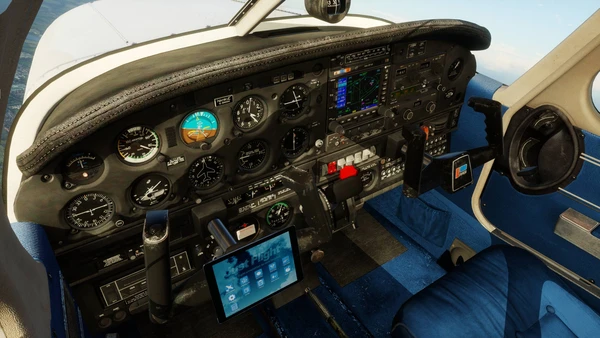
AeroSphere Simulations designed this aircraft using the official Pilot Information Manual to recreate the look, feel, and performance of a quintessential flight-line trainer in X-Plane 12. The virtual cockpit features classic analog steam gauges in standard "six-pack" arrangement, paired with modern utility instruments including a dual Garmin GNS 530 and GNS 430 GPS stack and Piper AutoControl autopilot. Animated access points include the right-side entry door, direct-vision storm window, and rear baggage compartment hatch.
In X-Plane 12, the aircraft benefits from updated atmospheric flight dynamics, photometric gauge lighting, and dynamic windshield rain rendering. The flight model captures the docile behavior of the semi-tapered wing: gentle stall breaks preceded by aerodynamic buffet warnings, stable roll damping, and easy trim management during pattern work. With 160 hp on tap, climb performance requires realistic energy awareness—especially on hot high-density altitude days—mirroring the real-world training experience.
Classified under our Procedural fidelity tier, AeroSphere's Warrior II serves as an approachable, highly functional trainer. While it foregoes punishing component failure loops and persistent wear states, its precise alignment with published POH performance tables makes it a dependable, hardware-friendly platform for practicing standard private pilot maneuvers and instrument approaches.
Primary Missions & Operational Roles
-
Ab Initio Flight Training: Practice standard private pilot maneuvers including steep turns, slow flight, stalls, and pattern work in a low-wing training staple.
-
Instrument Rating Instruction: Fly simulated instrument approaches, VOR tracking, and RNAV flight plans utilizing the dual Garmin GNS 530/430 navigation suite.
-
Economical VFR Cross-Country: Tour regional airfields at an economical 110 to 115 KTAS with low fuel burn and stable cruise trim.
-
Approach & Landing Mastery: Hone approach speed discipline and crosswind touchdown techniques using the manual floor-mounted flap handle.
Key Highlights
- Classic Flight School Trainer Cockpit: Faithful analog steam-gauge layout featuring authentic wear textures and standard flight-line ergonomics.
- Dual Garmin GNS 530/430 Stack: Provides modern IFR navigation and GPS approach guidance paired with dual VOR/LOC indicator needles.
- Docile & Forgiving Aerodynamics: Accurately replicates the gentle stall behavior, predictable roll damping, and stability characteristic of the semi-tapered wing.
- Manual Mechanical Flap Lever: Features the classic floor-mounted Johnson bar with positive notches at 10, 25, and 40 degrees.
- Frame-Rate Friendly Implementation: Lightweight textures and optimized 3D geometry provide high framerates across mid-tier PC configurations.
Quirks & Limitations
- Modest Useful Load & Climb Performance: With 160 horsepower, loading full fuel with adult passengers will push gross weight limits and noticeably reduce climb rates on hot days.
- Floating Tendency Over the Numbers: Arriving over the runway threshold with extra airspeed will cause the semi-tapered wing to float down the strip before touching down.
- Absence of Custom Component Abuse Engine: Powerplant parameters adhere to default simulator limits without modeling thermal shock, spark plug lead fouling, or vapor lock.
- No Cockpit-Mounted AviTab Frame: Lacks a dedicated 3D tablet mount in the cockpit, requiring external 2D pop-up windows for chart viewing.
Community Ratings & Feedback
Want to rate this flight deck or leave a review? Log In or Create an FSS Account to post your review.
Be the first simmer to leave a flight deck review and community score for this airframe.
Purchase & Download
X-Plane.org storeSystems & Integrations
Video Showcases
Help Improve the Directory
Notice missing details, broken links, or incorrect pricing? Submit a correction to our Hangar Mods.
Suggest an Update