
Piper Archer III / LX / DX PA-28-181
Editorial Overview & Systems Analysis
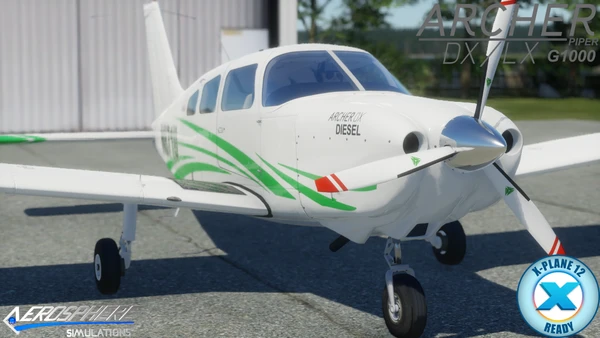
The modern evolution of Piper’s 180 hp touring staple split into two distinct engineering directions: the continuation of traditional Avgas powerplants and the adoption of cutting-edge Jet-A compression-ignition diesel engines. While the Avgas Archer LX maintains the proven 180 hp Lycoming O-360-A4M, the Archer DX incorporates the Continental CD-155 (formerly Thielert Centurion 2.0S)—a turbocharged, liquid-cooled, inline-four diesel engine running on standard Jet-A fuel. Governed by a redundant single-lever Full Authority Digital Engine Control (FADEC), the DX variant trades a modest amount of sea-level horsepower for exceptional fuel efficiency, extended range, and altitude-compensating turbocharging.
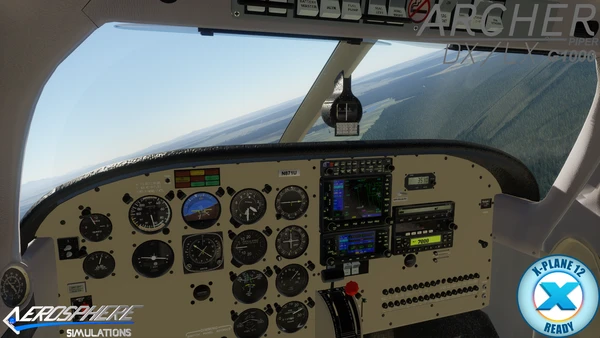
AeroSphere Simulations captures this multi-generational breadth in a single package for X-Plane 12 by including three separate airframes: the traditional steam-gauge Archer III, the modern glass-cockpit Archer LX, and the fuel-efficient Archer DX Diesel. The flight decks are modeled in full 3D, allowing pilots to choose between legacy instrument scans using Garmin GNS 530/430 GPS units or integrated glass displays powered by dual Garmin G1000 screens. The DX model faithfully replicates modern diesel cockpit ergonomics, trading traditional mixture and propeller levers for a single FADEC power lever and integrated glow-plug preheat sequences.
In the X-Plane 12 flight environment, each variant exhibits unique aerodynamic and powerplant performance. The semi-tapered wing provides predictable stability in cruise, with a clean 118 to 125 KTAS cruise profile across the board. The DX model shines in cross-country cruise above 8,000 feet, where its turbocharger maintains manifold pressure and power output long after normally aspirated Lycoming engines begin losing climb performance. The package features native X-Plane 12 photometric lighting, dynamic rain effects on the windshield, and refined tire friction on wet runways.
Operating within our Procedural fidelity tier, AeroSphere's Archer package focuses on providing dependable line operations, standard IFR procedures, and accessible flight dynamics. It avoids punitive component teardowns while giving virtual pilots a versatile training platform capable of showcasing both traditional carbureted flying and modern European-style Jet-A diesel operations.
Primary Missions & Operational Roles
-
Modern Fleet Flight Training: Train across both analog steam-gauge and dual-screen Garmin G1000 glass cockpits within a single aircraft type.
-
Jet-A Diesel Cross-Country Touring: Fly the Archer DX on long-distance regional cross-country routes, leveraging the fuel economy and high-altitude turbocharger of the Continental CD-155 diesel engine.
-
Technologically Advanced Aircraft (TAA) Navigation: Practice RNAV and GPS approach procedures using integrated glass avionics and coupled digital autopilot modes.
-
Economical VFR Country Hopping: Enjoy scenic cross-country flights with approachable handling and excellent cockpit sightlines.
Key Highlights
- Three Complete Airframe Variants Included: Delivers the classic analog Archer III, glass-cockpit Archer LX (Avgas), and modern Archer DX (Jet-A Diesel) in a single package.
- Authentic Jet-A Diesel FADEC Modeling: Faithfully recreates the single-lever power management, glow plug start sequence, and turbocharged high-altitude climb performance of the CD-155 engine.
- Dual Avionics Philosophy: Offers full flexibility between traditional six-pack steam gauges with Garmin GNS GPS units and modern Garmin G1000 glass displays.
- Native X-Plane 12 Environmental Integration: Features dynamic windshield rain effects, modern exterior 3D lighting, and updated ground surface friction.
- Accessible Hardware Performance: Well-optimized 3D models and textures deliver smooth framerates on mid-range PC hardware without exhausting GPU VRAM.
Quirks & Limitations
- Floating in Ground Effect: The semi-tapered wing design retains aerodynamic energy in ground effect; coming in faster than published Vref on short final results in extended floating before touchdown.
- Absence of Custom Component Abuse Engine: Powerplant simulation relies on standard simulator engine parameters without custom physics for vapor lock, thermal shock, or spark plug lead fouling.
- No Integrated 3D AviTab Tablet: Lacks a native 3D cockpit-mounted AviTab tablet frame, requiring reliance on external 2D pop-up windows for charts.
- Lower Sea-Level Climb on DX Variant: With 155 hp versus the Lycoming's 180 hp, the diesel DX variant exhibits slightly longer takeoff ground rolls and slower initial climb rates on hot sea-level days.
Community Ratings & Feedback
Want to rate this flight deck or leave a review? Log In or Create an FSS Account to post your review.
Be the first simmer to leave a flight deck review and community score for this airframe.
Systems & Integrations
Video Showcases
Help Improve the Directory
Notice missing details, broken links, or incorrect pricing? Submit a correction to our Hangar Mods.
Suggest an Update