
Cirrus Vision SF50
Editorial Overview & Systems Analysis
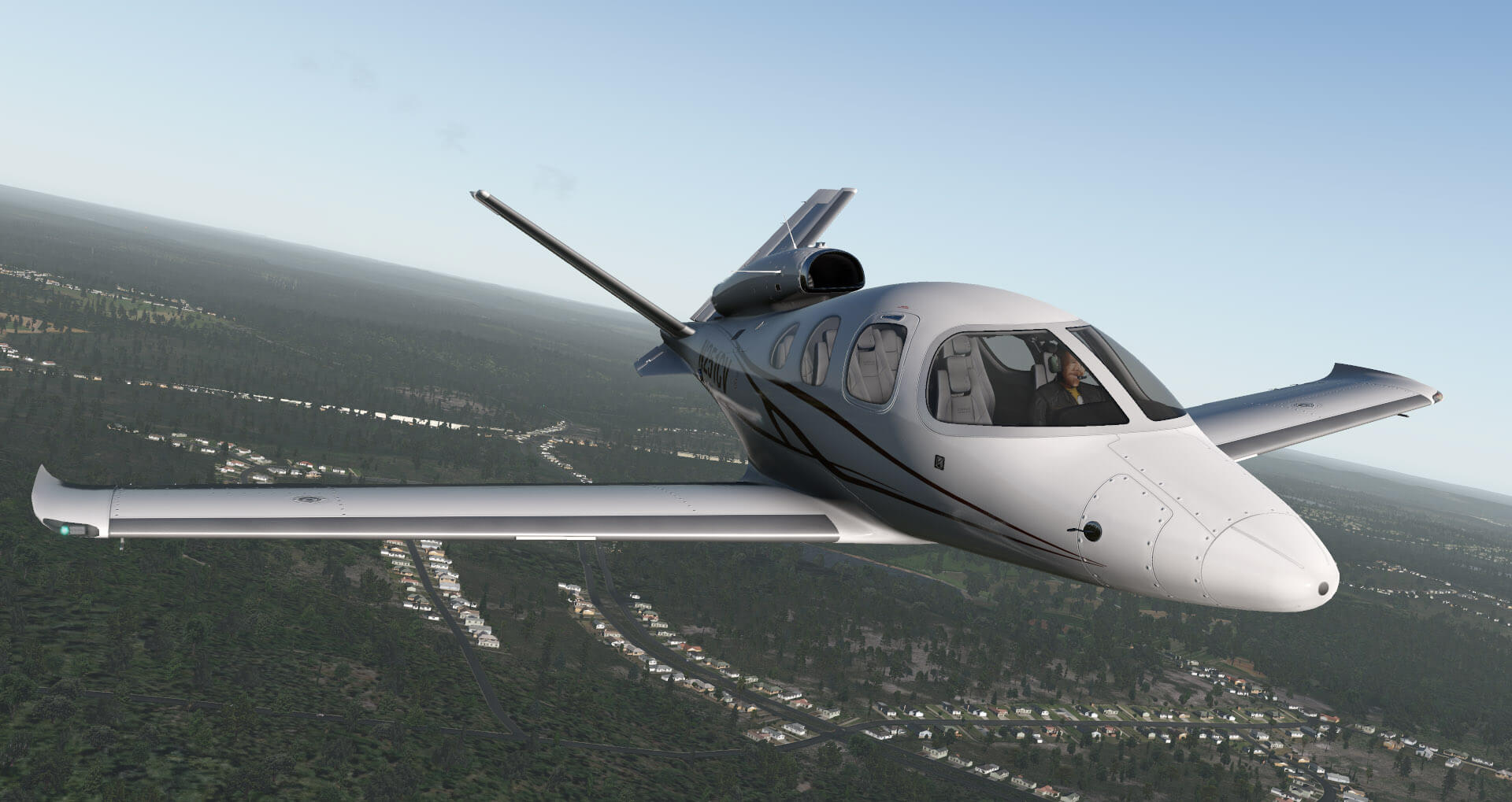
The Cirrus Vision SF50 (widely cataloged across corporate flight departments and simulation hangars as the Vision Jet, SF50, Cirrus Jet, and SF-50) occupies a unique category in modern aviation: the single-engine Personal Jet. Conceived by Cirrus Aircraft as the logical step-up for pilots transitioning out of the high-performance SR22 piston single, the SF50 pioneered the single-engine Very Light Jet (VLJ) market. It pairs an all-composite carbon-fiber airframe and distinctive V-tail empennage with a single dorsal-mounted Williams International FJ33-5A turbofan producing roughly 1,846 pounds of thrust. Built natively into X-Plane 12 as a flagship default aircraft by Laminar Research, this package delivers an accessible, high-efficiency corporate cruiser directly out of the box.
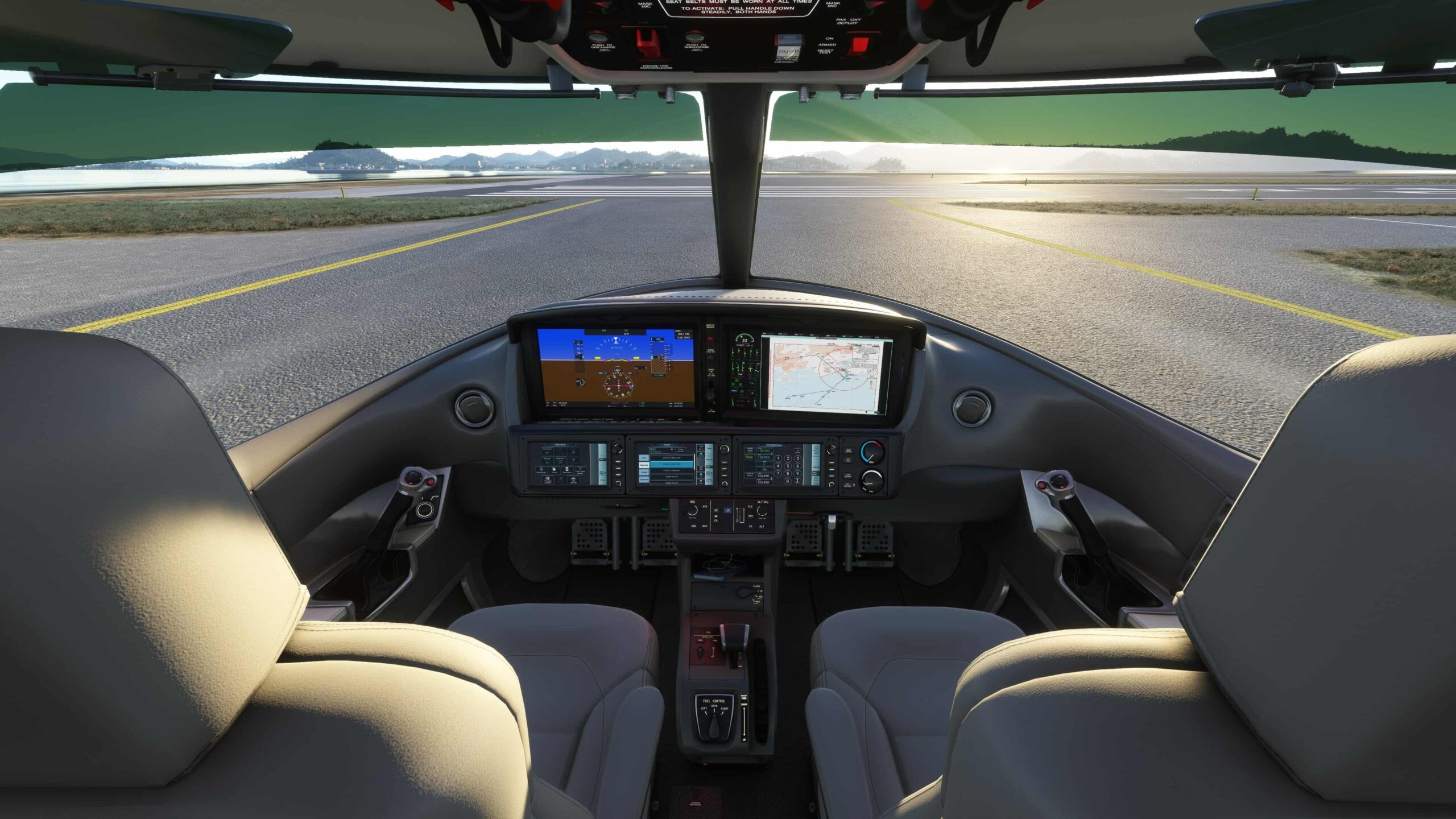
On the flight deck, the SF50 provides a modern integrated glass environment styled after the Cirrus Perspective Touch suite. Powered by Laminar's mature G1000 avionics engine, the dual large-format displays feature integrated synthetic vision, clear engine indication monitoring, terrain mapping, and a full-featured autopilot controller supporting coupled vertical navigation (VNAV), lateral navigation (LNAV), and precision ILS/RNAV approaches. System operations reflect modern single-pilot automation: engine starting is managed via a single push-button rotary switch, while full-authority digital engine control (FADEC) handles fuel metering and thrust output across all flight regimes through a single power lever. In keeping with Cirrus safety tradition, the aircraft also includes an operational cockpit deployment handle for the Cirrus Airframe Parachute System (CAPS).
In the X-Plane 12 flight environment, the Vision Jet offers docile, forgiving handling characteristics designed specifically to prevent low-time jet pilots from falling behind the airframe. The FJ33 turbofan climbs comfortably into the mid-twenties, settling into an efficient 300 to 305 KTAS cruise at its service ceiling of Flight Level 280 (or FL310 on later G2 standards). However, flying the SF50 demands disciplined energy planning: because the airframe is aerodynamically slippery and lacks dedicated speedbrakes or thrust reversers, pilots must plan descents far in advance to avoid arriving high and fast over the terminal pattern. Evaluated under our directory classification rubric, the simulation earns a solid Procedural tier: while circuit breakers are simplified and deep thermodynamic turbine wear is abstracted behind core simulator logic, its faithful flight dynamics, coupled glass avionics, and operational normal procedures deliver an outstanding starter bizjet for XP12.
Primary Missions & Operational Roles
-
Owner-Flown Corporate & Personal Travel: Flying high-speed personal business hops between 600 and 1,000 nautical miles at Flight Level 280, bridging executive municipal airports and commercial hubs.
-
Single-Pilot Jet Transition Training: Introducing piston pilots to turbine operating envelopes, high-altitude physiology, pressurization monitoring, and automated FADEC thrust management.
-
Precision RNAV & RNP Instrument Approaches: Flying coupled GPS approaches down to LPV and CAT I ILS minimums using the integrated glass deck and autopilot flight director.
-
Clean-Wing Energy Management Drills: Mastering the "slam-dunk" descent challenge by managing idle descents, early configuration changes, and gear drag in lieu of dedicated wing spoilers.
Key Highlights
- Built directly into X-Plane 12 at zero additional cost, offering immediate out-of-the-box corporate jet flying.
- Modern integrated glass flight deck with synthetic vision, terrain mapping, moving maps, and full coupled autopilot authority.
- Authentic Williams International FJ33-5A turbofan flight physics featuring single-lever FADEC power governance and native FMOD2 acoustics.
- Fully modeled emergency Cirrus Airframe Parachute System (CAPS) whole-aircraft ballistic recovery parachute.
- Docile, forgiving low-speed handling that captures the transition-friendly flight profile of the real-world VLJ.
Quirks & Limitations
- Extremely slippery aerodynamic profile combined with the absence of wing spoilers or thrust reversers demands early descent planning to decelerate.
- Cockpit circuit breakers and electrical bus switches are largely automated or cosmetic compared to dedicated payware study-level add-ons.
- Cockpit touchscreen data-entry controllers utilize default G1000 logic rather than a full 1:1 reproduction of the real Garmin Perspective Touch operating system.
- Takeoff pitch trim requires precise centering prior to roll; setting excessive nose-up trim can cause an aggressive pitch-up rotation immediately upon liftoff.
- Does not support automated direct SimBrief OFP operational flight plan downloads without manually loading saved route files.
Community Ratings & Feedback
Want to rate this flight deck or leave a review? Log In or Create an FSS Account to post your review.
Be the first simmer to leave a flight deck review and community score for this airframe.
Systems & Integrations
Video Showcases
Help Improve the Directory
Notice missing details, broken links, or incorrect pricing? Submit a correction to our Hangar Mods.
Suggest an Update