
Beechcraft F33A Bonanza

Editorial Overview & Systems Analysis
The Beechcraft F33A Bonanza (widely cataloged across general aviation fleets and simulation hangars as the F33A, Bonanza F33A, BE33, Debonair, and Thranda Bonanza) occupies an aristocratic seat in high-performance single-engine aviation. Originally spun off from the Model 35 line under the "Debonair" moniker to appeal to pilots wary of the famous V-tail design, the straight-tail Model 33 matured into the definitive F33A in 1970 when Beechcraft mated the conventional empennage with the muscular 285-horsepower Continental IO-520-BB engine. Built natively for X-Plane 12 under Thranda Design's refined DGS+ Series, this release combines classic Beechcraft luxury, retractable-gear speed, and extensive cockpit customization.
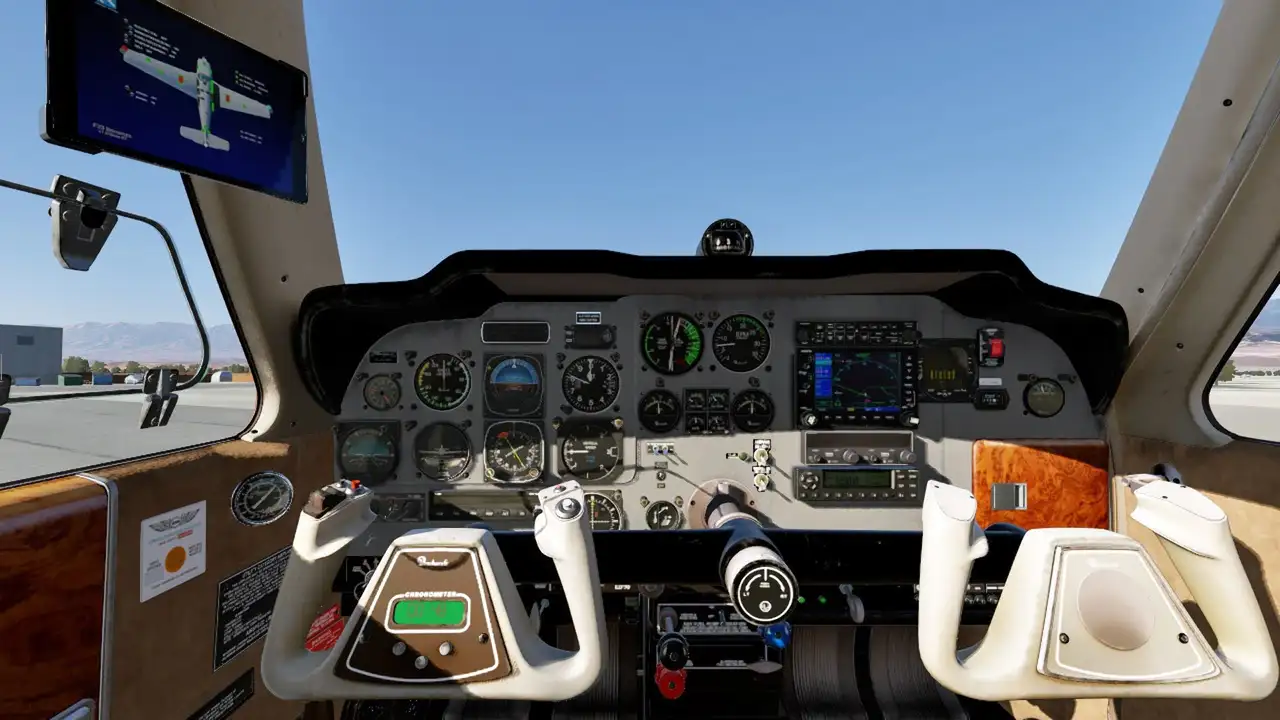
Central to Thranda’s rendition is their upgraded DGS+ modular 3D instrument panel architecture. Simmers are not locked into a rigid cockpit layout; instead, the aircraft provides over 60 individual 3D flight instruments that can be moved, swapped, or saved across presets in real time. Pilots can configure traditional analog six-pack layouts, integrate an Aspen EFD 1000 electronic flight display, or mount modern touchscreen GPS units including native Garmin GNS 430/530 units and third-party Reality XP or TDS GTNXi suites. The cockpit also models Beechcraft’s iconic throwover control yoke, operable pilot and cargo doors, and an interactive tablet EFB with integrated AviTab support, weight-and-balance loading charts, and Thranda’s proprietary DynaFeel flight control force calibration.
In the X-Plane 12 flight environment, the F33A delivers the slippery, high-energy profile that has made the Bonanza a premier cross-country machine for decades. The 285-horsepower Continental engine easily propels the airframe to cruise speeds between 165 and 175 KTAS at intermediate altitudes. Descent planning requires disciplined energy management: with its clean airframe and low parasite drag, descending without picking up excess airspeed requires proactive throttle reductions and timely gear extension to use the rugged landing gear as a drag brake. Evaluated under our directory classification rubric, the simulation earns a solid Procedural tier: while deep internal thermodynamic engine wear tracking is abstracted behind simulator logic, its faithful flight dynamics, modular panel technology, and real-time PBR livery customization make it an exceptional high-performance touring single for XP12.
Primary Missions & Operational Roles
-
High-Speed IFR Cross-Country Cruising: Operating fast personal business and cross-country flights between 6,000 and 11,000 feet MSL at 170 KTAS across 600-to-800-nautical-mile stages.
-
Complex Aircraft Transition & Commercial Training: Practicing complex-aircraft operating disciplines, including constant-speed propeller governing, retractable gear cycling, and manifold pressure management.
-
Precision Instrument Approaches: Flying coupled RNAV, VOR, and ILS approaches down to minimums utilizing the Aspen EFD 1000 or optional TDS GTNXi/Reality XP navigators.
-
Regional Airport & Paved Strip Touring: Connecting executive jet centers, municipal airports, and regional fields with comfortable, high-payload executive touring.
Key Highlights
- Dynamic modular instrument panel allowing pilots to position, drag, and calibrate over 60 individual analog and digital instruments (including Aspen EFD 1000, Reality XP, and TDS GTNXi support).
- High-speed, high-performance flight model tuned to published Beechcraft F33A POH performance tables and climb figures.
- Revamped dynamic livery editor with 40 built-in liveries, real-time color wheel adjustment, dirt/weathering control, and dynamic in-sim tail numbers.
- Feature-packed tablet Electronic Flight Bag (EFB) featuring weight and balance calculation, AviTab integration, and DynaFeel control tuning.
- Immersive FMOD2 spatial acoustic suite capturing Continental IO-520 starter cranking, propeller blade harmonic wash, and mechanical gear-door transit sounds.
- Authentic cockpit appointments detailing Beechcraft's classic throwover yoke mechanism, dual rudder pedals, and operable cabin doors.
Quirks & Limitations
- Cockpit circuit breaker array focuses on panel modularity and customization rather than active electrical overcurrent tripping.
- Extremely slippery aerodynamic descent profile requires early power reduction to avoid exceeding gear-extension speed ($V_{LE}$) or overspeeding in turbulence.
- Swapping between default Garmin GNS 430 and GNS 530 GPS stacks requires an aircraft reload due to core simulator dataref constraints.
- High-density 8K PBR exterior and interior textures can introduce video memory (VRAM) pressure when paired with heavy orthophoto scenery.
- Does not support automated direct SimBrief OFP flight plan uplink.
Community Ratings & Feedback
Want to rate this flight deck or leave a review? Log In or Create an FSS Account to post your review.
Be the first simmer to leave a flight deck review and community score for this airframe.
Systems & Integrations
Video Showcases
Help Improve the Directory
Notice missing details, broken links, or incorrect pricing? Submit a correction to our Hangar Mods.
Suggest an Update