
Colomban MC-15 Cri-Cri
Editorial Overview & Systems Analysis
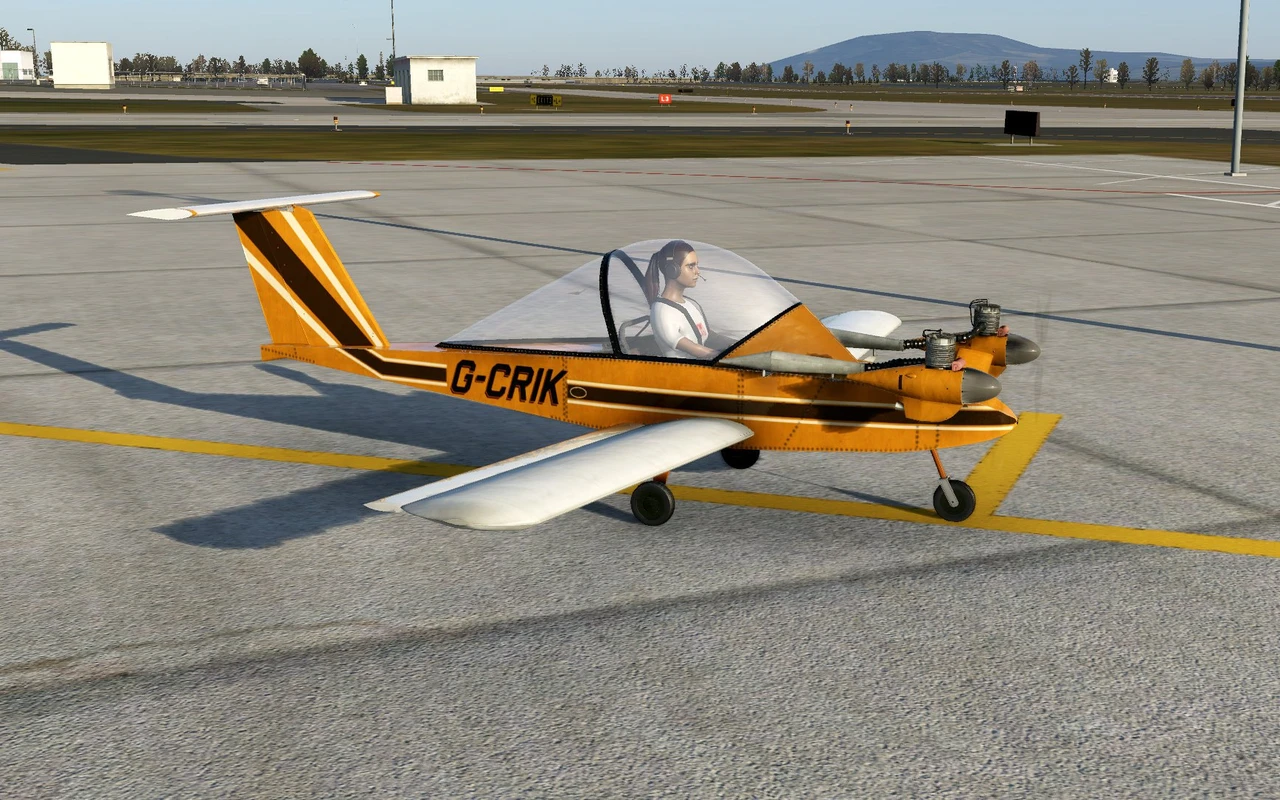
The Colomban Cri-Cri (universally chronicled across experimental aviation lore as the MC-15, Cri-Cri, Cricket, and the World's Smallest Twin) is one of the most eccentric achievements in aeronautical history. Conceived in the early 1970s by French aerospace engineer Michel Colomban, the Cri-Cri was engineered to prove that an aerobatic, twin-engine aircraft could be built smaller, lighter, and cheaper than almost anything on the market. Weighing less than 170 pounds (78 kg) empty, the aircraft sports an oversized clear bubble canopy that gives it the look of a retro-futuristic Jetsons flying capsule. Community developer T_C brought this native conversion to X-Plane 12, building upon NKDesign’s 3D assets to give virtual pilots a pocket-sized personal twin completely free of charge.
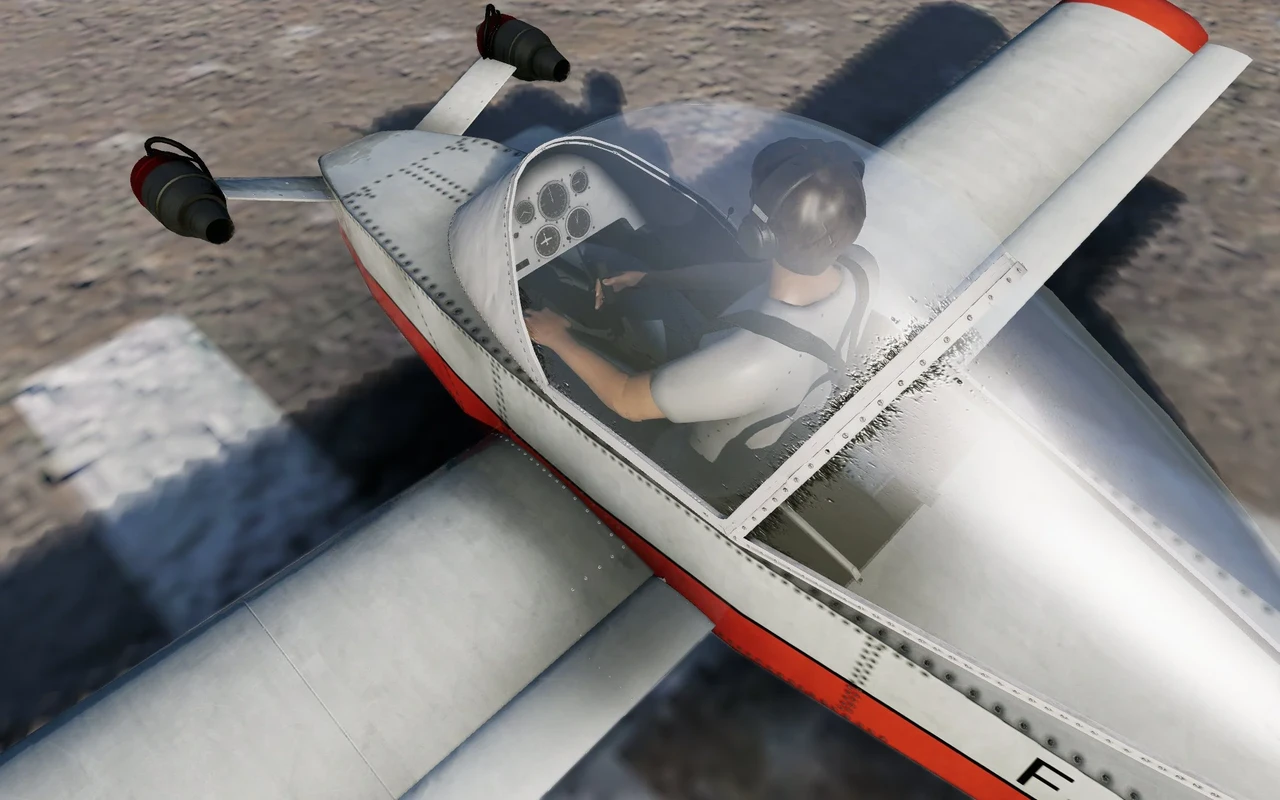
Stepping into the single-seat cockpit is closer to strapping on an airframe than climbing inside one. The pilot sits in a semi-reclined position enclosed beneath an expansive Plexiglas dome, with twin 15-horsepower JPX single-cylinder two-stroke engines buzzing on narrow forward pylons directly in front of the windscreen. The instrument panel is stripped down to the bare essentials: an analog airspeed indicator, altimeter, slip indicator, twin tachometers, and manual ignition switches. Forward visibility is virtually 360 degrees, offering a panoramic viewpoint that makes low-altitude sightseeing feel immediate and visceral.
In the X-Plane 12 flight environment, the Cri-Cri is an agile, responsive micro-machine. Powered by 30 total horsepower, it accelerates briskly on its tiny tricycle wheels, rotating at roughly 50 KIAS and cruising comfortably between 95 and 110 KTAS. Its diminutive 16-foot wingspan and full-span ailerons yield an energetic roll rate, allowing the micro-twin to execute crisp rolls, loops, and split-S maneuvers with minimal control effort. Under our directory fidelity rubric, the Cri-Cri lands in the Casual tier. With no complex systems, flight directors, or deep procedural requirements, it is built for pure, stress-free recreational fun. For flight simmers looking to shake off airliner procedures and buzz low over fields in the world's smallest twin, the freeware Cri-Cri delivers an entertaining change of pace.
Primary Missions & Operational Roles
-
Micro-Aerobatics & Sport Flying: Executing barrel rolls, loops, Cuban eights, and high-G zoom climbs with near-instant roll authority.
-
Grass-Strip & Low-Altitude Sightseeing: Buzzing low across rolling hills, farmlands, and coastal bays at 500 to 1,500 feet AGL with expansive bubble-canopy visibility.
-
Experimental Multi-Engine Fun: Experiencing the peculiar handling of the world’s smallest twin-engine airframe, including simulated single-engine asymmetrical thrust with near-zero yaw moment due to close centerline thrust.
-
Retro-Futuristic Flight Deck Exploration: Enjoying the pure, simplified novelty of flying a vintage homebuilt that feels like a cross between a chainsaw and a cartoon spacecraft.
Key Highlights
- Free Community Contribution: Completely freeware download on X-Plane.org, offering a fun addition to any virtual hangar.
- Energetic Aerobatic Roll Rates: Short wingspan and responsive control surfaces deliver crisp roll rates and agile handling.
- Unrestricted Bubble Canopy Visibility: Massive Plexiglas canopy offers expansive panoramic sightlines in all directions.
- Centerline Thrust Safety: Because the twin engines are mounted close together on the nose pylons, asymmetric yaw during single-engine flight is negligible compared to conventional wing-mounted twins.
- High Frame-Rate Performance: Streamlined geometry and lightweight systems ensure smooth performance on any hardware setup.
Quirks & Limitations
- Ultra-Lightweight Turbulence Sensitivity: Weighing under 400 pounds at gross weight, the airframe is sensitive to convective thermal updrafts and low-level turbulence.
- Sparse Casual Avionics: Lacks autopilots, radio nav gear, or moving maps; cross-country navigation relies entirely on visual landmarks and pilotage.
- Sensitive Pitch Response: Extremely short fuselage coupling means small elevator inputs produce prompt pitch changes, requiring smooth finger pressure on the stick.
- No Automated Flight Plan Datalink: Pure seat-of-the-pants hand-flying platform with zero automated FMS or tablet integration.
Community Ratings & Feedback
Want to rate this flight deck or leave a review? Log In or Create an FSS Account to post your review.
Be the first simmer to leave a flight deck review and community score for this airframe.
Purchase & Download
X-Plane.org DownloadsSystems & Integrations
Video Showcases
Help Improve the Directory
Notice missing details, broken links, or incorrect pricing? Submit a correction to our Hangar Mods.
Suggest an Update