
Schweizer SGS 2-33A
Editorial Overview & Systems Analysis
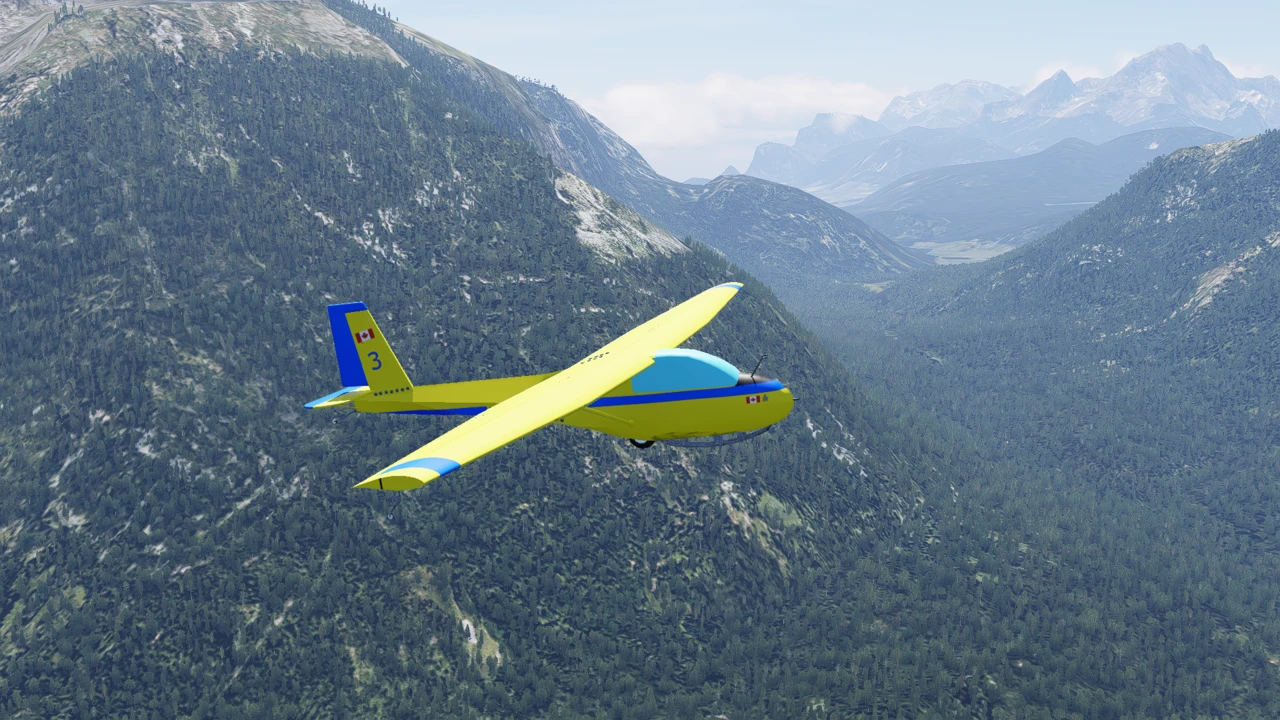
The Schweizer SGS 2-33 (widely cataloged across soaring clubs and aviation training rosters as the Schweizer 2-33, 2-33A, TG-4A, and Schweizer Sailplane) is North America's legendary ab-initio soaring trainer. Designed by Schweizer Aircraft in Elmira, New York, to replace the wooden 2-22, the 2-33 first flew in 1965 and became the definitive flight trainer for the Soaring Society of America (SSA) and the United States Air Force Academy. Constructed with a rugged welded steel tube fuselage and high-lift aluminum wings, the airframe was engineered to withstand hard student touchdowns on grass strips while delivering forgiving, docile stall behavior. Community creator weezl flyer developed this freeware rendition natively for X-Plane 12 to provide an accessible, vintage tandem trainer for desktop glider enthusiasts.
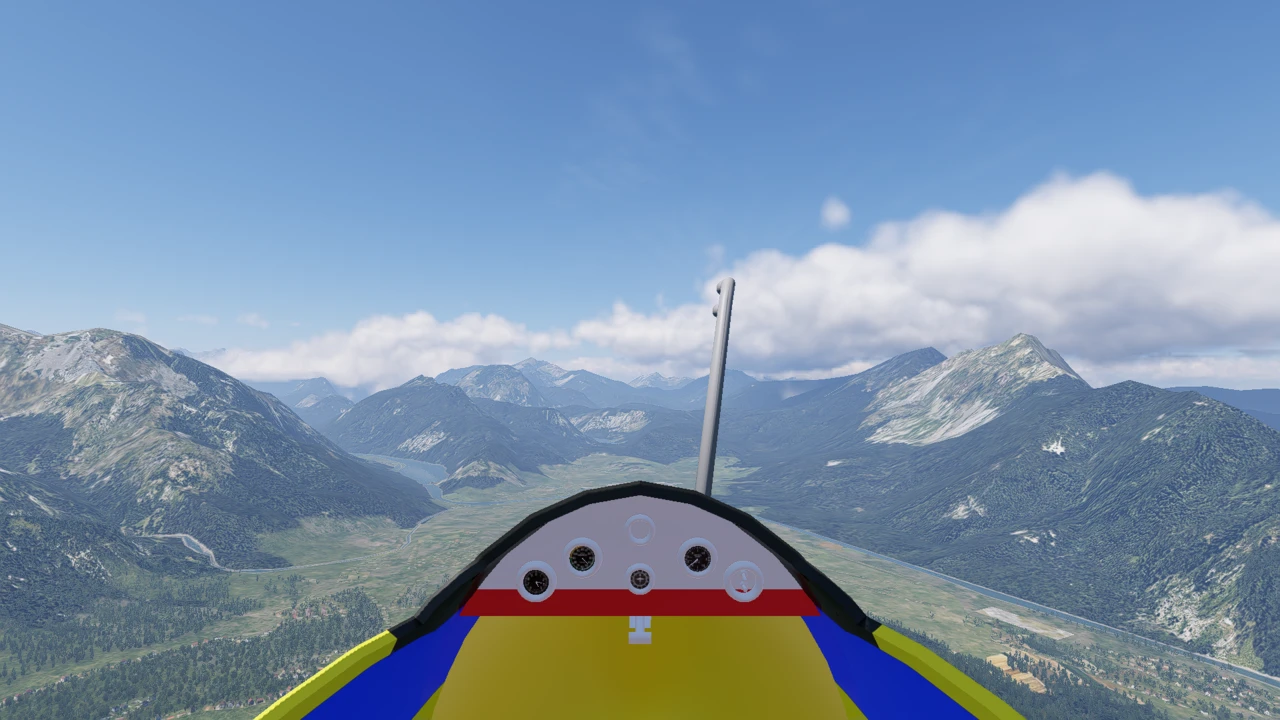
The cockpit represents the bare-bones simplicity of grassroots soaring instruction. Built primarily using Plane Maker tools, the tandem flight deck features essential soaring gauges: an analog airspeed indicator, sensitive altimeter, mechanical variometer for locating thermal lift, and a towline release knob. A functioning yaw string on the canopy provides primary slip/skid visual feedback, training pilots to keep the rudder centered during slow thermaling turns. Operation of the top-and-bottom wing dive brakes (spoilers) allows pilots to steepen approach glide angles without gaining excessive airspeed.
In the X-Plane 12 flight environment, the SGS 2-33A behaves as an approachable, forgiving training glider. Utilizing X-Plane’s native blade-element aerodynamics and real-time atmospheric updrafts, the sailplane rides thermal columns and ridge lift with predictable stability. Cruising at an optimal glide ratio around 22.25:1 at 50 mph (43 knots) with a minimum sink rate near 2.6 ft/s, the 2-33 demands proactive energy management to stay aloft. Under our directory classification rubric, the project sits firmly in the Casual tier. Because it is an unpowered beta project created with Plane Maker geometry, it bypasses complex systems programming, high-end 3D modeling, and custom sound design. For virtual pilots looking for a zero-cost, nostalgic tandem trainer to practice aerotow launches and circuit patterns, it offers an honest taste of classic club soaring.
Primary Missions & Operational Roles
-
Ab-Initio Glider Flight Instruction: Recreating introductory civilian soaring lessons, practicing coordinated rudder turns on tow, thermal circling, and landing pattern judgment.
-
Aerotow Launch & Release Practice: Rehearsing formation positioning behind AI or multiplayer towplanes, handling wake turbulence in the "high tow" position, and executing cable releases.
-
Ridge & Thermal Lift Exploration: Working coastal ridge lift and convective summer thermal currents using the mechanical variometer and yaw string.
-
Pattern & Spot-Landing Training: Flying tight rectangular glider circuits and using mechanical dive brakes to grease touchdowns on unimproved turf glider strips.
Key Highlights
- Free Community Freeware Contribution: Freely available on X-Plane.org, offering a zero-cost alternative to modern high-performance fiberglass sailplanes.
- Accessible Tandem Training Platform: Ideal for sim pilots wanting a slow, stable trainer to learn unpowered soaring fundamentals without complex electronic variometers.
- Functional Wing Spoilers / Dive Brakes: Accurately models top-and-bottom wing surface spoilers for steep glidepath control and short-field rollout control.
- Native XP12 Thermal & Weather Interaction: Responds naturally to X-Plane 12's native ridge lift, cloud thermals, and mountain wave air masses.
- Extremely Lightweight Performance Impact: Due to its streamlined Plane Maker geometry, the aircraft runs with high frame rates on virtually any hardware configuration.
Quirks & Limitations
- Plane Maker Textures & Visual Finish: Cockpit and exterior textures lack the photorealistic PBR refinement and detailed baking produced by high-end dedicated 3D tools like Blender.
- Beta State & Early Development: As an active beta project, some cockpit fixtures, panel mountings, and visual details remain utilitarian and subject to future revision.
- Modest Soaring Performance: True to the real steel-and-fabric club trainer, a modest 22:1 glide ratio means the 2-33 cannot run cross-country distances like modern fiberglass sailplanes, requiring pilots to stay within gliding distance of the home airfield.
- Default Simulator Wind & Sound Logic: Does not feature a custom FMOD2 acoustic suite, relying on default X-Plane aerodynamic airflow audio.
Community Ratings & Feedback
Want to rate this flight deck or leave a review? Log In or Create an FSS Account to post your review.
Be the first simmer to leave a flight deck review and community score for this airframe.
Purchase & Download
X-Plane.org DownloadsSystems & Integrations
Video Showcases
Help Improve the Directory
Notice missing details, broken links, or incorrect pricing? Submit a correction to our Hangar Mods.
Suggest an Update