
BETA Technologies ALIA-250
Editorial Overview & Systems Analysis
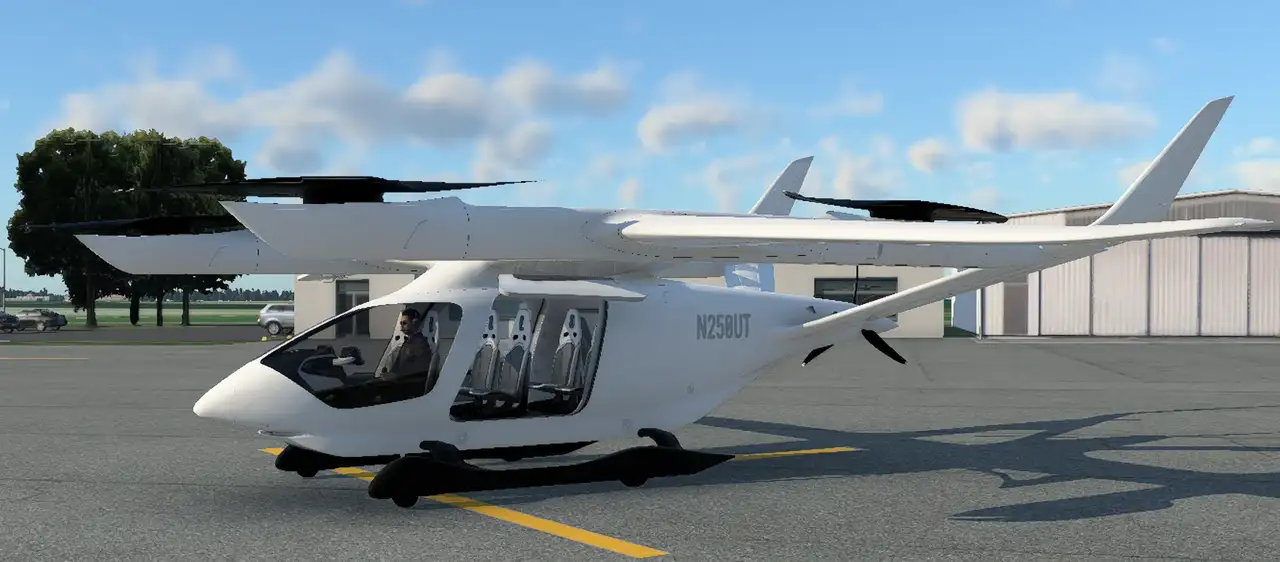
The BETA Technologies ALIA-250 (frequently cataloged in advanced air mobility trials and flight simulation hangars as the Alia, Alia-250, BETA eVTOL, and ALIA-250 VTOL) is an all-electric vertical takeoff and landing (eVTOL) aircraft developed by Burlington, Vermont-based aerospace firm BETA Technologies. Designed for regional passenger transit, medical organ logistics, and zero-emission middle-mile cargo, the aircraft utilizes a "lift + cruise" architecture inspired by the aerodynamic geometry of the Arctic tern. Laminar Research engineered this native model directly into X-Plane 12 under a technical partnership with BETA Technologies, who utilizes X-Plane’s core physics engine to power their engineering simulators and real-world test-pilot training suites.
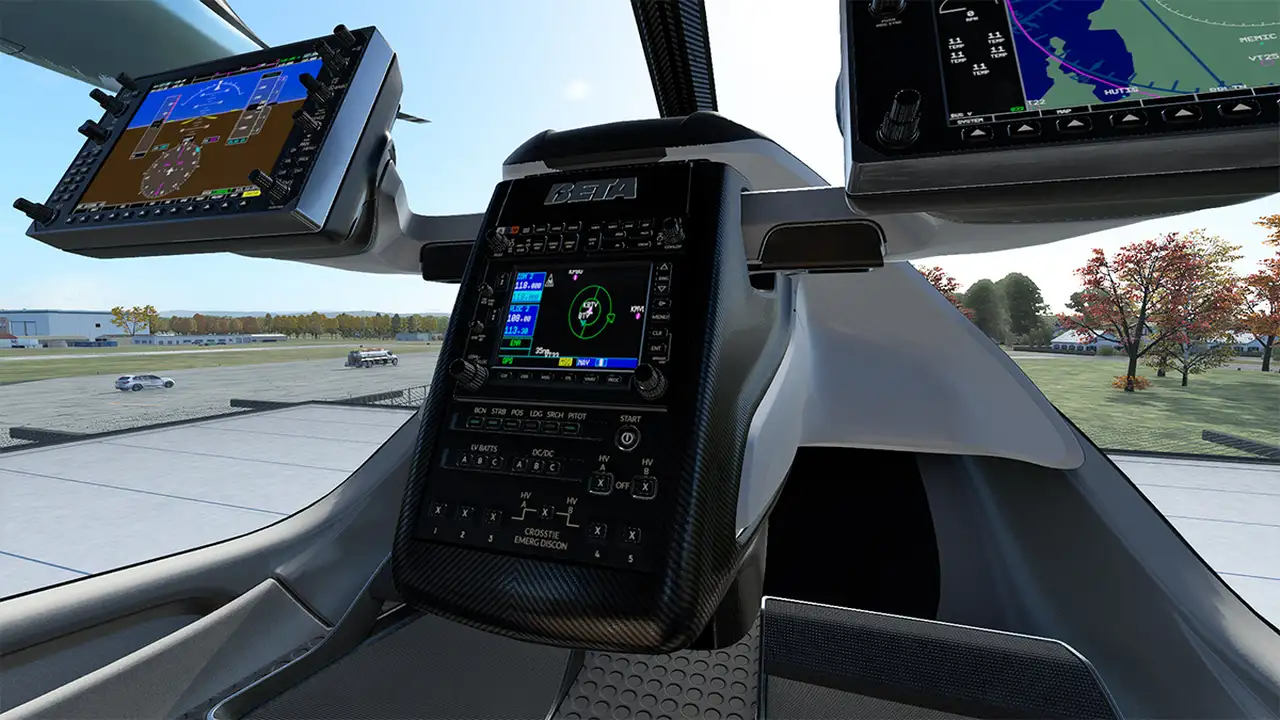
The ALIA-250 pairs four overhead, dual-bladed electric lift props with a single rear-mounted pusher propeller driven by an electric motor. The 50-foot carbon-fiber wing provides clean glide efficiency during high-speed cruise, allowing the overhead lift rotors to feather and stop spinning once aerodynamic forward flight is established. The glass flight deck delivers a futuristic, uncluttered environment dominated by twin primary flight and multifunction displays. These custom displays provide real-time electric powertrain feedback, battery state-of-charge readouts, thermal indications, and dynamic hover vector symbology that guides pilots through transition corridors.
In the X-Plane 12 flight environment, the ALIA-250 showcases the strengths of blade-element momentum physics. Taking off vertically requires managing collective pitch to establish a stable hover before tilting forward into translational lift. As the rear pusher prop accelerates the airframe beyond 80 KIAS, the wings generate full aerodynamic lift, allowing the vertical rotors to shut down and transition the aircraft into standard fixed-wing flight at cruise speeds up to 135 to 145 KTAS. Under our directory classification rubric, the simulation lands squarely in the Casual fidelity tier. While its aerodynamic transition model is technically advanced, cockpit operations are deliberately simplified to a hop-in-and-fly workflow with minimal sub-system depth, lack of functional circuit breakers, and an automated electrical architecture. For pilots eager to explore the future of urban air mobility, it provides an engaging, zero-emission look at next-generation electric flight.
Primary Missions & Operational Roles
-
Urban Air Mobility & Helipad Transit: Flying zero-emission point-to-point hops between downtown skyscraper helipads, hospital vertiports, and regional municipal airports.
-
High-Stakes Medical Organ & Cargo Logistics: Simulating express organ transport and urgent medical supply deliveries across 100-to-200-nautical-mile corridors (mirroring BETA's real-world flights with United Therapeutics).
-
Lift-to-Cruise Transition Training: Mastering the piloting mechanics of vertical hover, translational lift acceleration, and overhead rotor feathering into high-speed fixed-wing cruise.
-
Scenic Low-Altitude Whispering Reconnaissance: Touring metropolitan skylines and natural landmarks at 1,500 to 3,500 feet AGL with near-silent acoustic signatures.
Key Highlights
- Official Engineering Testbed Pedigree: Modeled directly in partnership with BETA Technologies, utilizing aerodynamic datasets refined for real-world pilot training.
- Dynamic Lift-and-Cruise Transition Aerodynamics: Seamlessly replicates the complex transition between rotary-wing hover and fixed-wing forward cruise flight.
- Built-in Base Airframe: Included completely free as a standard native aircraft inside every installation of X-Plane 12.
- Panoramic Cockpit Visibility: Sweeping, floor-to-ceiling glass canopy provides unobstructed visual sightlines for confined-area hover touchdowns.
- Custom Electric Powertrain Audio: High-detail FMOD acoustic suite capturing electric motor spool, high-frequency rotor chop, and airframe slipstream.
Quirks & Limitations
- Simplified Casual Systems Architecture: System management is largely automated; lacks granular battery thermal management, dynamic breaker logic, or complex non-normal failure depth.
- Limited Battery Flight Endurance: True to modern battery energy density limits, usable cruise endurance is restricted to approximately 200 to 250 nautical miles before battery depletion requires a recharge.
- Pitch Sensitivities During Hover Transition: Transitioning between rotary lift and fixed-wing flight requires smooth pitch inputs on desktop flight sticks to prevent abrupt altitude ballooning or sink rates.
- No Automated SimBrief Flight Plan Downlink: Lacks ACARS route uplinks; cross-country GPS routes must be keyed into the onboard glass display manually.
Community Ratings & Feedback
Want to rate this flight deck or leave a review? Log In or Create an FSS Account to post your review.
Be the first simmer to leave a flight deck review and community score for this airframe.
Systems & Integrations
Video Showcases
Help Improve the Directory
Notice missing details, broken links, or incorrect pricing? Submit a correction to our Hangar Mods.
Suggest an Update