
Cessna 152
Media Gallery
Editorial Overview & Systems Analysis
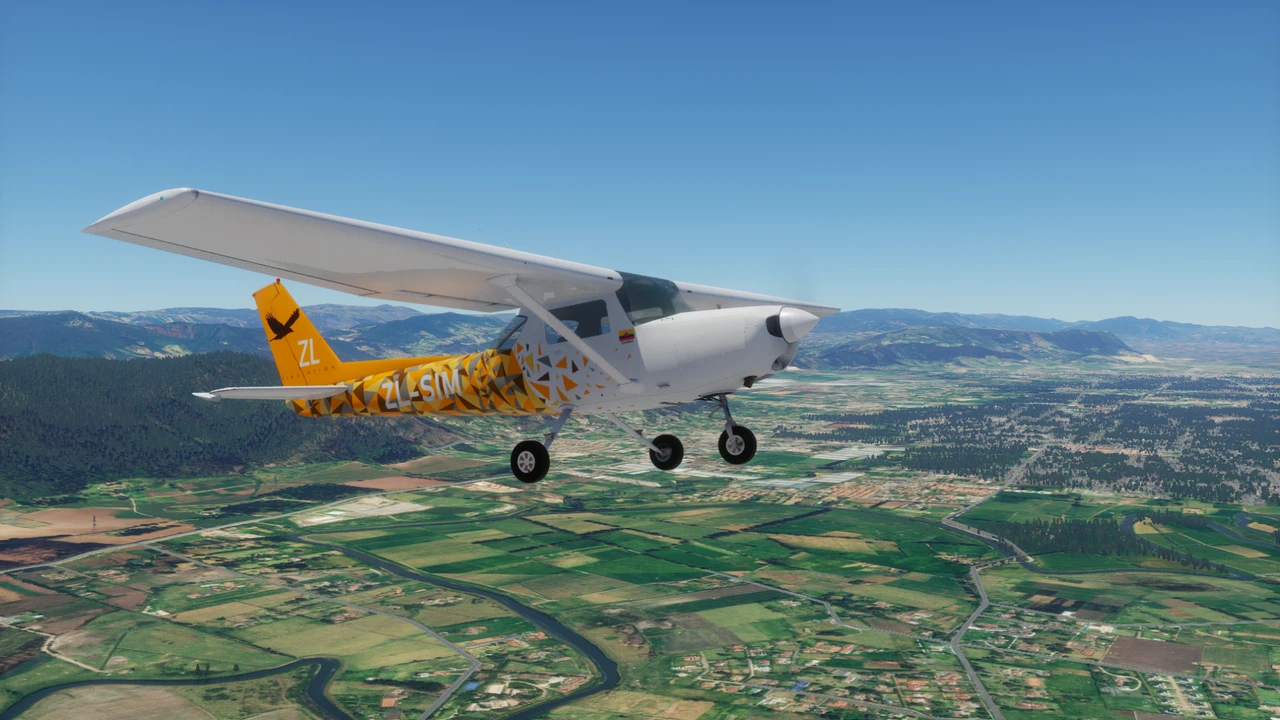
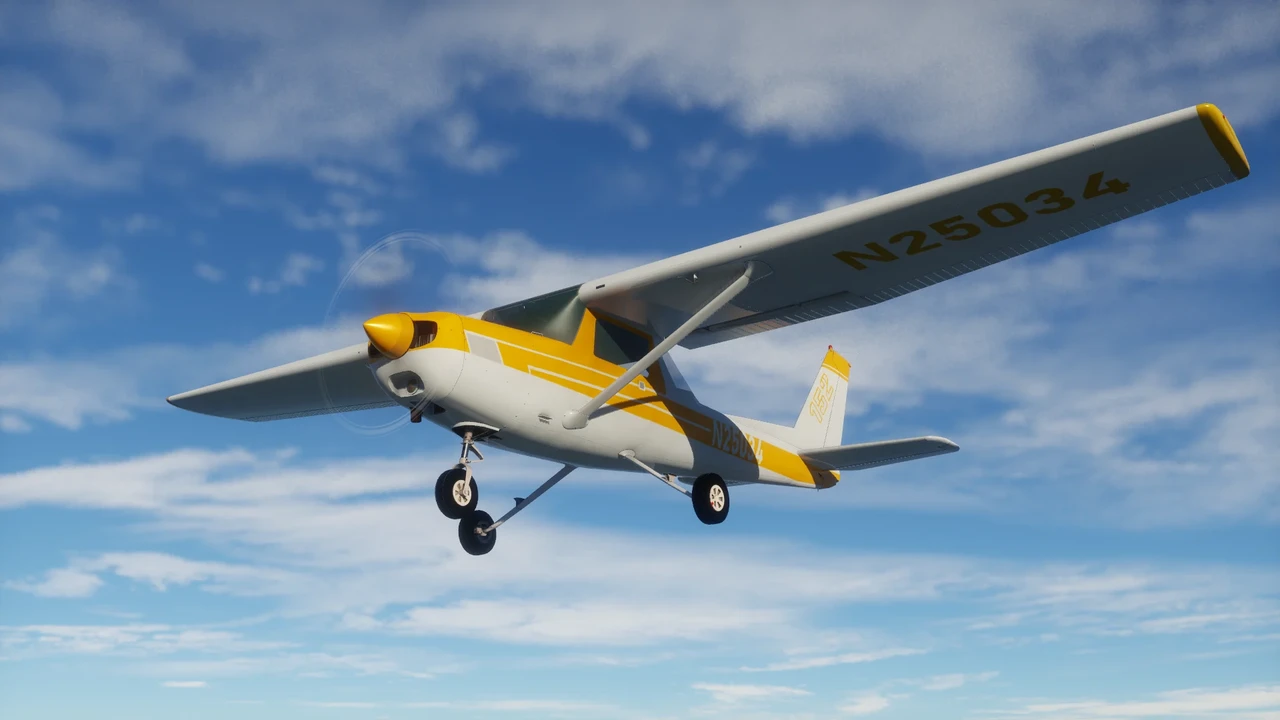
The Cessna 152 (universally cataloged across worldwide flight academies and simulation hangars as the C152, C-152, Cessna 152 II, and ZL Simulation C152) is the quintessential primary training aircraft of modern aviation. Introduced in 1977 to succeed the long-running Cessna 150, the 152 upgraded the design with a higher-compression Lycoming O-235 engine, a 28-volt electrical system, and split-flap settings limited to 30 degrees for more predictable student landings. Built as an open-source community endeavor over three years of dedicated development, ZL Simulation released this native rendition for X-Plane 12 to deliver a payware-grade, fully functional analog trainer to the flight simulation community completely free of charge.
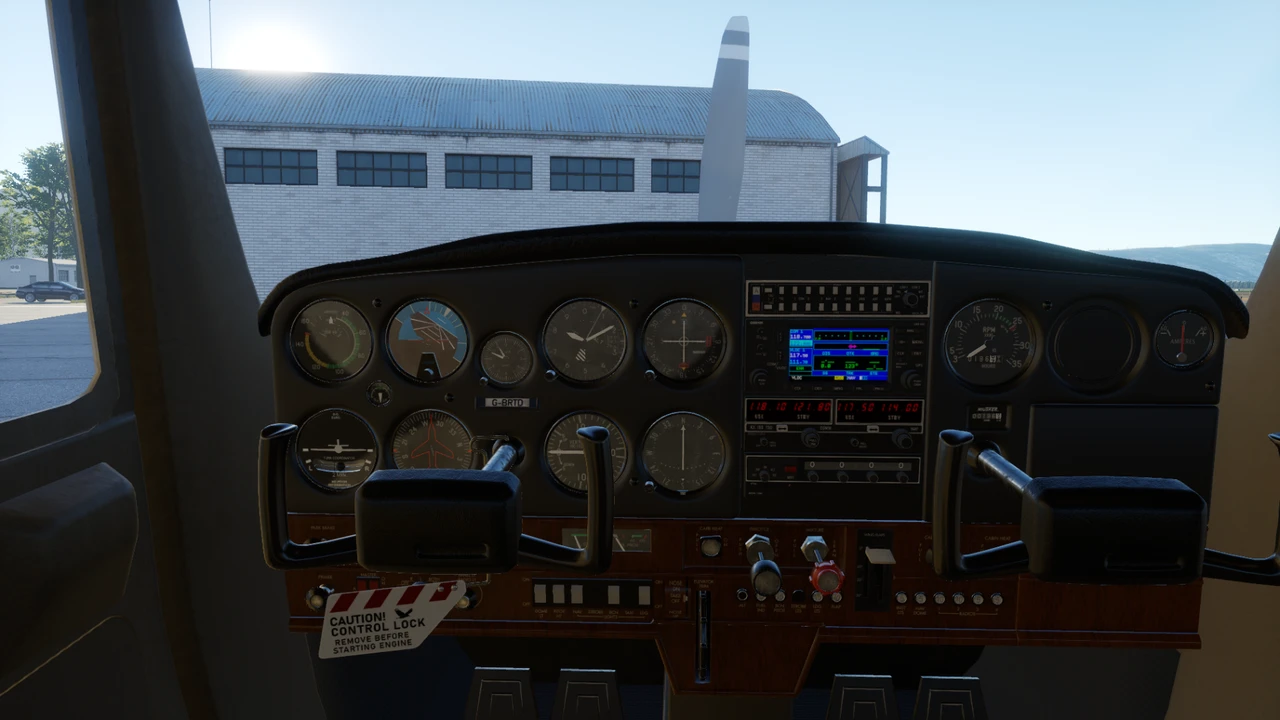
The cockpit captures the authentic, hard-wearing aesthetic of a flight school ramp workhorse. Modelers designed an interactive 3D flight deck where nearly every mechanical switch, rotary dial, and circuit breaker is fully functional. Powered by custom backend XTLua programming, the simulation models electrical bus load variations, authentic starter motor crank behavior, and working cabin ventilation and lighting controls. Avionics are anchored by classic round-dial flight instruments, dual Comm/Nav radios with VOR/LOC course deviation needles, and a center-mounted Garmin GNS 430 GPS unit for basic RNAV point-to-point navigation and terminal situational awareness.
In X-Plane 12, the ZL Simulation 152 flies with the stable, forgiving flight dynamics that have earned the airframe its reputation as the ultimate primary trainer. Powered by the 110-horsepower Lycoming O-235-L2C flat-four engine, the aircraft cruises comfortably between 95 and 105 KTAS while exhibiting gentle, predictable stall breaks and instant spin recovery. Hand-flying in the pattern reveals authentic light-aircraft inertia, demanding proactive pitch trim and prompt rudder coordination during slow-flight maneuvers and crosswind landings. With high-definition PBR exterior liveries, native windshield rain shaders, and custom FMOD audio, the ZL Simulation C152 stands as one of the most valuable freeware training assets available for X-Plane 12.
Primary Missions & Operational Roles
-
Ab-Initio Student Pilot Training: Serving as the definitive grassroots training platform for practicing traffic patterns, ground reference maneuvers, rectangular courses, and power-off stall recovery drills.
-
Classic VFR Pilotage & Navigational Dead Reckoning: Flying visual cross-country flights between 2,500 and 6,500 feet at 100 KTAS, navigating via landmark tracking, road networks, and VOR radial intersections.
-
Private Pilot License (PPL) Checkride Preparation: Rehearsing practical test standards including steep turns, emergency engine-out field selection, forward slips to land, and go-around procedures.
-
Grass Field & Unimproved Strip Operations: Practicing soft-field takeoffs and short-field rollout techniques into grass clearings and small municipal airports
Key Highlights
- Payware-Grade Freeware Release: Completely free, open-source project delivering a fully modeled, highly interactive trainer backed by three years of development.
- Interactive Functional 3D Cockpit: Features working circuit breakers, authentic mechanical switch logic, interactive cabin controls, and crisp high-resolution PBR textures.
- Authentic Flight Dynamics & Inertia: Tuned to replicate real-world Cessna 152 performance tables, featuring docile stall behavior, stable trim response, and forgiving pattern handling.
- Custom FMOD Multi-Layered Soundscape: Detailed acoustic suite capturing Lycoming O-235 engine turnover, prop airflow wash, cockpit switch clicks, and airframe roll rumblings.
- Native XP12 Environmental Integration: Optimized for X-Plane 12 with native photometric panel floodlighting, wet runway tire friction, and dynamic windshield rain effects.
Quirks & Limitations
- Sensitive Ground Steering on Takeoff: High-speed rudder authority on the takeoff roll can feel sensitive on standard desktop flight pedals, requiring light footwork to stay centered before rotation.
- Elevator Trim Range During Engine-Out Drills: Pilots practicing simulated power-off glides will find that trimming out the aircraft for best glide speed (60 KIAS) requires significant nose-up trim travel.
- Modest Climb Rates at High Density Altitudes: True to the 110-horsepower trainer design, climb rates taper considerably on warm summer days or when operating above 5,000 feet MSL at maximum gross weight.
- No Integrated AviTab Tablet Display: Does not include an integrated 3D pilot tablet for chart viewing; electronic plates must be referenced via external monitors or third-party desktop overlays.
Community Ratings & Feedback
Want to rate this flight deck or leave a review? Log In or Create an FSS Account to post your review.
Be the first simmer to leave a flight deck review and community score for this airframe.
Systems & Integrations
Video Showcases
Help Improve the Directory
Notice missing details, broken links, or incorrect pricing? Submit a correction to our Hangar Mods.
Suggest an Update