
Daher-Socata TBM 850
Media Gallery
Editorial Overview & Systems Analysis
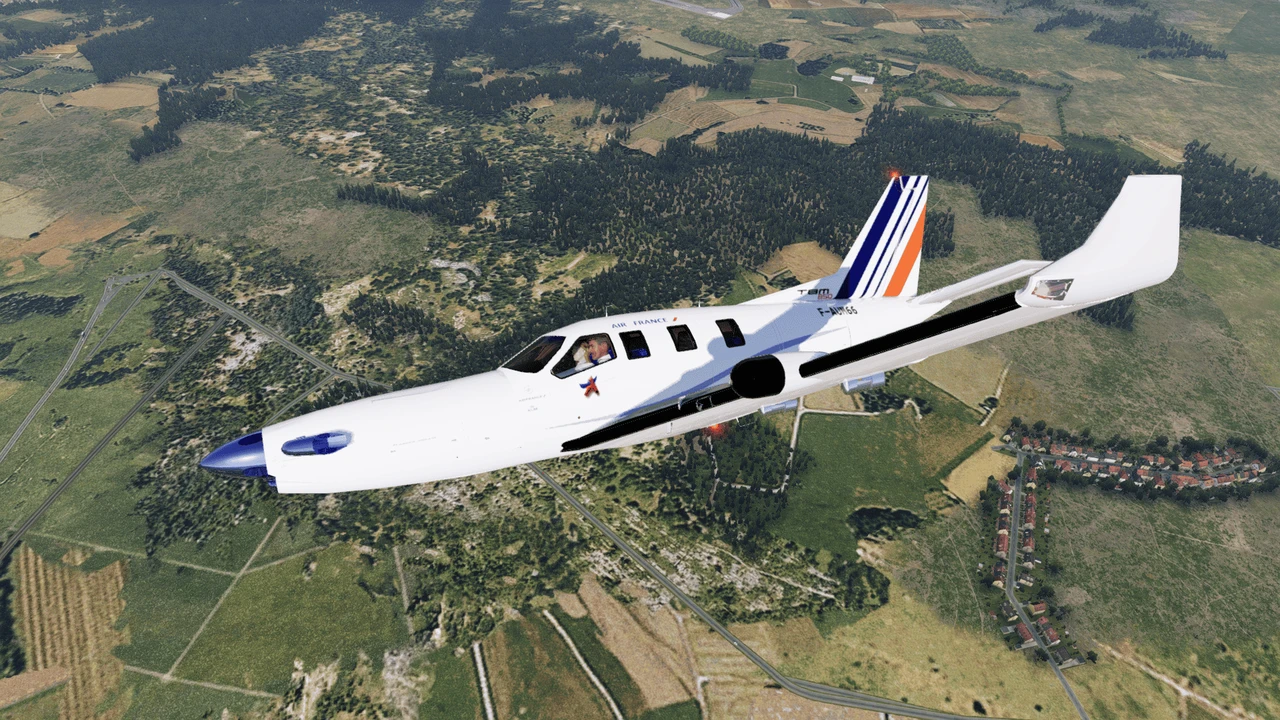
The Daher-Socata TBM 850 (frequently cataloged across general aviation circles and flight simulation downloads as the TBM 850, TBM850, Socata TBM, Daher TBM, and Eric Leissler TBM) is general aviation's benchmark high-speed single-engine turboprop. Manufactured in Tarbes, France, the TBM 850 was introduced as the high-powered successor to the TBM 700, mating a pressurized six-seat cabin with an 850-shaft-horsepower Pratt & Whitney Canada PT6A-66D engine. Delivering light-jet cruise speeds in excess of 315 KTAS with single-engine turboprop economy, the aircraft has long been a favorite of owner-flown operators. Community developer Eric Leissler built and actively maintains this dedicated freeware project natively for X-Plane 12, providing an accessible, fast cruiser to the community at zero cost.
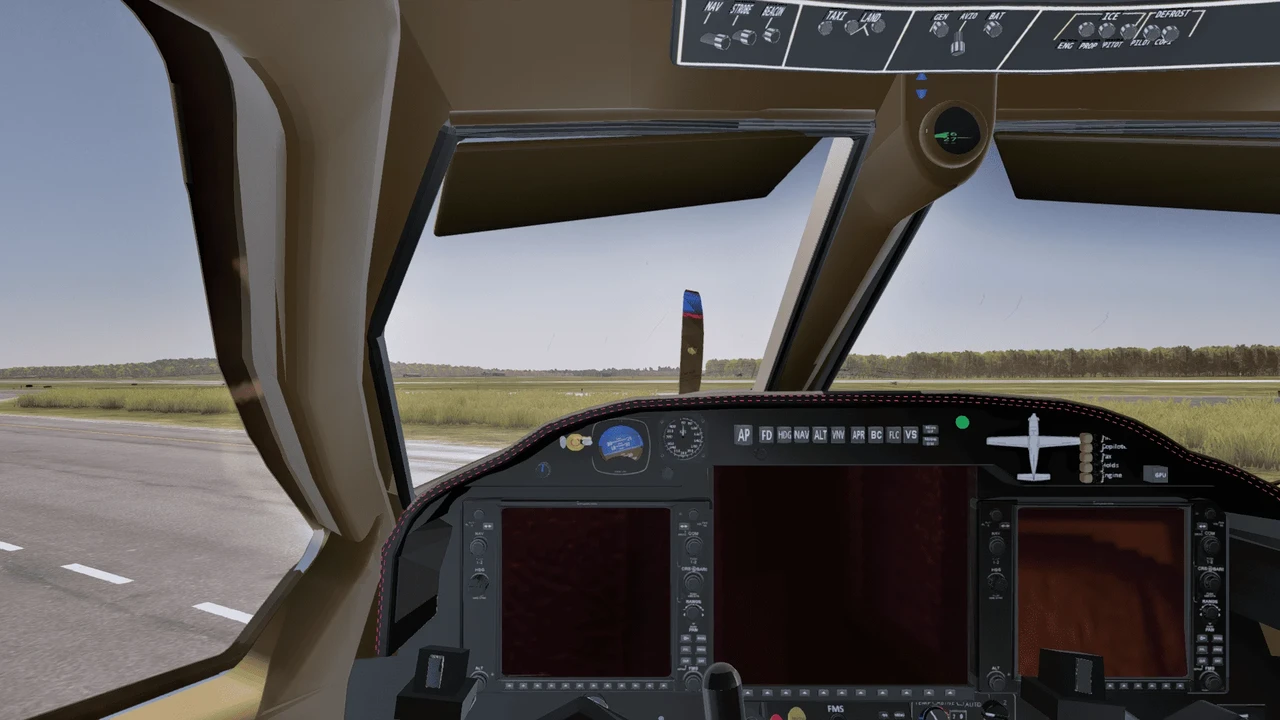
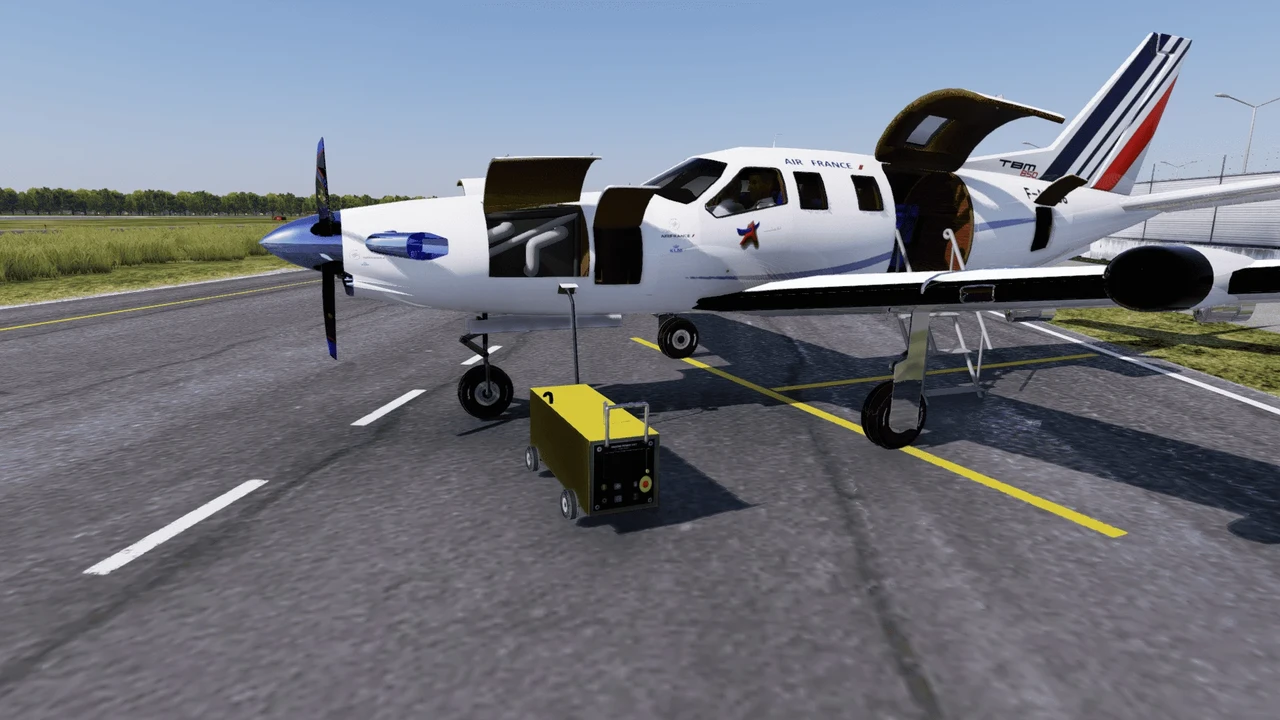
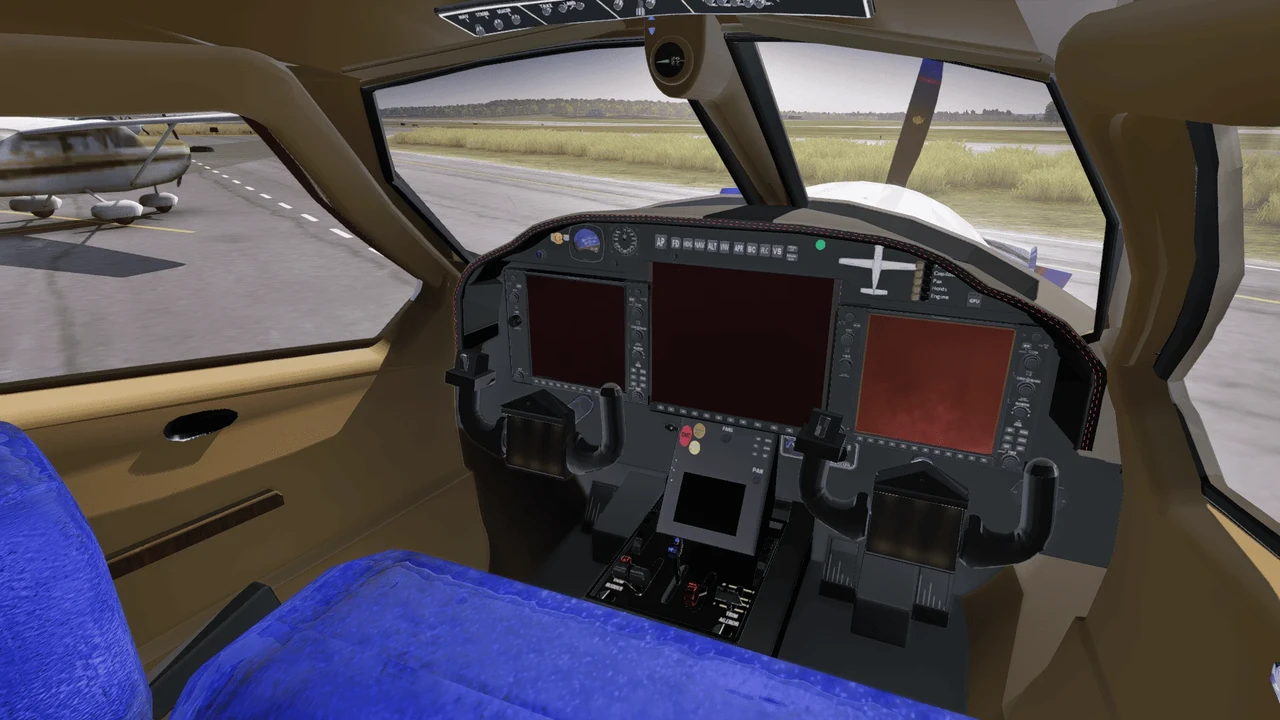
The flight deck is centered around a modern three-screen Garmin G1000 glass cockpit configuration flanked by dual PFDs and a large central MFD. Leissler incorporates active clickspots to toggle the control yokes for unobstructed instrument scans, alongside functional cabin light switches, animated folding armrests, and interactive door levers that command the pilot, copilot, passenger clamshell, and baggage compartments. Ground handling includes a custom automated nosewheel steering lock mechanism that locks the steering gear above 30 knots for high-speed directional takeoff stability and unlocks it below 30 knots for tight ramp taxi turns.
In X-Plane 12, the TBM 850 flies with the high-energy performance expected of the PT6A-66D turbine. The flight model takes full advantage of XP12’s native wet runway friction equations, dynamic lighting, and blade-element propwash. Cruising at 28,000 to 31,000 feet, the aircraft sustains a fast 310 to 316 KTAS true airspeed, covering ground at roughly five miles a minute. Powered by its four-bladed reversible propeller, the aircraft decelerates effectively on rollout when beta and reverse ranges are commanded, making 3,000-foot regional runways well within its operational reach.
Primary Missions & Operational Roles
-
High-Speed Single-Pilot Cross-Country Cruising: Flying rapid corporate hops at Flight Level 280 to 310 at 315 KTAS, connecting regional and metropolitan business hubs across 800 to 1,100 nautical mile legs.
-
Single-Engine Turboprop (SETP) Type Transition: Training pilots transitioning from piston singles into high-performance turboprops, practicing turbine start cycles, prop-wash torque compensation, and high-altitude step climbs.
-
High-Altitude IFR Weather Navigation: Utilizing the high service ceiling of 31,000 feet and onboard weather radar displays to cruise above convective lower-altitude turbulence.
-
Short-Field Regional Mountain Flying: Operating in and out of confined alpine runways (such as Courchevel or Aspen) using the PT6A's brisk climb rate and prompt reverse-thrust braking.
Key Highlights
- Exceptional Value as Community Freeware: Completely free native X-Plane 12 high-performance turboprop with full 3D visual modeling and working cabin animations.
- Active Developer Iteration & Community Updates: Frequently patched and refined with active community feedback on the X-Plane.org forums, receiving regular updates to flight dynamics, sounds, and ground handling.
- Speed-Sensitive Nosewheel Steering System: Features automatic directional locking above 30 knots for stable high-speed rollout alongside tight free-castoring steering under 30 knots for taxi maneuvering.
- Full Glass Cockpit Layout: Integrates a three-display Garmin G1000 flight deck with electronic engine indications and coupled GFC 700 autopilot modes.
- Comprehensive Animated Visual Elements: Detailed 3D model featuring opening cabin, cockpit, and cargo doors, deployable GPU power unit, animated passenger tables, and switchable yoke visibility.
Quirks & Limitations
- Simplified Automatic Pressurization Controls: While high-altitude performance is modeled, manual cabin altitude rate controllers and bleed air dump switches are automated rather than individually simulated.
- Autopilot Vertical Speed Oscillation Sensitivity: Rapid atmospheric pressure changes in turbulent weather can induce slight pitch hunting in altitude hold mode, requiring smooth vertical speed selections when leveling off.
- Heavy Elevator Control Forces: True to its high-speed airframe design, manual stick forces can feel heavy during the landing flare; establishing proper nose-up approach trim before crossing the threshold is critical.
- No Automated SimBrief Datalink Import: Lacks automated EFB or ACARS import; flight plan routes must be loaded into the G1000 via standard .fms files or entered manually.
Community Ratings & Feedback
Want to rate this flight deck or leave a review? Log In or Create an FSS Account to post your review.
Be the first simmer to leave a flight deck review and community score for this airframe.
Purchase & Download
X-Plane.org DownloadsSystems & Integrations
Video Showcases
Help Improve the Directory
Notice missing details, broken links, or incorrect pricing? Submit a correction to our Hangar Mods.
Suggest an Update