
Schleicher ASK 21 (Laminar Research)
Editorial Overview & Systems Analysis
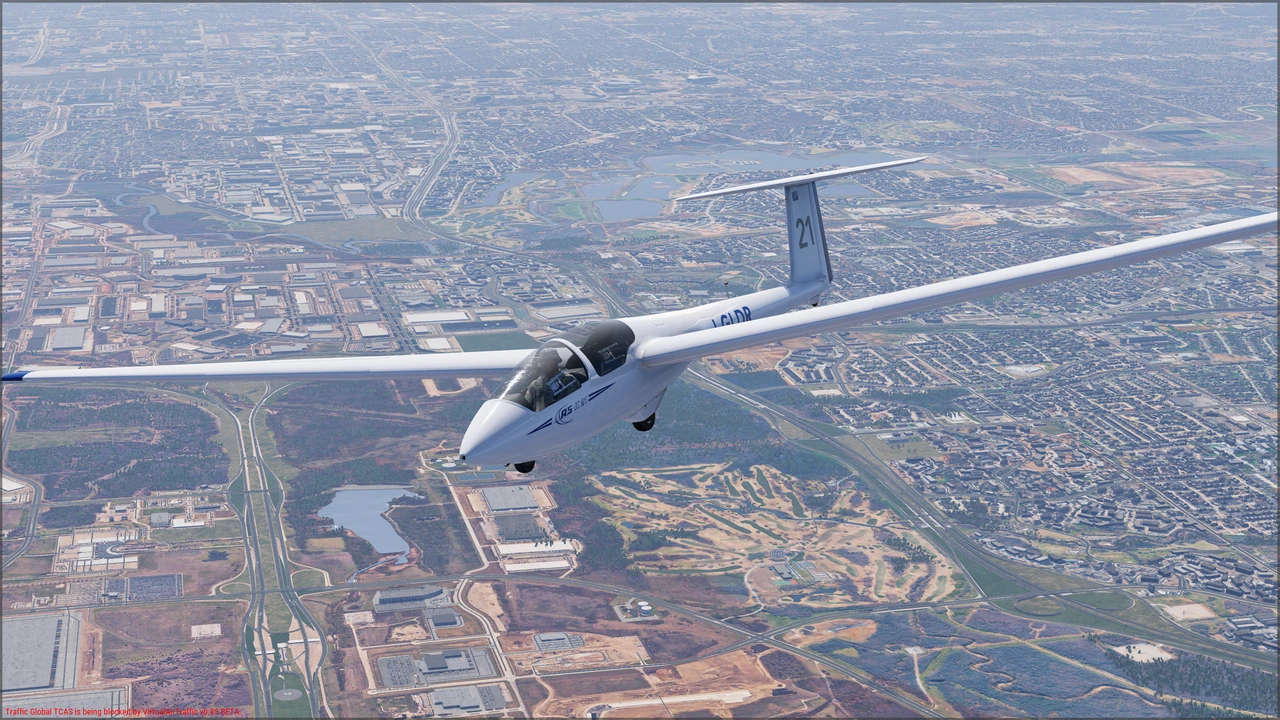
The Schleicher ASK 21 (widely recognized across soaring clubs and flight simulation as the ASK 21, ASK21, K21, Schleicher Glider, and Laminar ASK 21) is the global benchmark for dual-seat soaring instruction. Designed by Rudolf Kaiser and built by Alexander Schleicher GmbH & Co, this rugged fiberglass sailplane has introduced more pilots to motorless flight than nearly any other modern glider. Thanks to its glass-reinforced plastic (GRP) construction, forgiving spin characteristics, and certified +6.5G / -4.0G aerobatic load limits, the ASK 21 excels in roles ranging from first-time student hops to advanced aerobatic routines. Laminar Research updated this classic sailplane for X-Plane 12, taking full advantage of the platform's reworked volumetric atmospheric modeling, thermal physics, and blade-element aerodynamics.
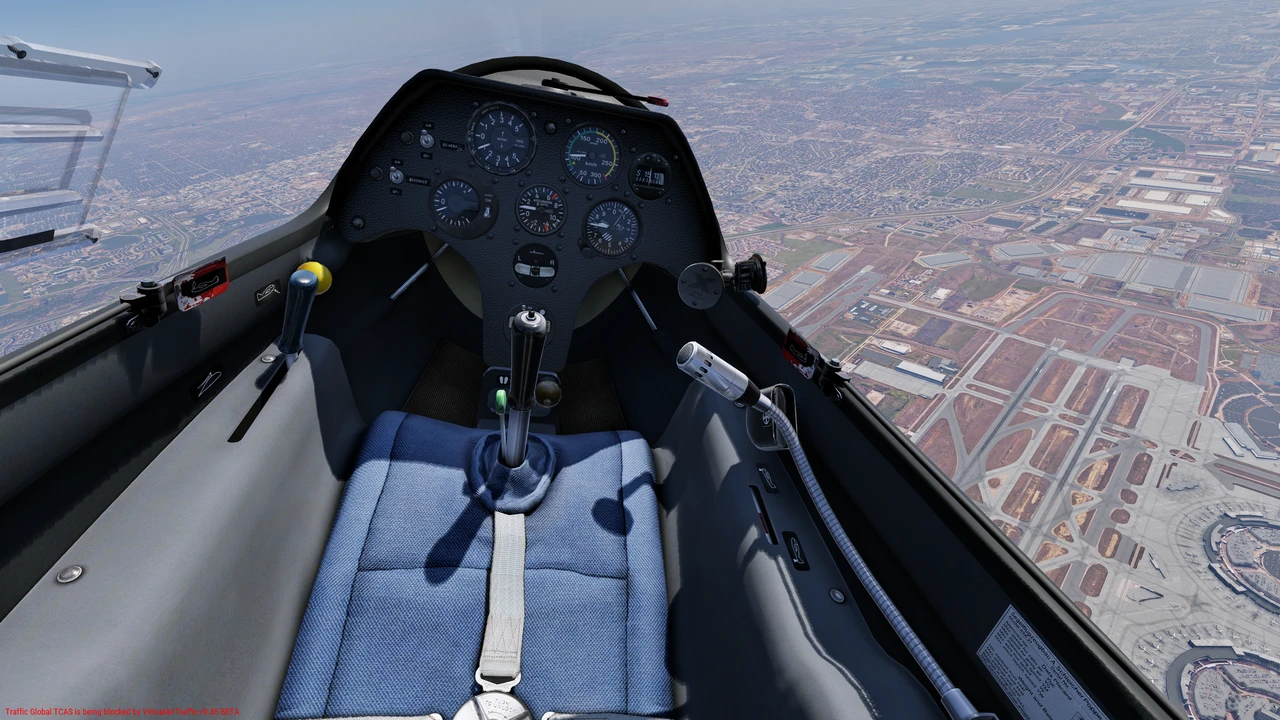
The flight deck focuses strictly on essential soaring instrumentation. Simmers sit beneath a large bubble canopy offering expansive panoramic visibility, with an animated physical yaw string taped to the outer windscreen to visually indicate slip and skid. The panel is anchored by both a mechanical total energy-compensated (TE) variometer and a modern electric audio variometer. The electric variometer features an adjustable MacCready speed ring and dual-tone acoustic audio—delivering high-frequency chirps when climbing through core lift and low-pitched groans when encountering sink, allowing pilots to keep their eyes outside the cockpit while centering thermals. Laminar also models functional wing water ballast dump valves and a center-console yellow tow-release knob.
In X-Plane 12, soaring in the ASK 21 provides a genuine workout in atmospheric energy management. Without an engine, pilots rely on X-Plane 12’s dynamic weather engine to sustain flight—working localized cumulus cloud thermals, windward mountain ridge lift, and high-altitude mountain wave rotors. Launch options are built directly into the simulator, allowing pilots to choose between a high-acceleration ground winch launch or an AI-driven aerotow behind a towplane. With an effective glide ratio of 34 to 1, cross-country gliding requires balancing speed-to-fly tactics with careful descent planning, deploying the powerful two-tier Schempp-Hirth airbrakes to control touchdown points during runway or off-field farm strip outlandings.
Primary Missions & Operational Roles
-
Ab-Initio Sailplane Flight Training: Practicing primary glider takeoffs, winch launches, aerotows, coordinated thermaling turns, and spot landings.
-
Glider Aerobatic Certification & Practice: Executing certified aerobatic maneuvers including inside loops, chandelles, lazy eights, stall turns, and spins within its +6.5G / -4.0G structural envelope.
-
Cross-Country Thermal & Ridge Soaring: Working rising air currents along mountain ridges, valley passes, and thermal corridors to complete cross-country distance tasks without motor power.
-
Simulated Emergency Outlanding Drills: Practicing off-field forced landings in remote fields and pastures when lift decays, relying on Schempp-Hirth dive brakes to control steep descent paths.
Key Highlights
- Included Free in Base Simulator: Ships pre-installed with every copy of X-Plane 12 at zero additional cost, offering immediate access to motorless flight.
- Dual Launch Capability: Native simulator support for high-angle ground winch cable launches and AI aerotow operations behind a powered towplane.
- Acoustic Audio Variometer & MacCready Integration: Audio variometer with distinct climb/sink audio tones and adjustable MacCready speed-to-fly ring for outside-cockpit thermal centering.
- Photometric Visuals & Canopy Shading: High-resolution fiberglass textures, dynamic canopy rain effects, and an interactive physical yaw string that reacts to airflow.
- Full Aerobatic Structural Envelope: GRP composite airframe certified for basic aerobatics and spin recovery training with authentic high-G stick forces.
Quirks & Limitations
- Aerotow Cable Tether Physics: Flying behind the AI towplane can be sensitive in convective turbulence; drifting outside the propwash cone can induce severe pilot-induced oscillations on entry-level rudder pedals.
- No Motorized FES or Sustainer Variant: Pure unpowered sailplane configuration; once lift dissipates, pilots must locate a suitable runway or perform an off-field landing.
- No Dedicated Modern Soaring Computer: Lacks an integrated modern digital glide computer (such as an LX9000 or XCSoar interface) for automated task speed-to-fly optimization.
- Airbrake Drag Bleed-Off: Deploying full Schempp-Hirth airbrakes creates massive aerodynamic drag; extending them too aggressively close to the ground leads to rapid sink rates that require swift stick correction.
Community Ratings & Feedback
Want to rate this flight deck or leave a review? Log In or Create an FSS Account to post your review.
Be the first simmer to leave a flight deck review and community score for this airframe.
Systems & Integrations
Video Showcases
Help Improve the Directory
Notice missing details, broken links, or incorrect pricing? Submit a correction to our Hangar Mods.
Suggest an Update